EDUCATION | Case Study | February 2026
From the Pink Tower to the Launch Pad
What a Failed Rocket Taught Us About Success — and how the SBB-1 mission proved that adolescent work is real enough to fail in real ways.
At Blue Blocks, we often say education is preparation for life. But rarely does a school project test that philosophy against the unforgiving reality of orbital mechanics.
In January 2026, at the IMF-AMI 7th National Montessori Conference in Mumbai, a team of adolescent students stood before a national audience of educators and experts to present a landmark case study: “Valorization in Orbit.”
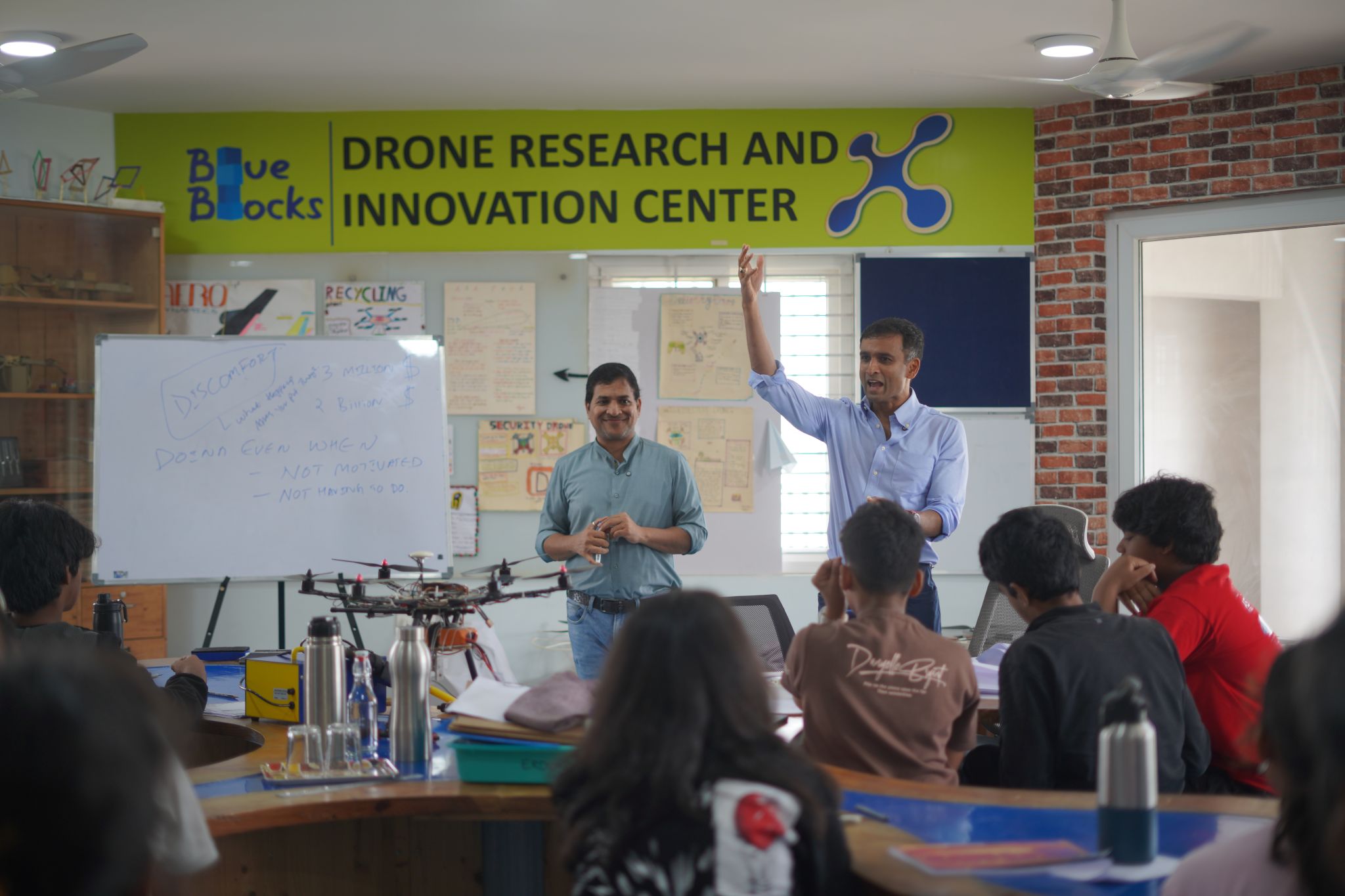
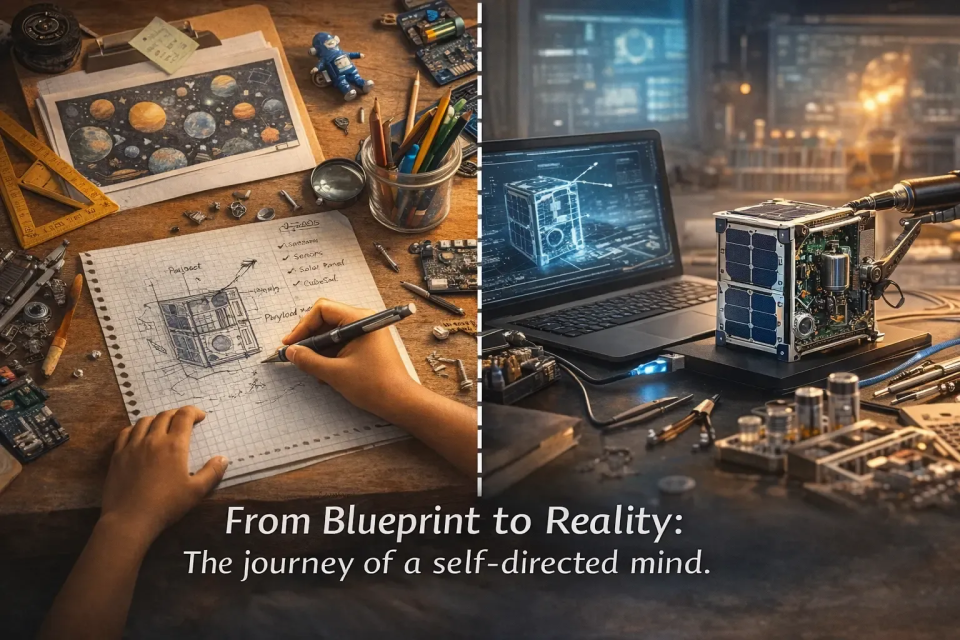
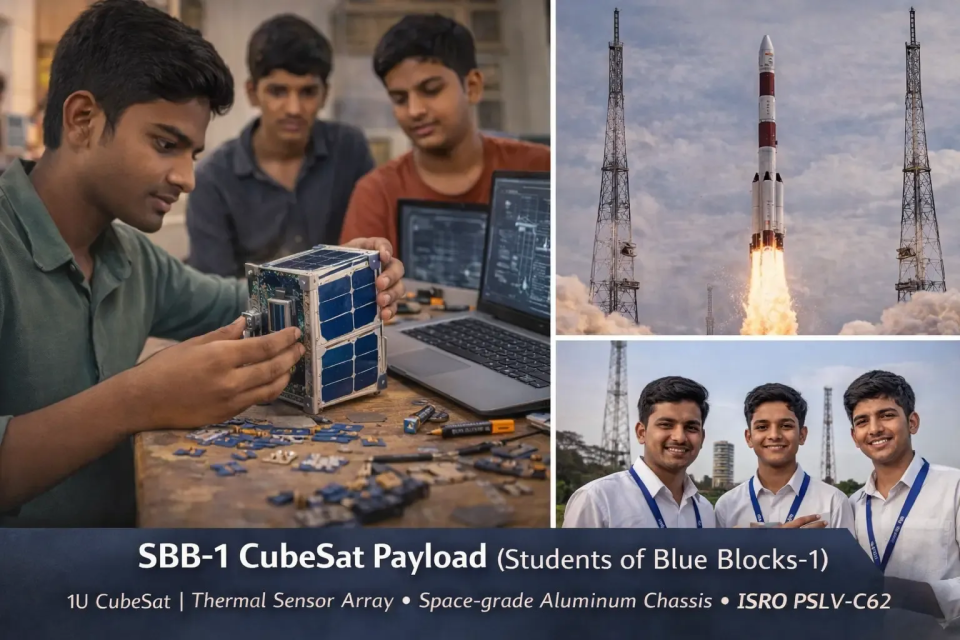
They shared the story of SBB-1, a thermal sensor payload designed, engineered, and managed entirely by 17 students aged 12–16.
The Geometry That Connected Childhood to Space
The story begins with a simple geometric coincidence.
The largest cube of the Montessori Pink Tower — a material mastered by a three-year-old — measures exactly 10cm × 10cm × 10cm.
The standard 1U CubeSat used in satellite engineering measures exactly the same.
That meant the same spatial understanding that begins in early Montessori classrooms could scale, years later, into real aerospace design.
In one symbolic journey, the cube moved from the hands of the child… to the mind of the adolescent… and finally to the launch pad at Sriharikota.
Standing Inside Mission Control
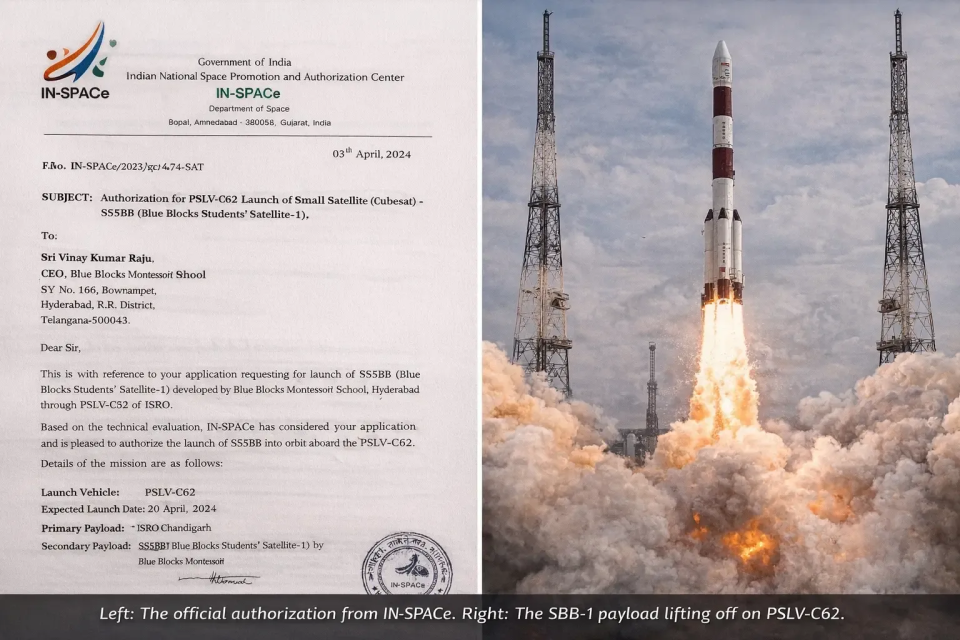
On January 28, 2025, the student team stood inside the ISRO Mission Control VVIP Gallery.
They watched the PSLV-C62 rocket roar into the sky.
Stage 1 ignited. Then Stage 2. Then Stage 3. Everything performed perfectly.
But at T+847 seconds, the Stage 4 ignition failed.
The mission was terminated before the SBB-1 payload could be deployed into orbit.
For a moment, the room went silent.
Why This Was Still a Success
The SBB-1 payload did not fail.
Over eighteen months, the student team successfully passed multiple IN-SPACe technical reviews and subjected their design to rigorous testing environments.
- Vibration testing
- Thermal testing
- Pressure testing
Every engineering requirement for the payload itself had been met.
The failure occurred strictly in the launch vehicle’s final stage — outside the students’ control.
“Build again — build better.”
— IN-SPACe Assistant Director
When School Work Becomes Real Work
This mission demonstrated something profound about Montessori adolescent education.
The students were not doing a simulation. They were not completing a classroom exercise.
They were practicing real aerospace engineering.
And real engineering carries real risk.
When the launch failed, the students experienced something that cannot be taught through lectures: the emotional weight of authentic responsibility.
Their work mattered enough to fail.
The True Meaning of Valorization
In Montessori philosophy, valorization refers to the process through which adolescents discover their capacity to contribute meaningfully to society.
It is not achieved through praise or grades.
It emerges when young people engage with work that is complex, consequential, and real.
Standing in that mission control room, the students understood something many adults never experience:
Their work was part of the real world.
And that is the deepest form of educational success.
Access the Full Case Study
The complete research paper authored and presented by the student team has been documented for the wider scientific and educational community.
Zenodo DOI Link: Access the full technical paper and case study.
Tags: #Montessori #Aerospace #AdolescentEducation #FailureAnalysis #ISRO #BlueBlocksResearch #STEM