We wrote earlier about how to raise a curious child — the small, daily, slightly resistant questions a three-year-old asks about bedtime, shoes, and the colour of leaves. This piece is about what those questions become. Raising curious children is a ten-year proposition. The question a three-year-old asks at the dinner table, and the project a thirteen-year-old presents in front of a room are the same capacity at two ages — but only if the years in between protected the shape of the thing.
Most schools that market project-based learning describe it as a method introduced at age nine or ten, as though the capacity to drive a multi-week inquiry can be installed at that age by handing children a topic and a deadline. It cannot. By thirteen, a child either has the underlying habit or does not. The work of getting them there happens long before any school says the word project.
What does a three-year-old’s curiosity actually look like?
The earlier piece described the form: small, daily, often resistant. Why can’t I walk barefoot. Why do I have to wear shoes. Why are the leaves green. All three are the same question wearing different clothes. The work of the early years is to treat each one as legitimate, not to redirect the resistant ones toward acceptable subject matter.
The work that does not get done in the early years cannot be retrofitted later. A child who learns at three that some questions are welcome and others are inconvenient becomes a child at seven who asks fewer questions, then a child at eleven who waits for the teacher’s prompt, then a teenager at fourteen who completes assignments competently but does not know what is worth asking on her own. The arc is not visible at any single year. It is visible only if you look back from thirteen.
What does the same child look like at age 7?
By seven, in an environment that protected the early questions, the same disposition has gained the capacity to sustain itself across days. The three-year-old who asked why the leaves were green is now the seven-year-old who keeps a notebook of observations about her grandmother’s plants, who returns to the work voluntarily on a Saturday afternoon because the question is still alive in her, who notices that some of her observations contradict each other and decides this needs sorting out. This is what child curiosity at different ages actually looks like — not different children, but the same child wearing the same disposition at a larger scale.
The questions get longer. The follow-through gets longer. Both are the same capacity from age three, simply scaled up. The child has not become a different person. She has been allowed to keep being the same person at a larger size.
The child has not become a different person. She has been allowed to keep being the same person at a larger size.
What changes is the form of the asking. At three the question is verbal and demands an answer from a parent. At seven it is increasingly written, increasingly addressed to the world itself rather than to an adult, increasingly content to wait for the answer to emerge from the work rather than from a person. The child is becoming her own first source of information.
What does the same child look like at age 11?
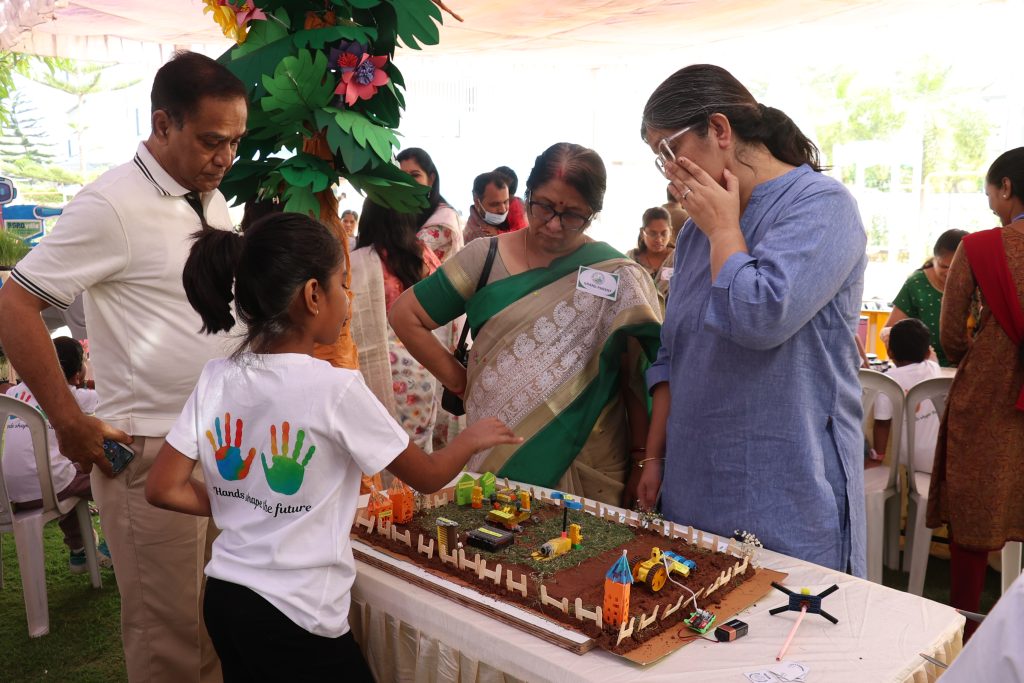
By eleven, in an environment that has continued to honour the questions, the capacity has consolidated into something an outside observer would call work. A multi-week inquiry into how chlorophyll converts sunlight. A working model that the child has built three times and refined twice. A presentation she insists on giving twice because she noticed she could explain it better the second time. The bedtime and shoes questions are gone — or rather, they have become something else. This is what raising curious children produces by the upper primary years when the early years were honoured.
This is the age at which most schools introduce project-based learning. For a child who has been carrying the capacity since age three, the school’s framing is an institutional name for what she has already been doing for most of her life. For a child who has not been carrying the capacity, the school’s framing is an exercise in completion: a topic she is given, a deadline she meets, a project she finishes. Both children produce something at the end of the term. The piece a parent or admissions tour sees can look identical. The two children are not the same.
What does the same child look like at age 13?
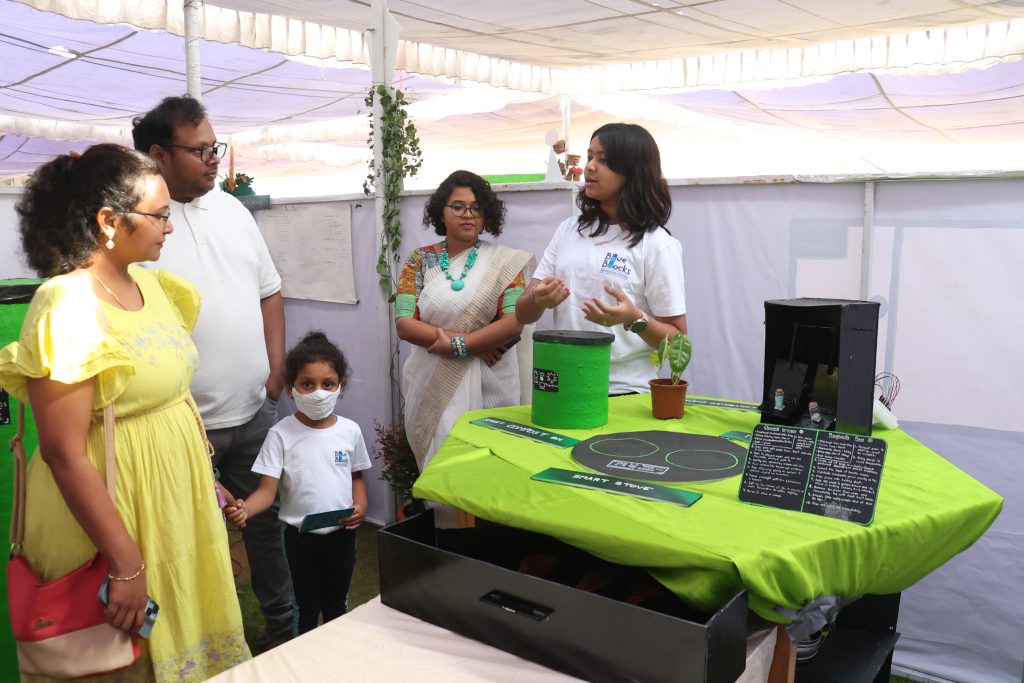
At thirteen, in an Erdkinder program that takes the adolescent’s developing capacity seriously, the work becomes structurally adult in scale. Sustained inquiry across months. Real audiences. Real consequences for the work being incomplete or wrong. We have written separately about what happens when adolescents are given real research — what we observed there is the visible end of an arc that started ten years earlier with a small daily resistant question that an adult had taken seriously enough to answer honestly.
The thirteen-year-old who asks for summer homework as a privilege rather than a burden is the same child who at three asked why she had to wear shoes. The question has changed shape four times. The disposition has not.
The thirteen-year-old who asks for summer homework is the same child who at three asked why she had to wear shoes. The question has changed shape four times. The disposition has not.
What should parents look for in a Montessori school for a three-year-old?
If you are deciding between schools when your child is three, you are not really deciding what your child will do at three. You are deciding what your child will be doing at thirteen. The features that matter at three — whether resistant questions are welcomed, whether the prepared environment offers real choice, whether the small daily wondering is treated as legitimate intellectual work — are the same features that produce a teenager who can drive her own inquiry a decade later. Not because the school will get better at project-based learning by the time she is eleven. Because the disposition the school protected at three will still be intact at thirteen, and will not need to be manufactured.
The hardest part of raising curious children is that the work is invisible at every age except the last. The three-year-old’s question does not announce itself as the foundation of a thirteen-year-old’s project. It just looks like a tired parent and an inconvenient question. Take it seriously anyway. The decade is built from those moments.
Authors: Munira Hussain Kagalwalla, Co-founder, Blue Blocks Montessori School. AMI Auxiliary Trainer and co-author of Lining the Nest. Secondary Investigator at Blue Blocks Micro Research Institute. Three decades of Montessori practice. (ORCID: 0009-0003-5904-6206).