


Innovation Lab

THE INNOVATION LAB
Where Hands Build Minds — With Care
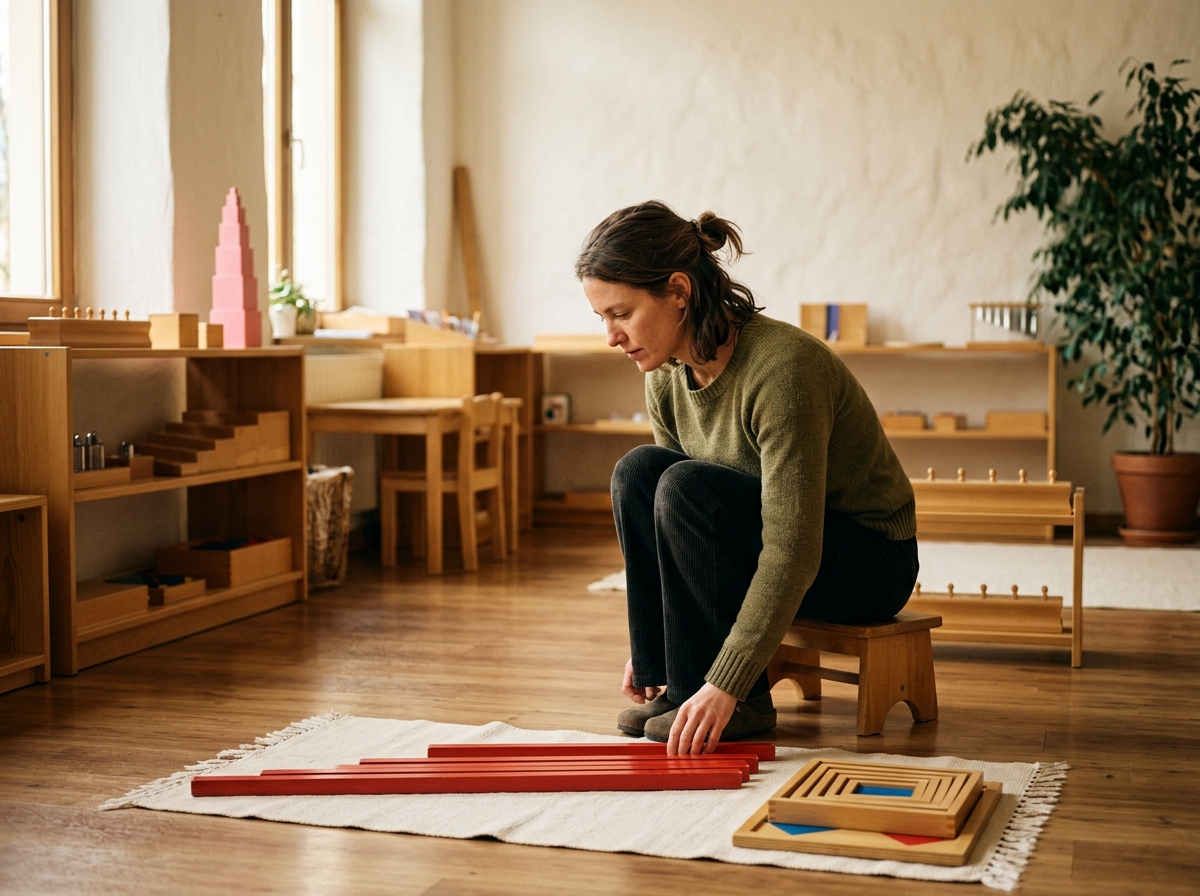
A space designed for ethical making — where hands build minds and develop respect for materials. Every tool is cared for. Every material is valued. Students learn that creation carries responsibility for what is created.
→ Explore The Innovation Lab
“The hands are the instruments of man's intelligence.”
— Dr. Maria Montessori
The Ethics of Materials

The Hand That Builds the Mind — And Conscience
Dr. Montessori observed that children build their intelligence through their hands. But there is more. When the hand works with materials, it develops relationship with those materials. The child learns to respect the weight of the Pink Tower cube, the fragility of the glass pitcher, the living nature of clay.
This is the foundation of ethical making: respect for materials, care for tools, awareness that everything we touch has its own nature that must be honoured. The hand that builds the mind also builds sensitivity to matter — living and non-living.

Creation Carries Responsibility
Our observations with children aged six and beyond revealed that the hands want more than manipulation. They want to create, to design, to construct. But creation carries responsibility. The child who makes something is responsible for what they make.
The Innovation Lab serves this need — the need to create with conscience. Every project includes the questions: What is this for? Who does it serve? What are its consequences for living and non-living systems?
Tools Across Development
Our curriculum introduces five hundred tools across eighteen years — each expanding capability, each requiring care.
Control of Error: Ethical Learning
We celebrate the "broken model" — the prototype that failed. But we extend control of error to ethical learning. When a design wastes material, when it could harm — the student experiences consequences.
Conscience forms not through rules imposed, but through consequences experienced.

From Making to Serving
Every project includes: Who is this for? Does it serve genuine need? Does it heal or harm? Does it regenerate or extract? Students who filed patent applications evaluated them not just for novelty but for benefit.
The question is never just "Can I make this?" It is always also "Should I make this?"
The Conscientious Creator
“We may define a scientist as one who... has felt so passionate a love for the mysteries of nature that he forgets himself.”
— Dr. Maria Montessori
The Innovation Lab produces conscientious creators — makers who ask at every step: Does this serve life? Does this honour the Earth? The hands that learned care through pouring now create with care. The respect for materials learned at age two shapes design decisions at age sixteen.
Read
Is Montessori Right for Your Family?
A practical guide for parents evaluating Montessori education, developmental independence, and home-school alignment.
Montessori vs Traditional Education: What the Research Shows
Understanding how self-directed work and multi-age classrooms build lifelong focus, critical thinking, and intrinsic motivation.
How to Keep Children Connected to Nature: Six Small Habits at Home
Simple, daily habits parents can introduce at home to foster a deep connection to nature and sensorial learning.
What Do Children Draw When Asked About Life? Trees and the Sun
Observations from our art and cosmic education environments on how children perceive the living world.