Real learning Montessori is a phrase the movement uses often enough that it has started to lose precision. Schools market real learning. Curriculum brochures promise real learning. Parents looking for an alternative to conventional schooling are asked to recognize real learning when they see it. The word does honest work — but only when the school using it can describe, in concrete terms, what real looks like in practice.
Earlier this month, our Research Head Sreemoyee Chakraborty published a case study documenting a four-session palaeontology program she ran with twelve adolescents at our school in April 2026. Two earlier pieces have addressed what happened to the nine students who left across the four sessions and what the three students who stayed went on to do. This piece is about something the case study documents in detail but neither earlier piece addresses as its central question: what the seventy-two-page case study calls unsimplified material, and what that phrase actually contains.
What does real learning in Montessori actually require?
Real learning in Montessori, at the adolescent stage, requires that the work the school offers be unsimplified. The case study is explicit about what this means in this specific program:
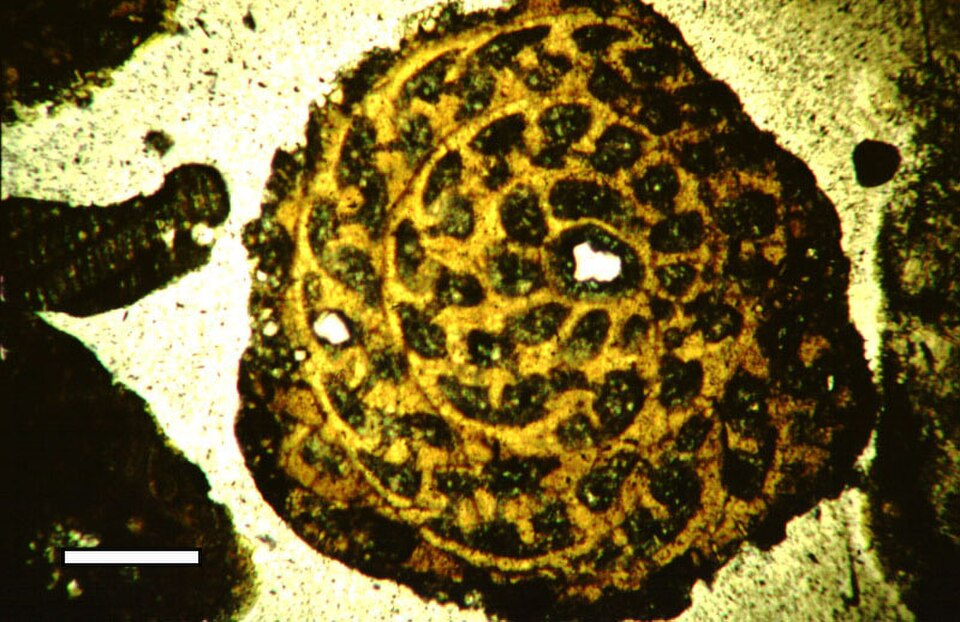
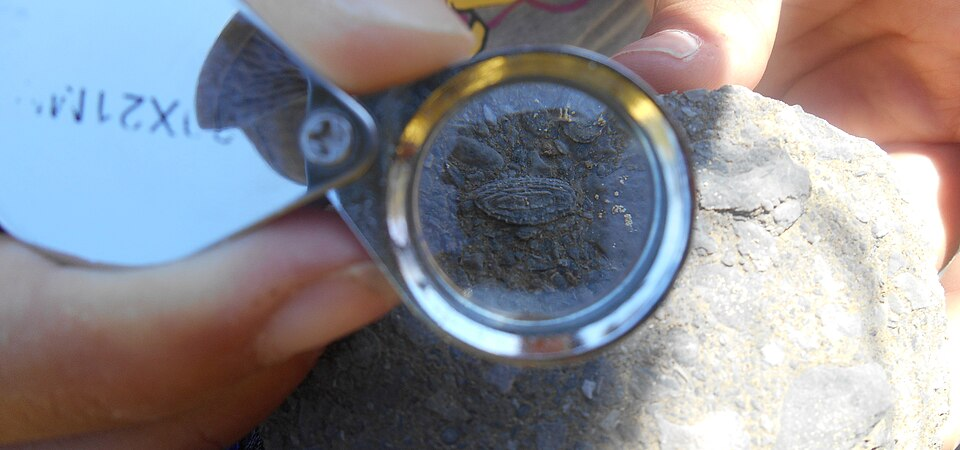
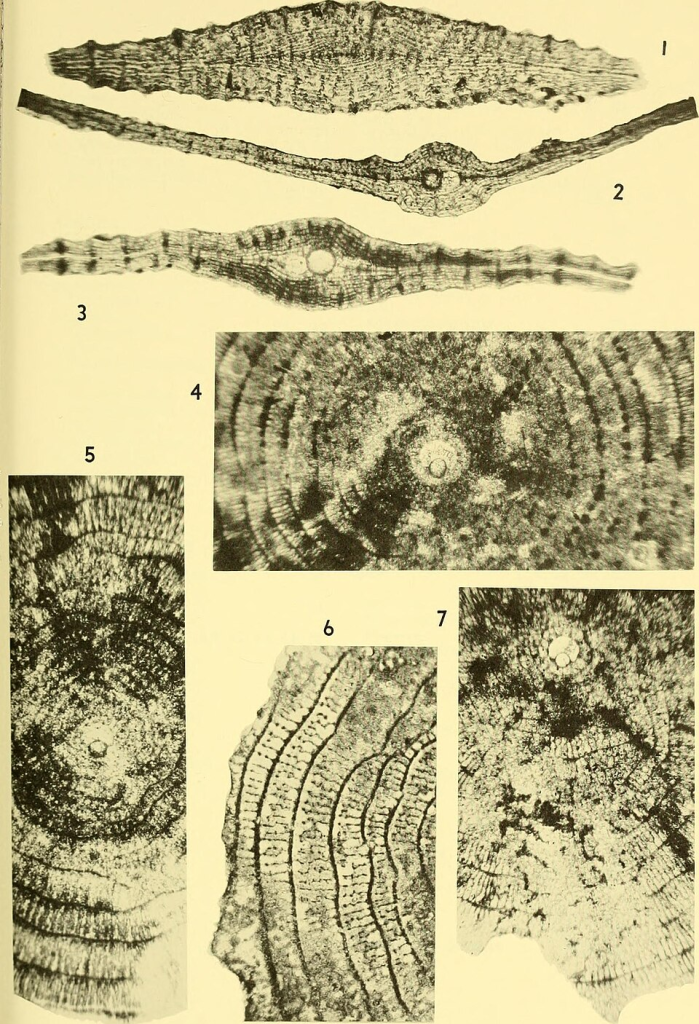
Students were given the actual scientific material with the actual nomenclature — Discocyclina, Nummulites, Asterocyclina, Assilina, Alveolina — and learned to assess sectional orientation. No simplification.
Five Latin genus names. Five microscopic foraminifera identifications. Sectional orientation work — the standard palaeontological skill of distinguishing axial, equatorial, and oblique cuts through a shell that may be less than a millimetre across. The students used real thin sections from the Fulra Limestone of the Kutch Basin, the same Eocene horizon that yields the vertebrate fossils Sreemoyee’s collaborative research engages with. They used a real microscope. They worked from actual scientific keys. Nothing was renamed, paraphrased, redrawn for accessibility, or replaced with a simpler analogue.
This is what unsimplified means in practice. It is not a marketing word. It is a structural commitment about what the school agrees to put in front of an adolescent.
Unsimplified is not a marketing word. It is a structural commitment about what the school agrees to put in front of an adolescent.
How does unsimplified material differ from what other schools offer?
Most schools — Montessori-named and otherwise — simplify scientific material for adolescents in at least four ways, often without recognising they are doing so. Each of these simplifications is small. Together they produce a fundamentally different material experience for the child.
- Vocabulary is renamed. Discocyclina becomes a kind of disc-shaped fossil. Sectional orientation becomes the angle you cut the fossil at. The child encounters a friendly substitute rather than the working term the discipline uses. The substitute is easier to remember. It is also easier to forget, because it does not connect to anything the child will encounter later.
- Specimens are replaced with images. Real thin sections are replaced with printed photographs in a textbook. The child cannot rotate the specimen, cannot adjust the magnification, cannot vary the lighting. The specimen becomes a picture rather than an object — and the difference is large, because real identification requires manipulating the actual material under varying conditions.
- Identification is replaced with recognition. The child is shown an image and asked which one is this from a list of four options. The actual research task — given this specimen, what is it, and how would you know — is replaced with a multiple-choice exercise that hands the child the answer set in advance.
- Context is replaced with narrative. The geological context of the specimen — Fulra Limestone, middle Eocene, carbonate ramp setting — is replaced with this fossil is forty million years old and lived in the sea. The narrative is more memorable. It also strips away the information that lets the child eventually understand why the specimen is interesting to someone who does this work professionally.
The case study documents that none of these four simplifications were applied in our four-session program. The adolescents handled the actual material, learned the actual names, assessed orientation rather than recognised images, and engaged the geological context as part of the identification. These are unsimplified names.
Why does unsimplified material matter for adolescents specifically?
Real learning in Montessori at the adolescent stage matters more than it does at any other age — because the adolescent is at the developmental point where genuine professional work first becomes possible. The earlier years build the capacities; adolescence is when the capacities encounter material that asks something of them.
The case study makes the structural claim directly. Twelve adolescents joined the first session of our program. Three completed it. The three who stayed had not received different material from the nine who left — they had received exactly the same unsimplified material. What differed was their response to it. The work, offered without simplification, communicated to certain adolescents that this could become mine. To other adolescents, the same work communicated this is not for me. Both responses are honest. Both are valuable.
A program that simplifies cannot produce either response. A simplified program produces a third response: I can complete this. The student knows they have done what was asked. They do not know whether the work could be theirs, because the work has been arranged to be doable rather than to be theirs. They emerge with a grade rather than with a relationship to a discipline.
What does this mean for parents evaluating real learning in Montessori?
If you are evaluating schools for an adolescent — Montessori or otherwise — the most important question to ask is not whether the school does real learning. Every school answers yes to that question. The useful question is what the school’s adolescents are currently working on, in technical detail. What specific specimens, what specific vocabulary, what specific scientific keys, what specific identification problems. If the school cannot answer that question with the discipline-appropriate terms, the work is not unsimplified. If the school answers with friendly substitutes, the work is not unsimplified. If the school answers with images instead of objects, the work is not unsimplified.
Our four-session palaeontology program had twelve adolescents reading Discocyclina, Nummulites, Asterocyclina, Assilina, and Alveolina under microscopes from week one. Three of them are now working toward what may become a co-authored publication in a working palaeontological discipline. The two earlier pieces in this cluster address what attrition meant in that program and what the three who continued went on to claim as their own. This piece is about the material itself — and what it means, structurally, when a school agrees to put unsimplified work in front of a teenager and let them choose what to do with it.
That is what real means in real learning in Montessori. Not the word. The work the word describes.
Authors:
Blue Blocks Micro Research Institute is the research arm of Blue Blocks Montessori School in Hyderabad, India. Our research focuses on Montessori adolescent education, with contributing work across palaeontology, satellite engineering, and developmental psychology.
Sreemoyee Chakraborty, Research Head, Blue Blocks Micro Research Institute. Author of the case study When Children Enter Deep Time: A Case Study of Adolescent Engagement with a Palaeontological Research Problem at the Blue Blocks Erdkinder Environment (Blue Blocks Micro Research Institute, 2026, DOI 10.5281/zenodo.20019376). ORCID: 0000-0001-5180-156X.