Teaching children to think before answering is one of the quieter skills a school can build, and one of the hardest for parents to protect at home.
Most days, we do the opposite by accident. A child pauses at a question, and we fill the pause for her. We prompt, we suggest, we soften, we hurry her along. We do this out of love, not out of laziness. We want her to feel confident. We want the moment not to be awkward. We are trying to help.
The help, repeated across years, teaches the child that pauses are not welcome. The fast answer is the safe answer. That someone will always step in before the thinking gets uncomfortable.
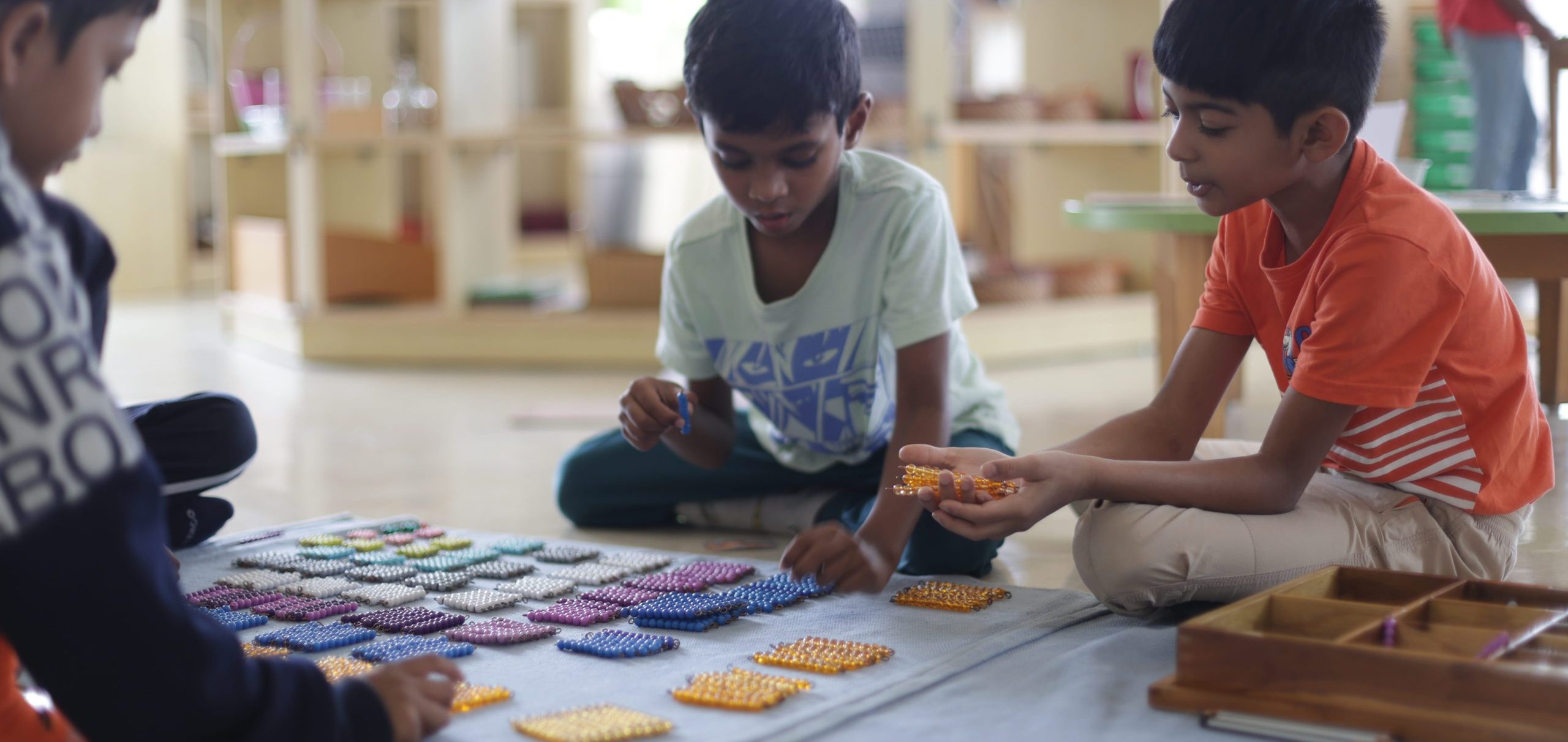
The whole of Montessori pedagogy is built to reverse this, gradually and structurally, in a way that classroom rules or parenting workshops cannot.
What teaching children to think before answering really mean
Thinking before answering is not caution. It is not hesitation. It is not shyness dressed up as wisdom.
It is the small internal act of noticing that a question has been asked, deciding what the question is actually asking, searching for what you know that might address it, choosing one thing to say, and only then speaking.
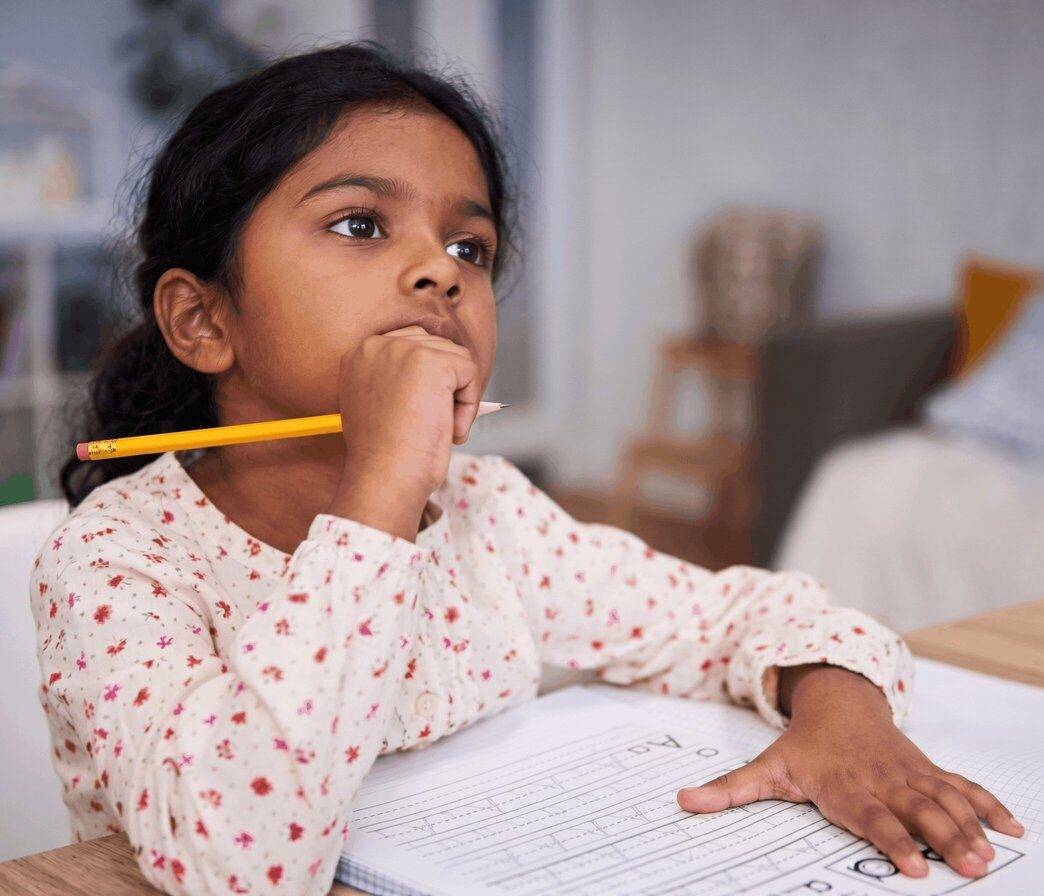
A confident adult does this in half a second, and no one notices. A young child, at the beginning of the skill, needs longer. Sometimes several seconds. Sometimes the length of a sigh, or a small movement of the hand, or an um held in the air like a bookmark.
The bookmark is not confusion. It is the child telling you her mind is in motion.
If the child has been given years of practice in an environment that treats the bookmark as a normal part of thinking, the pause becomes reliable. It becomes something she can trust her own mind to use. That is t
he skill.
This is not only a Montessori observation. In the 1970s, the American education researcher Mary Budd Rowe measured how long teachers actually waited after asking a question. The average was under 1.4 seconds.
When Rowe trained teachers to wait three seconds instead, the children’s responses grew longer, more logical, more speculative, and more likely to arrive at all. Her original study is published in the Journal of Research in Science Teaching (DOI: 10.1002/tea.3660110309).
Robert Stahl later extended her work into what he called think-time, showing that the same three-second threshold applies whether the silence follows a teacher’s question or a child’s answer. The pause is not empty time. It is the cognitive work of choosing.
“Um. Wait. Study.”
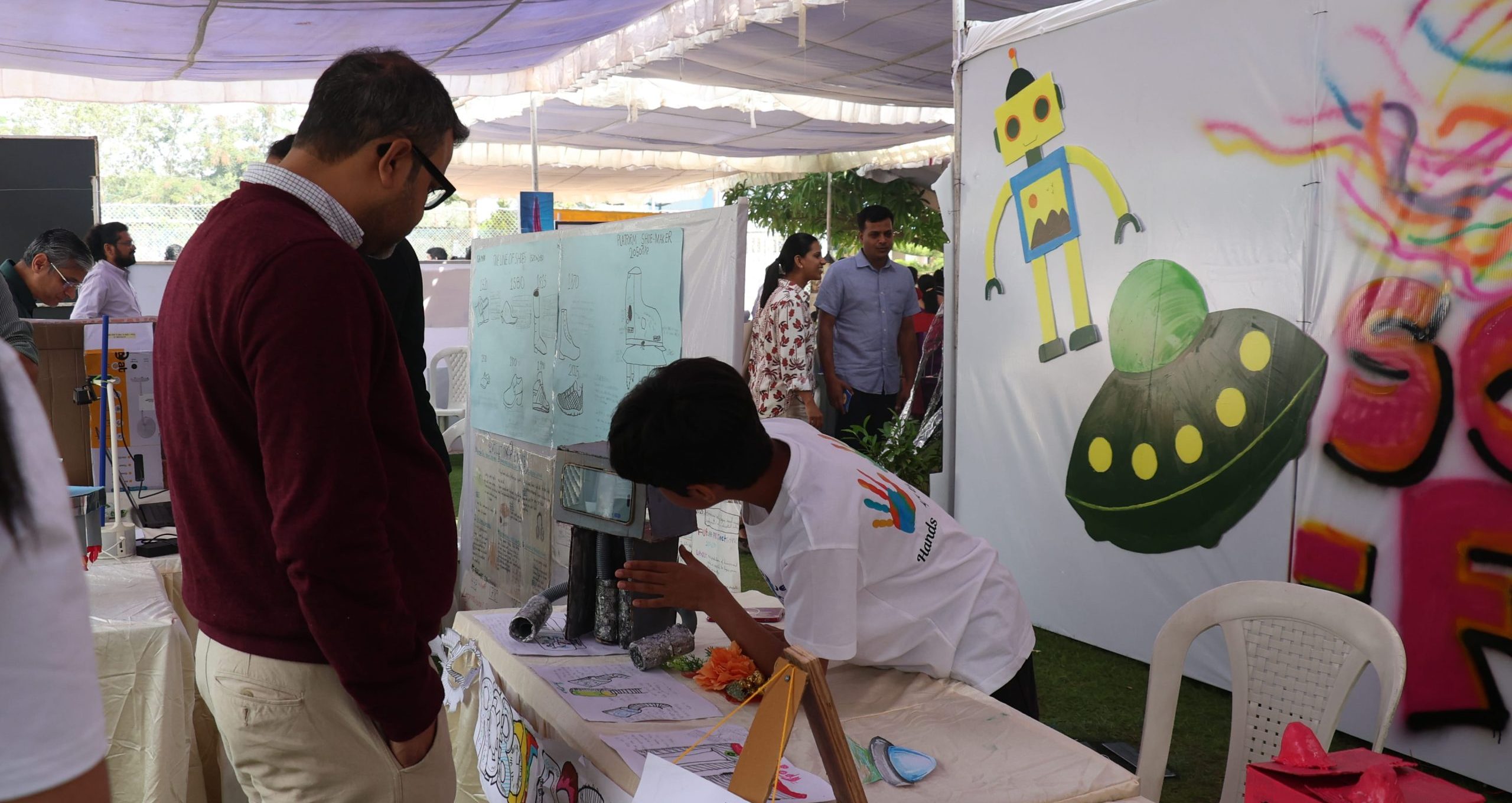
A child at one of our events answered a big question this way. The question was, what will shape a better world in 2050? She was six.
She paused, and the three syllables came out one at a time.
Um. Wait. Study.
Um was her permission to think. Wait was her request that the adult in front of her slow down for a moment. Study was the answer she arrived at.
The answer itself is small, and the smallness matters. She did not name robots, or artificial intelligence, or empathy, or climate. She named the thing she does every day that she believes matters. That is what an honest six-year-old answer looks like when the six-year-old has been trusted to think.
Most children in that setting, on a busy day with cameras and visitors, would either freeze or rush. She did neither, because in the environment she has spent every school day since she was three, the pause has been treated as work, not weakness.
The art of stepping back
The other half of this skill lives with the adults around the child, and it is where most of the difficulty sits.
Maria Montessori’s method, developed and refined across her lifetime, asks the adult to do something counter-intuitive. When the child is thinking, the adult is not to help. Not to prompt. Not to fill the silence. Not to soften the question. Not to praise the child for trying. Nothing.
Just to stay present, quietly, and let the thinking happen.
We call this the art of stepping back. The art is real because stepping back is hard. Watching a child struggle to answer feels, to most adults, like watching someone drown a little. The instinct is to reach.
But reaching interrupts the thinking. The child registers that the adult has arrived to rescue her. The next time a question is asked, she waits an instant less before speaking, because she has learned that the adult will speak for her if she doesn’t. Over years, that instant shrinks toward zero.
Stepping back is the opposite. The adult stays. The room stays. The question stays. And the child, given the space, does the internal work she is capable of doing.
Over time, the art becomes ordinary. The child grows up knowing that a pause is a place adults will leave her to work in, not a gap adults will rush to close. That knowledge, more than any curriculum item, is what teaches her to think before answering.
This is what psychologists now call executive function, the capacity to regulate one’s own thoughts and choose one’s own responses. Angeline Lillard, professor of psychology at the University of Virginia and one of the world’s leading researchers on Montessori education, has documented that Montessori environments structurally develop this capacity.
Her 2017 longitudinal study, published in Frontiers in Psychology, found that children in high-fidelity Montessori settings significantly outperformed controls on measures of self-regulation (DOI: 10.3389/fpsyg.2017.01783). Self-regulation at age four is a strong predictor of health and life outcomes at age thirty-two. The pause before answering is one small, observable form of this larger capacity.
What this asks of parents
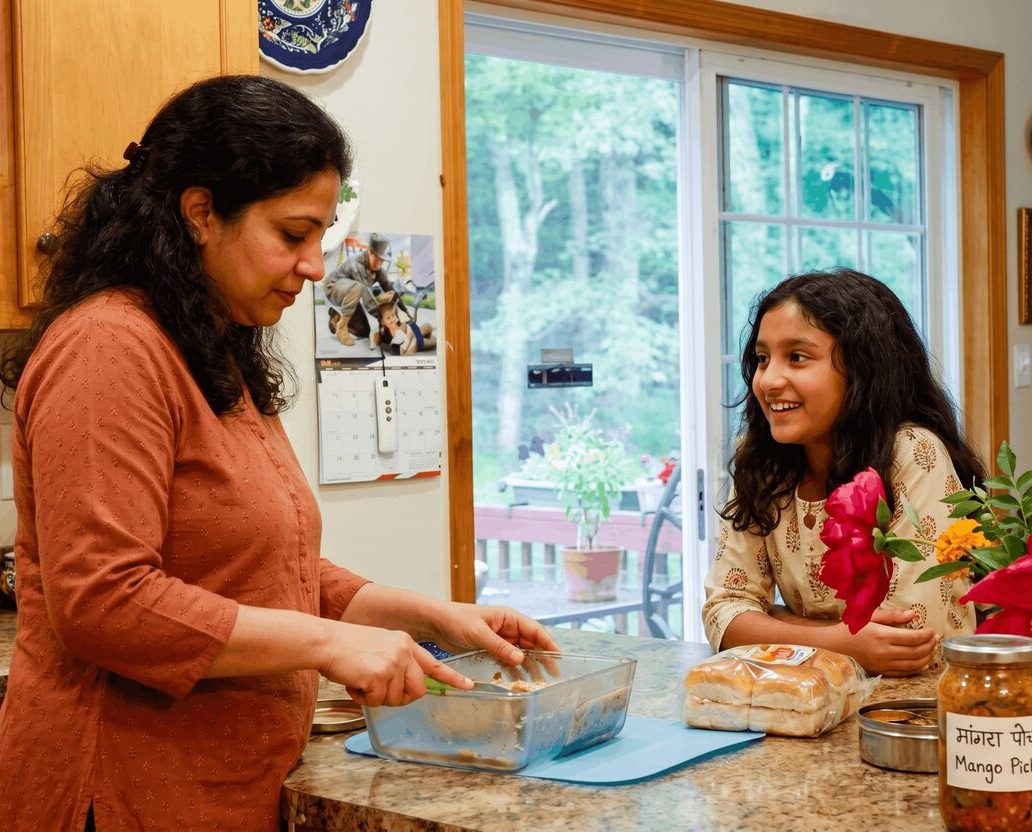
You do not need a Montessori classroom to practice the art of stepping back. You need only the willingness to leave a small silence unfilled once or twice a day.
Ask your child a real question. Not a test question, not a routine one, a real one. And then wait, without helping. Ten seconds. Twenty. Do not offer choices. Do not rephrase. Do not fill the silence with a smile that says it’s alright if you don’t know.
Just wait, the way you wait for a kettle. Something is happening. It is not visible yet.
Then let her answer, whatever the answer is. Even if it is small. Even if it is not the answer you were hoping for. Even if the answer is another pause.
Do this for a week. You will notice something you did not know was missing.
Teaching children to think before answering does not require a technique. It requires an adult who has learned to trust the pause.
The wait-time research and the executive-function literature converge on the same conclusion Maria Montessori arrived at a century earlier by observation alone: children need protected silence to think.
The child does the rest.
Related Blogs:
How the same disposition prepares children for the unpredictable world of 2050
Why boredom in childhood is the doorway through which real thinking often enters.
What Our Research Shows:
“When Children Own the Research Instrument: A Cross-Study Analysis of Child-Driven Inquiry Across Five Contexts”, Blue Blocks Micro Research Institute (2026), DOI: 10.5281/zenodo.19840991.
Blue Blocks Parental Observation: Observed Intensity and Parental Response During Sensitive Periods in Montessori Children”, Pavan Goyal, Blue Blocks Micro Research Institute (2026), DOI: 10.5281/zenodo.20791908.
Author:
Munira Hussain, Co-founder and Director of Pedagogy, Blue Blocks Montessori School; Secondary Investigator, Blue Blocks Micro Research Institute. AMI Auxiliary Trainer and co-author of Lining the Nest. Three decades of Montessori practice. ORCID: 0009-0003-5904-6206. LinkedIn.