





The Three Streams: How Blue Blocks Brought Research Methodology to a Student Satellite Mission
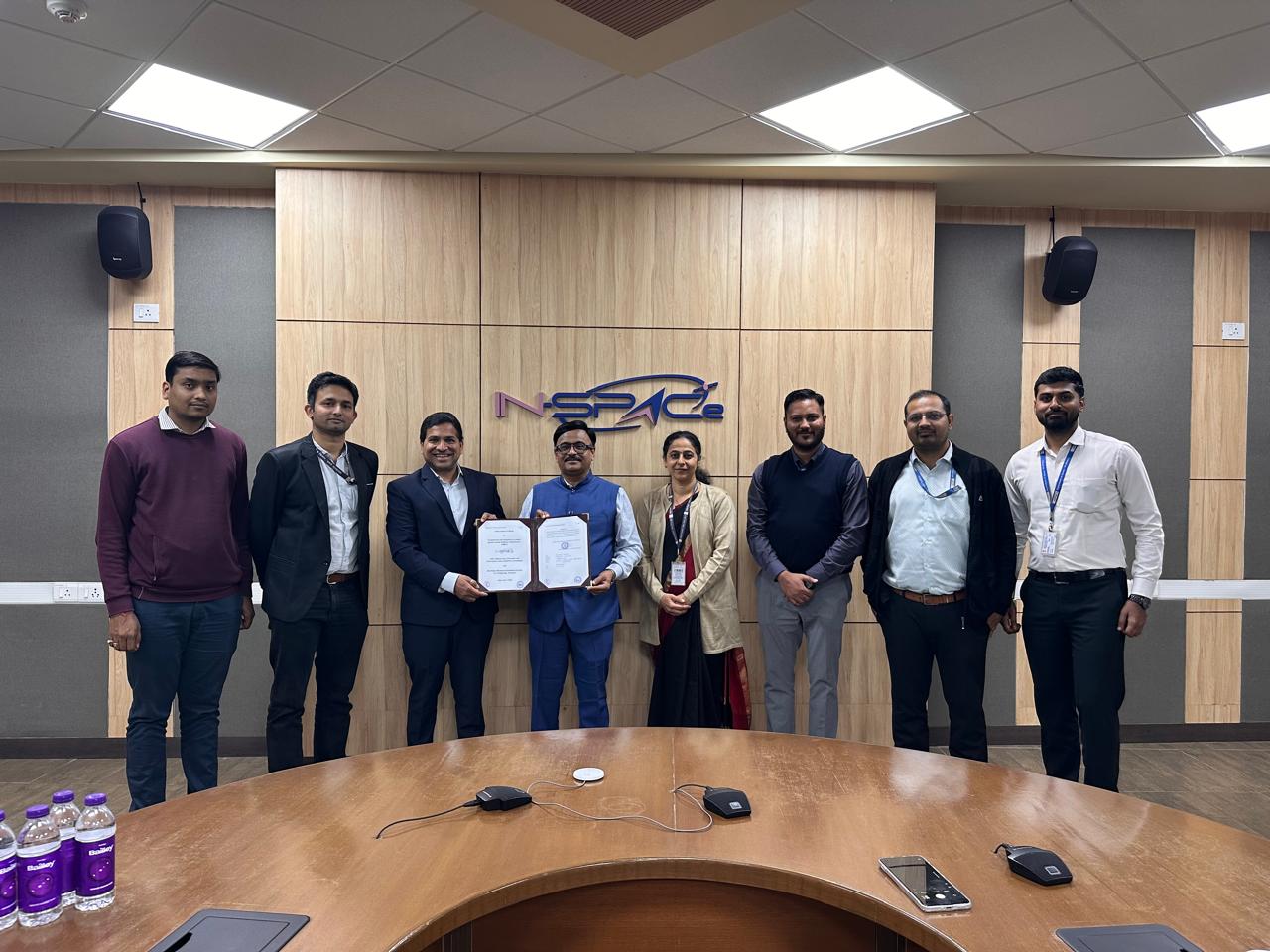
The first iteration of the Students of Blue Blocks (SBB) satellite — SBB-1 — was the work of the adolescent cohort at Blue Blocks Montessori School in Hyderabad: the concept, the design, the iteration cycles, the qualification: all of it was theirs. The school enabled the work; Pavan Goyal, in his role as Principal Investigator, advised on the institutional and regulatory steps an adolescent-led aerospace project must work through to reach a launch pad. The payload was authored by the children. School-based educational research, in our usage at Blue Blocks Micro Research Institute, is what comes after.
Blue Blocks Micro Research Institute entered the SBB story not as the designer of the program, but as its researcher. Specifically, BBMRI’s research instrument engages the SBB story from the moment the work crossed an institutional threshold — the issuance of the IN-SPACe authorisation certificate (PMA/IN-SPACe/AUTH/2026/115) on 9 January 2026 — and continues across the launch event, the PSLV-C62 launch anomaly of 12 January 2026, and the post-event observation period. In our usage, school-based educational research is what BBMRI conducted across that arc.
The three observation streams below describe the research instrumentation BBMRI ran across the post-authorisation period. The streams are not a design template for the satellite program. They are a research methodology applied to an existing student-led program, intended to produce records that can confirm or falsify claims about what the children carried, learned, and demonstrated.
The reader for this piece is anyone working at the intersection of school practice and research methodology — Montessori practitioners considering how to instrument their environments, school-based researchers, academic partners considering collaboration with BBMRI, or graduate students wondering what rigorous practice-research can look like in a school setting.
Stream A — The engineering record as research artefact
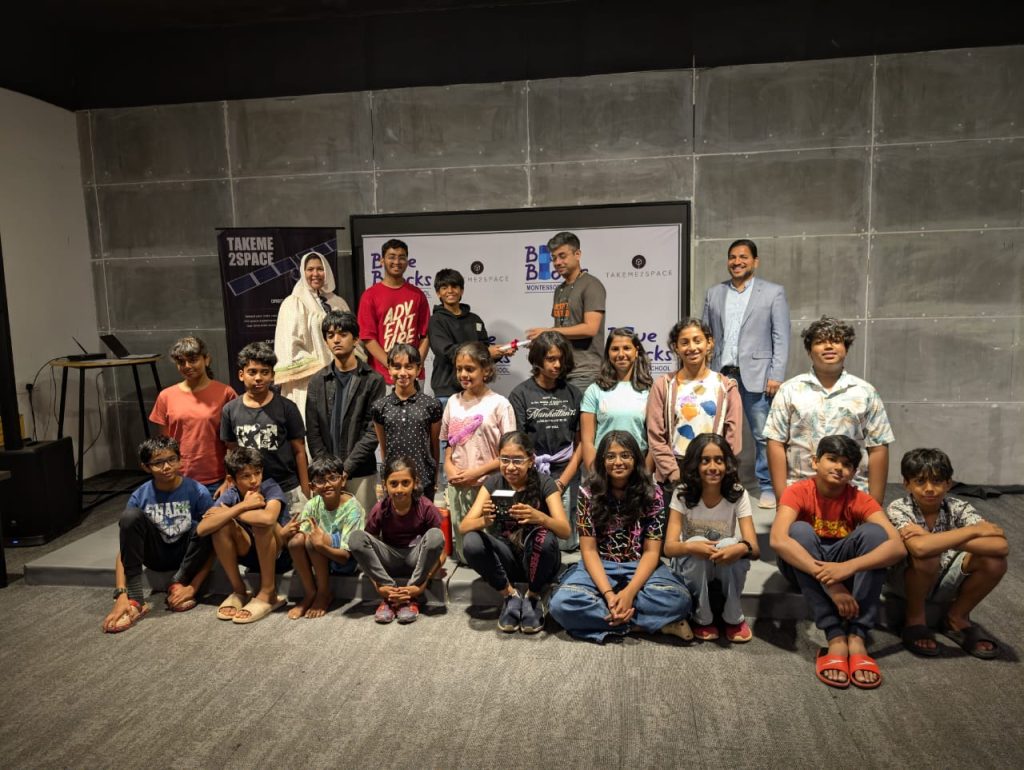
Stream A is the school’s engineering documentation, taken into BBMRI’s research corpus as a research artifact. Design specifications. Materials and component selection. Sub-system testing logs. Environmental qualification campaigns. Integration documentation with the aerospace partner. The formal authorisation file was submitted to the Indian National Space Promotion and Authorization Centre (IN-SPACe) and the resulting certificate.
The substance of Stream A is not unique to BBMRI. Any aerospace organization generates this kind of documentation when it builds a payload destined for spaceflight. What makes Stream A function as a research artifact rather than a corporate engineering archive is the authorship trail the school maintained — every design decision, every iteration, every qualification result is documented against the adolescent who originated it, with adult specialist input recorded as consultative rather than directive. BBMRI takes this archive into its research corpus precisely because the authorship trail makes it externally verifiable: a reader can examine which child originated which design choice, and how that decision propagated through the qualification campaign.
Stream A retains its full validity as research artefact regardless of launch outcome.
This matters because it forecloses one of the most common methodological objections to school-built engineering: that the school cannot really claim its children built the thing because there is no honest way to separate adult contribution from adolescent contribution. Stream A’s authorship trail makes the separation explicit, contemporaneous, and externally verifiable. The payload’s existence as a qualified, authorized aerospace artifact — with its child authors named in the record — is not contingent on the satellite reaching orbit.
Stream B — The learner-development record
Stream B is the part of the methodology that Blue Blocks Micro Research Institute ran directly. Specifically, embedded observation of the adolescent participants across the post-authorization, launch, and post-launch periods, conducted under the Blue Blocks Embedded Observation Protocol (BEOP v1.0). The protocol specifies high-frequency, low-complexity observations recorded by adults working alongside the children — not survey instruments administered at intervals, not standardized tests, not teacher impressions written up at the end of the year, but contemporaneous observation of what the children were doing, deciding, and saying as the institutional milestones of their own program unfolded around them.
Any school could observe its children. In practice, very few do — observation that meets research-grade standards requires protocols, training, time-stamped recording, and the discipline to record what is actually observed rather than what the school would prefer to have happened. BEOP is the artefact through which BBMRI has made this transferable to any other practitioner serious about school-based educational research.
What Stream B uniquely captured during the SBB-1 arc was the dataset that no conventional school could have generated: contemporaneous observation of an adolescent cohort across the days and weeks following the launch anomaly in which their payload was lost. That observation window is the most scientifically valuable part of the SBB-1 corpus. Adolescents responding in real time to an external, public, irreversible event of this magnitude is a research subject that most school environments cannot study, because most school environments do not place adolescents in front of events of this magnitude in the first place. This is what we mean when we describe Stream B as rare data. The records are governed by the Child Data Classification Standard (CDCS v1.0); any release will follow the protocols defined there.
Stream C — The institutional and regulatory record
Stream C is the documented account of the post-authorisation institutional, regulatory, and aerospace-partner interactions that BBMRI observed across the SBB-1 arc. The correspondence with IN-SPACe in the days between authorisation and launch. The launch service interactions. The institutional decisions the school took in response to the launch anomaly. The version histories of the documents at each post-authorisation stage.
Stream C is the artefact that most resembles ordinary institutional record-keeping. Any organisation, in principle, could maintain it. The reason it functions as research data in the SBB context is that it is the protocol record for any school or research group considering a comparable arc. What does it actually take to put a school-built payload through a national space authorisation process, get to the launch pad, and respond institutionally when a launch event does not go to plan? The honest answer to that question lives in Stream C — the sequence of approvals, the regulatory thresholds, the documentation requirements, the aerospace-partner interaction patterns. Every other school considering this arc benefits from having Stream C exist as a public protocol artefact rather than reconstructing it from scratch.
Why three streams together are different from any one alone
Each stream individually is the kind of record some other organisation could produce. Stream A is what an aerospace company already produces — what BBMRI did was take the school’s archive into its research corpus and treat it as research data. Stream B is what a careful longitudinal child-development research group produces — what BBMRI did was run such a protocol on a real student-led program at a moment of consequential, externally-stakeholder events. Stream C is what an institution with disciplined record-keeping produces — what BBMRI did was preserve the post-authorisation portion of that record as a public protocol artefact.
What is unique — and what makes the post-authorisation arc a research instrument rather than three parallel exercises — is that all three streams run on the same arc, with the same cohort, against the same payload, with timestamps that allow events in one stream to be cross-referenced against events in the others. When a particular regulatory milestone appears in Stream C on a particular date, what does Stream B record about the cohort’s response to that milestone in the days that follow? When the launch anomaly occurs, what is the joint signature across all three streams in the days that follow?
These cross-stream questions are the questions BBMRI’s longitudinal corpus is built to answer over years and across multiple SBB iterations. They are not answerable from any single stream alone. They are not answerable from a school program that did not have all three streams running on it.
Some equivalent multi-stream architecture is necessary if a research group’s claim to study a school program is to mean what the words say.
The argument is not that BBMRI’s three-stream architecture is the only way to instrument school-based educational research. It is that some such architecture is required for the claim to hold at all. The full methodological substrate is documented in the Blue Blocks Micro Research Methodology. Academic partners interested in the cross-stream analysis of the SBB-1 corpus, subject to CDCS-compliant release, can write to research@blueblocks.in.
What this is for
The three-stream architecture set out above is not a checklist for a school program to look more rigorous. It is the structural condition that allows the eventual claims this corpus produces — about adolescent attention, persistence, response to consequential work, response to consequential loss — to be tested against a record other people can examine.
Last week at the 30th International Montessori Congress in Mexico, the adolescents of Blue Blocks Montessori School took the stage and revealed what they had been working on through the academic year following SBB-1. The new design choices that distinguish SBB-2 from SBB-1 — what has changed, why, and what they have spent the year building — are theirs to announce, and they did. BBMRI’s role with respect to SBB-2 is the same as with SBB-1: to instrument the post-authorization arc, when it comes, with the same three-stream architecture.
The point of running three streams is not that doing so is sufficient. It is that doing so makes the eventual claims about adolescent development falsifiable.
A research design whose claims cannot be falsified is not a research design.
Author: This methodological piece was prepared by Blue Blocks Micro Research Institute. Principal Investigator: Pavan Goyal, Founder of Blue Blocks Micro Research Institute and Founder of Blue Blocks Montessori School in Hyderabad. Holder of all four AMI Montessori diplomas (0–18). ORCID:0009-0009-8840-8505.