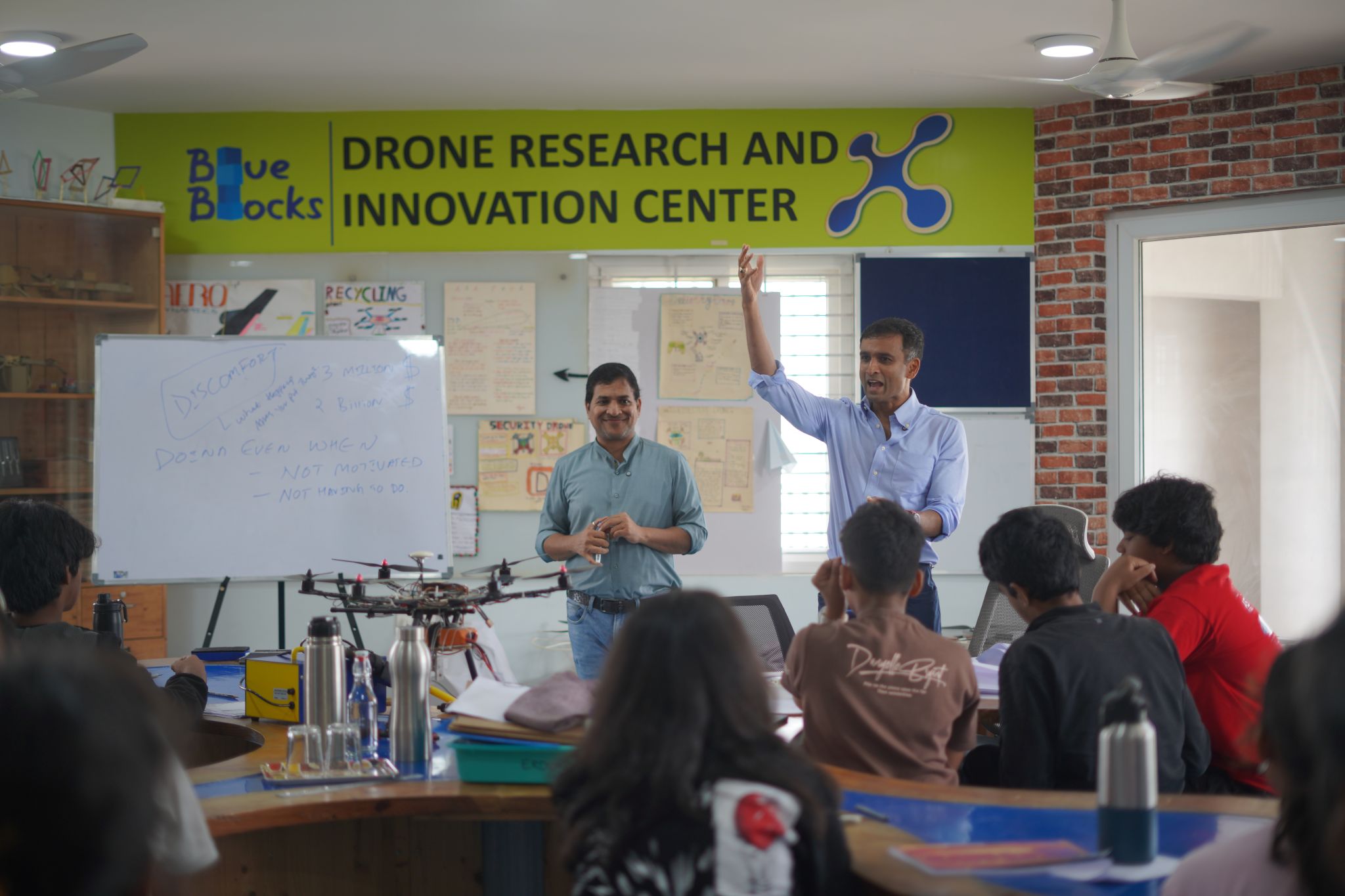
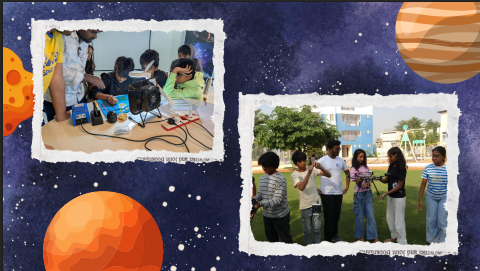
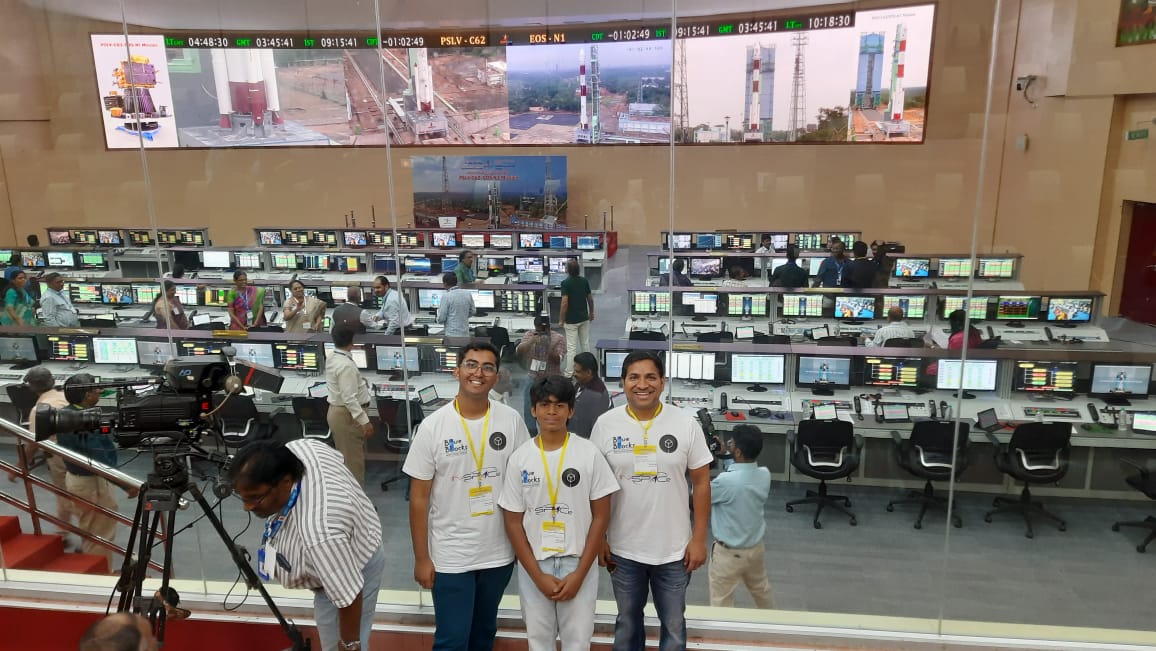
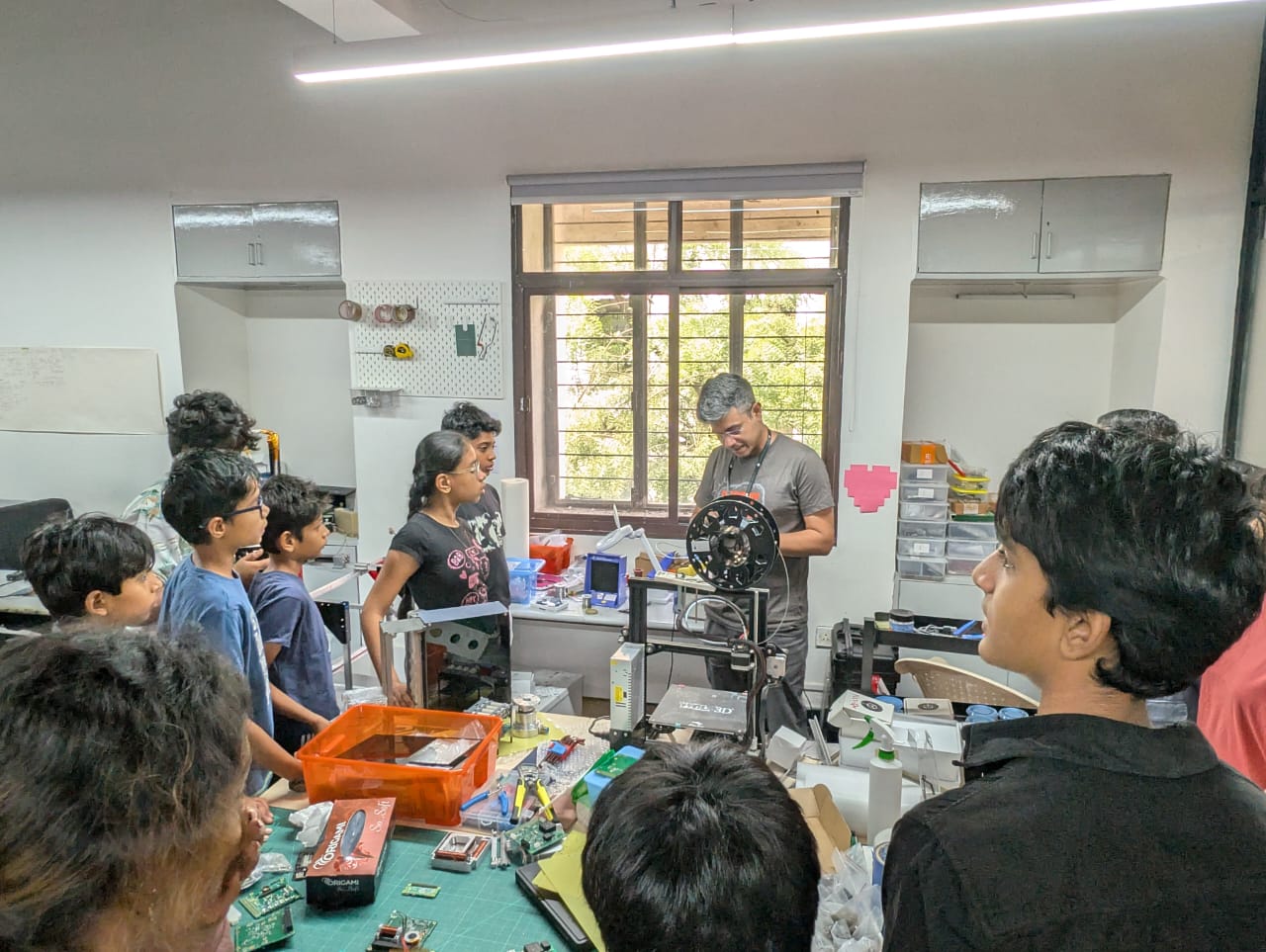
Three adolescents from Blue Blocks Montessori School in Hyderabad stood on the main stage of the 30th International Montessori Congress in Mexico, in front of 1,500 attendees from the global AMI community, and walked the audience through their work — from the foundational Montessori material every one of those 1,500 trained adults had once placed on a small mat with a three-year-old, all the way to a CubeSat that had reached an Indian launch pad earlier this year. The arc the three of them traced on stage — Pink Tower Montessori material at one end, the Students of Blue Blocks satellite at the other — is what made the audience cry. Not the loss of the satellite. Not the build details. The arc itself.
The three adolescents were the only Indian adolescents presenting on the main stage. They had practised the presentation word by word, through twenty to thirty rehearsals across the weeks leading up to Congress. They were also free to leave the script if they needed to — “You have practised enough. It’s okay for you to tell. You want to remember, you want to say something more, you want not to say something. It doesn’t matter.” That freedom from the script was given to them ten minutes before they walked on stage. They used it.
This is a reflection from the two of us — one of us in the audience, one of us coordinating from the back — on what those forty minutes did to a room of 1,500 trained Montessorians, and what we think happened in the moments when adults stopped clapping and started listening.
Why does the Pink Tower matter so much in Montessori?
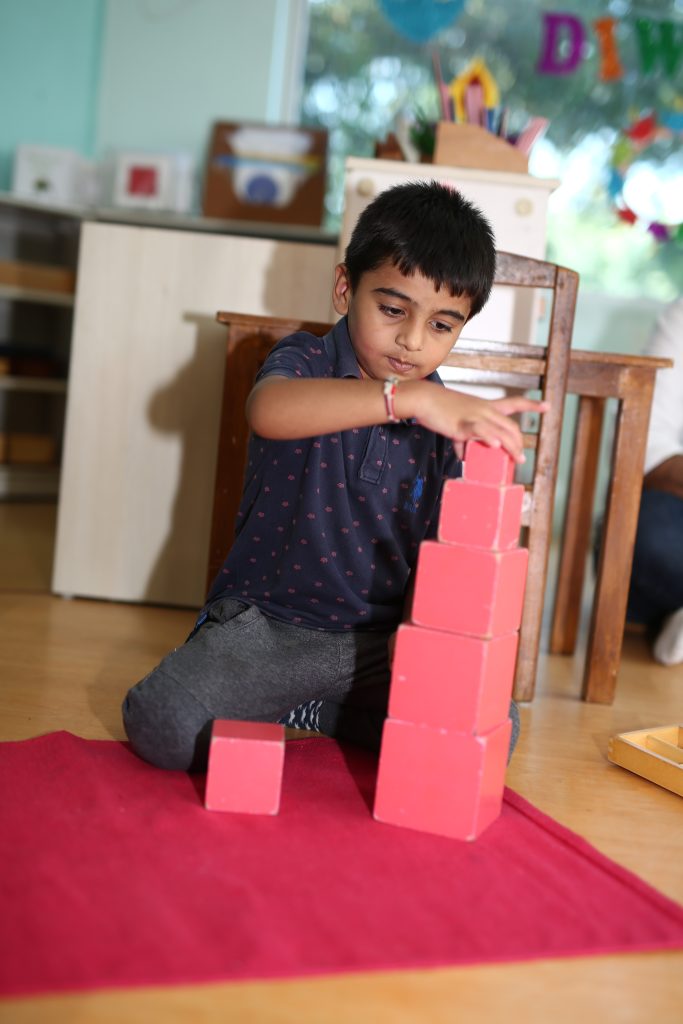
For anyone outside the AMI community, the Pink Tower Montessori material is one of the early sensorial materials in a 3-to-6 environment. Ten wooden cubes graduating in size from one centimetre to ten centimetres, painted pink, presented to a young child as an exercise in visual discrimination and the building of order. The youngest children in a Montessori classroom learn to handle the cubes with care, build the tower from largest to smallest, and notice in their hands the change from one cube to the next.
For the AMI community itself, the Pink Tower Montessori material is something more. It is the material almost every Montessori-trained adult has held, has presented hundreds of times to other people’s three-year-olds, has watched generations of children master. The 3-to-6 program is the heart of the global AMI community — for every ten 3-to-6 programs worldwide, there is roughly one other program at any age. The Pink Tower lives in muscle memory and shared meaning across the whole tradition.
The Pink Tower is the most recognizable shared object in Montessori practice. Almost every AMI-trained adult has placed those ten cubes on a mat with a child.
That is why what happened next mattered.
What made the AMI Congress audience cry?
The first moment came when the adolescents on stage made the connection explicit. The Pink Tower Montessori material was on a stand at the front. The CubeSat — or a model close enough to it that the audience read it the same way — was next to it. The adolescents walked the audience through the connection. From the smallest sensorial material a three-year-old first picks up, to an aerospace artefact that had been authorised by the Indian National Space Promotion and Authorization Centre and integrated onto a PSLV-C62 launch vehicle.
For the 1,300 of the 1,500 attendees who had never heard the Blue Blocks story before, this was the first glimpse of what the school’s adolescent program had produced. For everyone in the room, it was the connection between the youngest sensorial work they all knew and an outcome they had not imagined was possible from the same pedagogical foundation. People in the audience cried, and they were not the only ones — several adults later said they had not realised they were crying until they noticed it on their own faces.
The second moment came later. The adolescents spoke about the PSLV-C62 launch anomaly of 12 January 2026, in which their payload was lost. They described what they had done in the days and weeks following the launch. One of them said the line that landed in the room: we are Montessori in all sense. We don’t give up. We don’t get stopped by anything. The audience cried again.
The applause we hear at most conferences is a courtesy. The silence we heard at AMI Congress, before the applause, is what told us the work had landed.
This was not the polite extended applause that follows a well-prepared talk. It was a different register — visible emotional response from professionals who do not usually display it, followed by sustained silence, then a standing ovation that did not end quickly.
What does this say about Montessori adolescent programs?
The two of us have spent decades in this work — three decades for one of us, two for the other, both of us at the school we founded together. We have watched many Montessori presentations, in many settings, by many children and adults. We had seen earlier in the Congress what happens when a children’s presentation is well-meaning but unprepared. There had been other children’s sessions across the four days; some had been clapped politely; the audience had clapped through several rounds; the content had landed flat. We knew this happens. We were not certain our adolescents’ work would land any differently.
What we think happened, on reflection, is two things.
First, the audience saw work that had been done by the children themselves. The arc from Pink Tower to CubeSat was not metaphor. The adolescents had genuinely traced their own developmental journey through the Montessori materials and arrived at an aerospace project they had designed, iterated, and qualified. The audience could see that the children on stage were not reciting prepared content. They were speaking from what they had built.
Second, the audience saw what the adolescent plane of development is capable of when an AMI-guided environment honours it for a sustained period of years. Montessori adolescent programs are rarer globally than 3-to-6 programs, and many in the audience had never seen graduated adolescents from a Montessori upbringing speak about their own work in this register. The argument the children’s presentation made — without ever stating it — was that the Montessori arc continues, that it produces this, that the materials each adult in that room teaches to three-year-olds are part of a much longer architecture.
What happened in the three days after the presentation
For three days after the presentation, the adolescents could not walk down the streets of the venue city without being stopped. At eleven o’clock at night, returning from dinner, people stopped them for photographs. At the airport on the way home, attendees recognised them and came over to talk. Adults whose photographs the children appeared in came up to the children, not the adults; the children, not the adults, were asked to join the photographs.
This is not the response a workshop or a talk usually produces. It is the response to something that has shifted what the audience now believes is possible. The two of us watched the children become, for those three days, the visible centre of attention in a community where the children themselves are usually the work and the adults are usually the messengers. The reversal was deliberate, and it was right. The work belonged to the children. The audience knew it.
What this means for Montessori parents
If you are a parent considering whether the Montessori arc continues past the primary years, the answer this Congress gave is yes. Not in vocabulary. In the kind of work the audience saw, the kind of confidence the adolescents brought with them, the kind of public response that followed. The Pink Tower Montessori material a parent watches a three-year-old struggle to build is not a complete answer in itself; it is the first cube of a much longer tower the same child can build over years.
What the three adolescents from our school did on the main stage of the AMI Congress was complete one such tower.
Authors:Pavan Goyal is Founder of Blue Blocks Montessori School in Hyderabad and Principal Investigator at Blue Blocks Micro Research Institute. ORCID: 0009-0009-8840-8505. Munira Hussain is Co-founder of Blue Blocks Montessori School, AMI Auxiliary Trainer, and Secondary Investigator at Blue Blocks Micro Research Institute. Co-author of Lining the Nest.