







Teaching Teenagers Engineering: How Adolescents Convinced a Satellite Company CEO in 30 Minutes
When we approached Ronak Samantray — CEO and founder of TakeMe2Space, an Indian satellite company that builds and launches real spacecraft — about collaborating with our adolescents on a CubeSat, he was not sure adolescents could do this kind of work. He said so directly. That was the right response from him. Teaching teenagers engineering at the level required to build a flight-qualified satellite is not a claim any school should make casually, and Ronak’s professional caution was the appropriate first reaction from a CEO whose company’s reputation and time would be on the line.
We asked him for thirty minutes with the children. Not a presentation. Not a scripted tour. A direct conversation. He agreed. What happened in that thirty minutes is the substance of this piece.
Why a satellite company CEO was right to be skeptical
Most schools that approach a working professional with an our students would benefit from collaborating with you request are asking the professional to absorb risk. The risk is real. If the students cannot do the work, the professional has wasted weeks or months of their team’s time, possibly compromised a real project, and damaged their company’s relationship with whatever schools or institutions referred them. The CEO of a satellite company has every structural reason to say no when an unfamiliar school asks for an adolescent collaboration. Saying no is the default professional response, and it is the correct one until the school can give that professional a reason to believe the students are actually ready.
Ronak’s hesitation was not adversarial. It was the kind of skepticism a serious working adult should bring to a serious request. The job of the school, in that moment, is not to argue the children’s case verbally. It is to put the children in a room with the professional and let the professional ask them anything.
What 30 minutes with a CEO of a satellite company actually revealed
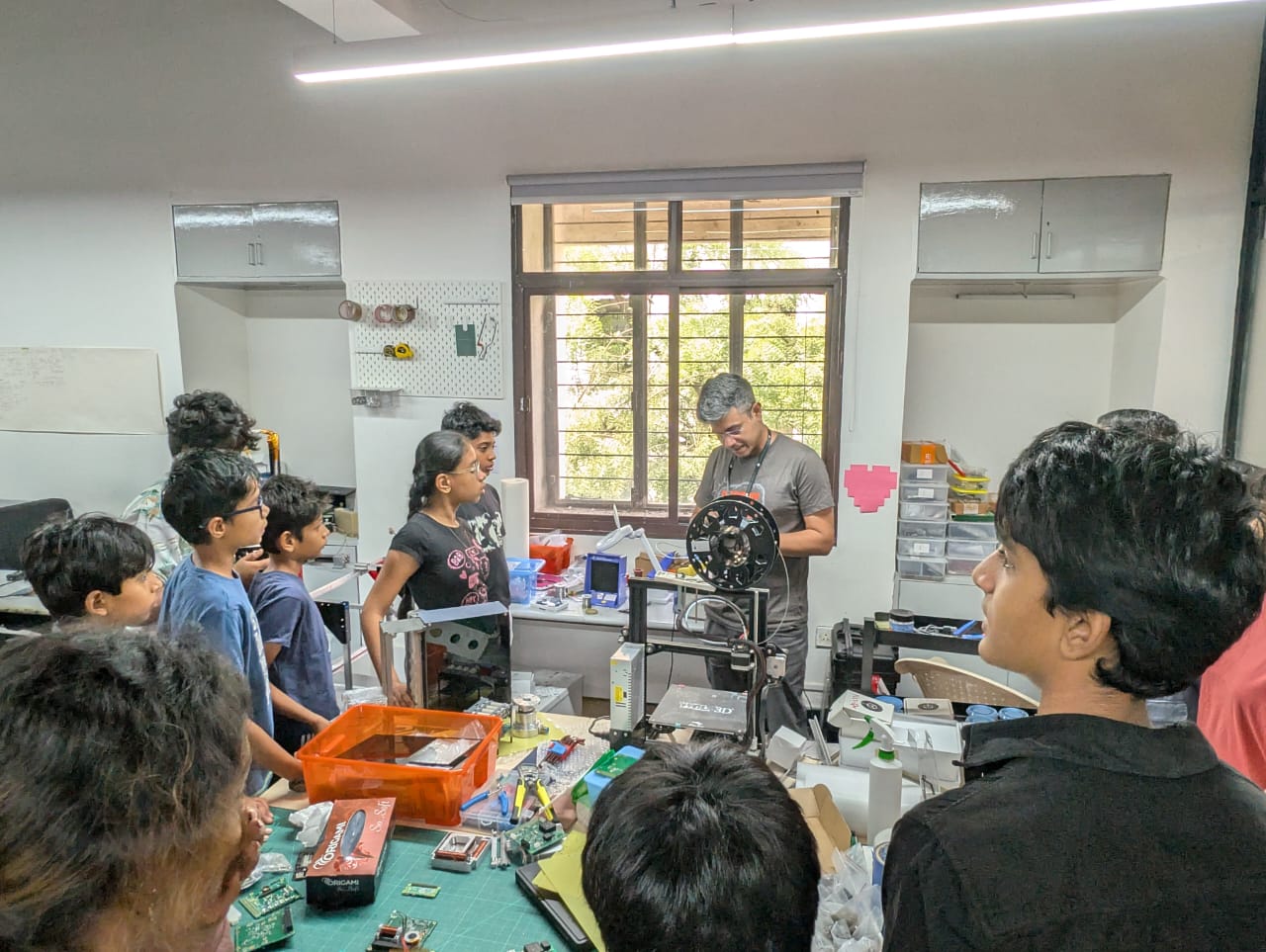
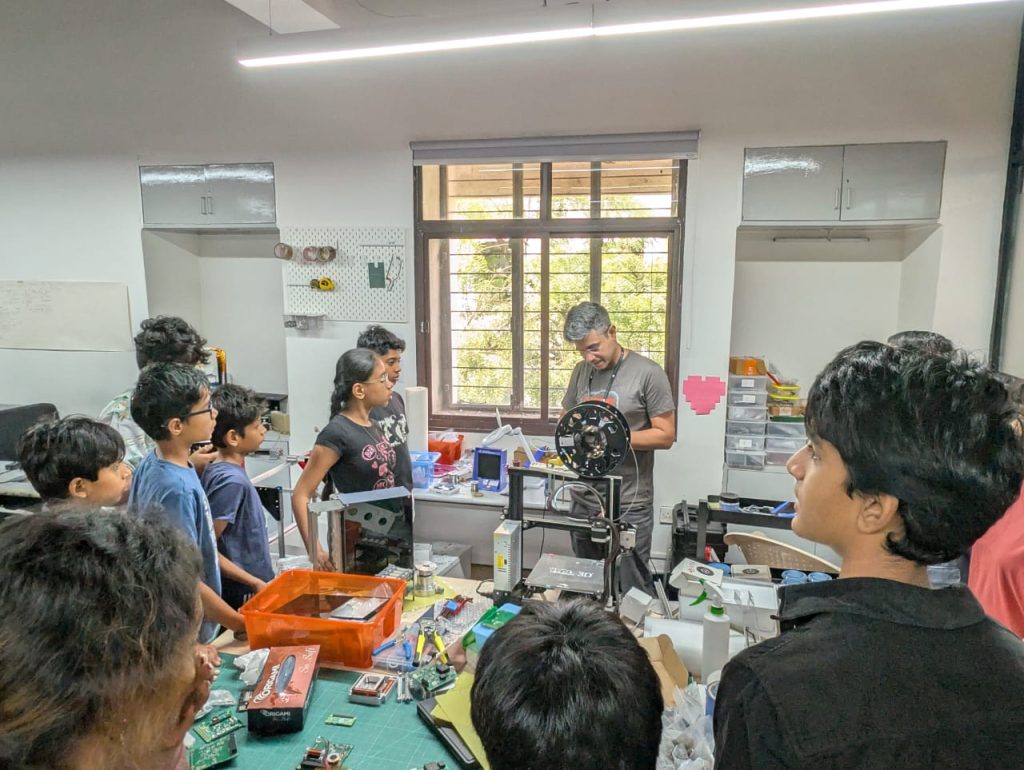
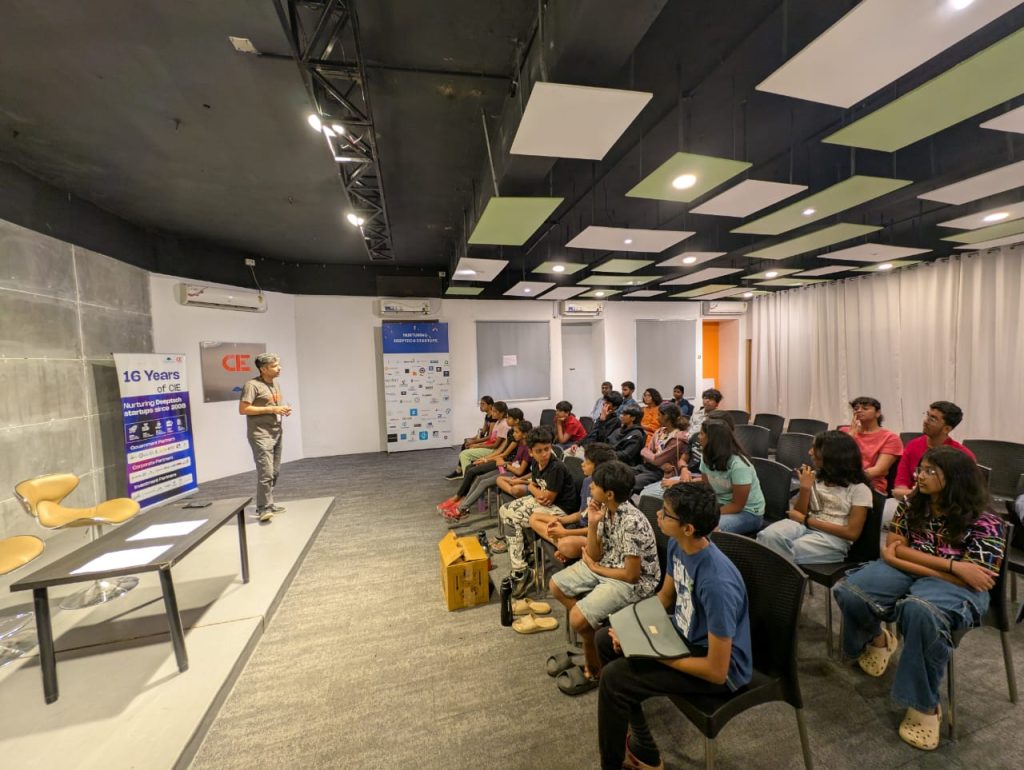
Ronak came to our space lab. He had recently sent his company’s first satellite to orbit and had brought materials from that mission. He explained what his team had done. And then he asked the children questions.
Twenty-eight of them, in sequence. He was not running a quiz. He was doing what an experienced engineer does when assessing whether a younger person can collaborate on a technical project — probing the foundational understanding that real work requires.
The questions he asked included: Are magnetic fields scalar or vector? What are wavelengths and frequencies? Why are space stations not aerodynamically designed? Three specific examples Sanshray, who was in the room, remembered later. Each question is a test of foundational physics understanding. Scalar versus vector is a question about whether a teenager can distinguish between quantities that have only magnitude and quantities that have both magnitude and direction — fundamental to any work involving fields, forces, or orbital mechanics.
Wavelengths and frequencies test whether the student understands how electromagnetic radiation actually works, which is non-negotiable for anyone designing satellite communications. Why space stations are not aerodynamically designed is a question about whether the student has internalised that there is essentially no atmosphere in low Earth orbit — and therefore no aerodynamic forces to streamline against. A student who has memorised that space stations are in space will fail this question. A student who has understood that aerodynamics requires atmosphere will answer it directly.
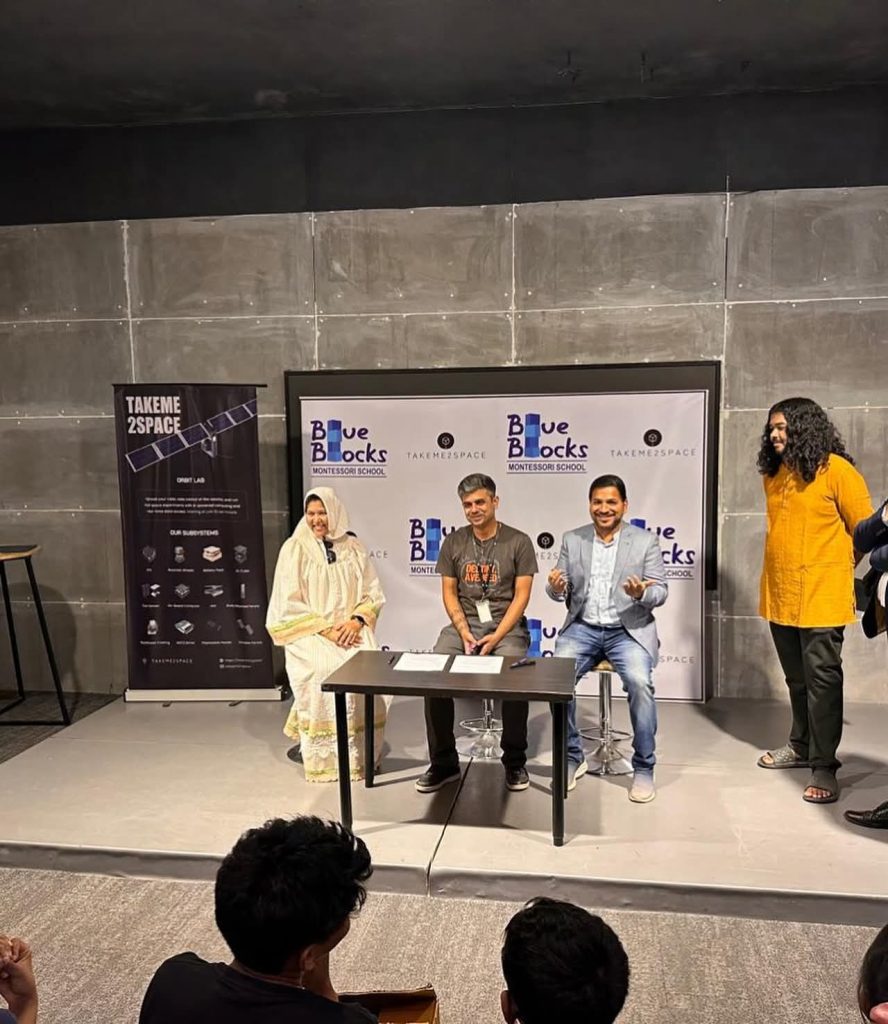
The children answered all twenty-eight. Ronak agreed to collaborate.
He was not running a quiz. He was doing what an experienced engineer does when assessing whether a younger person can collaborate on a technical project.
What teaching teenagers engineering actually requires
This is the part of the story that matters for parents and schools, more than the satellite mission itself does. The children did not answer twenty-eight foundational physics questions because they had been coached for that meeting. They answered them because, across the years before that meeting, they had been allowed to encounter the actual concepts — not simplified versions — in the laboratories the school had built, in the drone work the school had been running since 2019, in the elementary materials that had introduced them to scientific reasoning long before any of it was framed as engineering.
Teaching teenagers engineering does not begin at age fourteen with a topic and a project deadline. It begins much earlier, in the gradual treatment of the world as something the child can ask honest questions about and get honest answers from. By the time a teenager is asked whether magnetic fields are scalar or vector, the answer is either there or it is not. There is no way to coach the underlying capacity for understanding the question into existence in the days before a meeting. Either the years of preparation have done their work or they have not.
This connects directly to what we have written about earlier — that raising curious children is a decade-long project, and that the research identity that emerges in adolescents is the visible end of an arc that started much earlier. The capacity to answer twenty-eight unannounced technical questions from a CEO is the same capacity at a different ages.
What schools should be willing to test
Most schools that market adolescent programs would not survive a thirty-minute meeting like the one Ronak ran. Their students could perform on stage with notice. They could complete a project with a teacher’s framing. They could not stand in a lab in front of a working CEO and answer foundational questions about the science underlying the work they claim to be doing.
The honest test of an adolescent program is not whether its students can produce impressive deliverables under controlled conditions. The honest test is whether a working professional in the field — someone with no relationship to the school, no obligation to be encouraging, and real reasons to protect their own time — would, after thirty minutes with the students, agree to collaborate. That is the test our Erdkinder program has been built to pass, and it is the test parents should be willing to ask of any school claiming to do this kind of work.
The honest test of an adolescent program is whether a working professional would, after thirty minutes with the students, agree to collaborate.
What parents should look for when evaluating adolescent programs
If you are looking at schools for a teenager, the question to ask is not what the school does. Most schools can describe what they do persuasively. The question to ask is what the school’s adolescents could be tested on right now, by a professional from outside the school, without preparation. If the answer is they would need time to prepare, the school is producing children who can perform under arrangement. If the answer is they would answer what is asked, the school is producing teenagers who are actually capable of the work.
Ronak Samantray spent thirty minutes in our space lab in 2023. He asked twenty-eight foundational technical questions. He left having agreed to collaborate on what eventually became our first CubeSat mission. We have written elsewhere about what those three adolescents went on to do on the main stage of the 30th International Montessori Congress in Mexico — and their full presentation transcript is publicly archived. The questions Ronak asked were the test that made all of the rest possible. The children passed it because the preparation was real. There is no other path.
Authors:
Pavan Goyal, Co-founder, Blue Blocks Montessori School. Holder of all four AMI Montessori diplomas (0–18) and Trustee of the Indian Montessori Foundation. ORCID: 0009-0009-8840-8505.
Munira Hussain, Co-founder, Blue Blocks Montessori School. AMI Auxiliary Trainer and co-author of Lining the Nest. Three decades of Montessori practice. ORCID: 0009-0003-5904-6206.