


Teaching Kids to Handle Failure: What Our Students Did When Their Satellite Was Lost
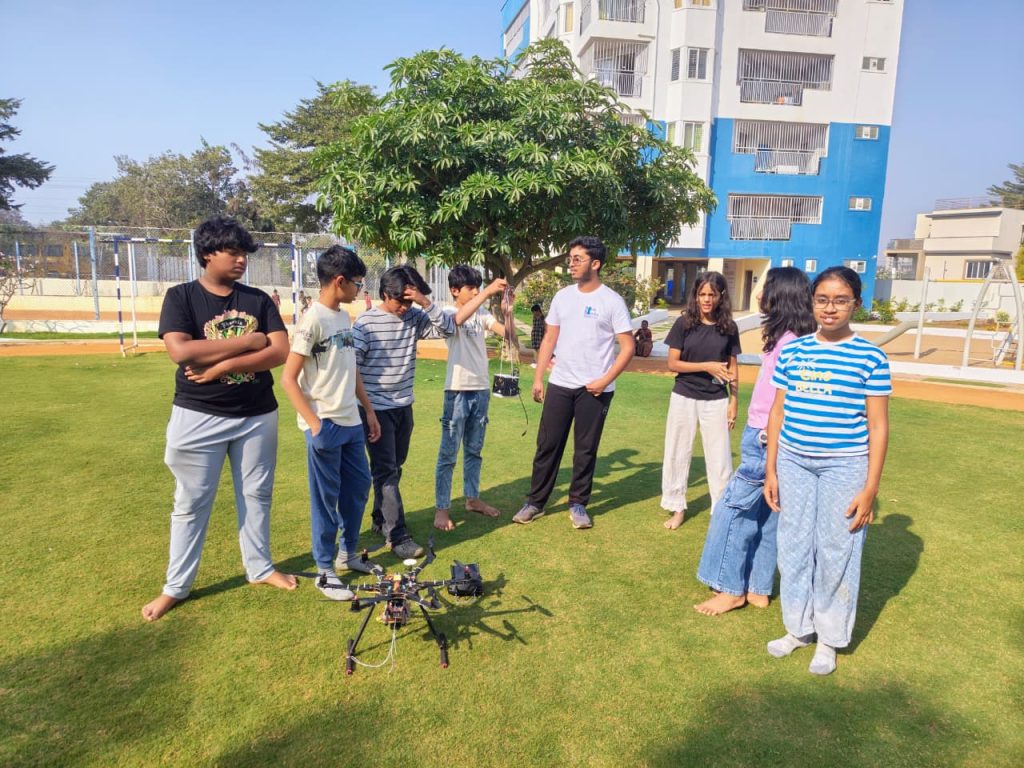
This blog draws on two publicly archived sources: the verbatim presentation transcript of three Blue Blocks adolescents at the 30th International Montessori Congress in Mexico, and the case study paper “Valorization in Orbit: An Adolescent CubeSat Mission” presented by seventeen Blue Blocks adolescents at the 7th National Montessori Conference ( Saparya, Mumbai), January 2026. Direct quotations from those documents appear throughout this piece.
Teaching kids to handle failure is a phrase most parenting articles treat as a how-to. Give the child a small risk, watch the child fail, talk it through, build resilience. The trouble with this account is that the risks involved are usually small enough that nothing real is at stake — and a child who has only ever practiced handling failure on small things does not necessarily know how to handle the moment when something large goes wrong.
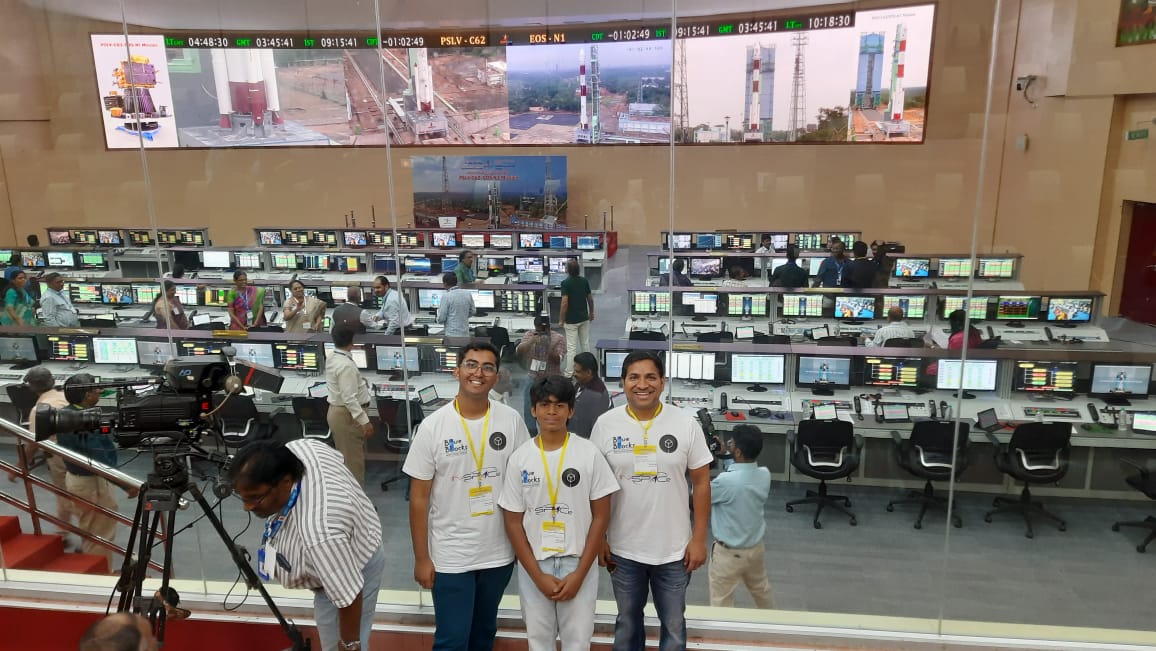
On 12 January 2026, seventeen of our students watched their CubeSat payload, SBB-1, lift off from the Satish Dhawan Space Centre at Sriharikota aboard an Indian Space Research Organisation PSLV-C62 launch vehicle. Stage 1 was separated nominally. Stage 2 was separated nominally. Stage 3 was on target. At T+847 seconds, Stage 4 ignition failed. The mission was terminated before payload deployment. The work the adolescents had carried for eighteen months — fabrication, qualification testing, IN-SPACe authorisation, integration — was lost in less than ten seconds. We have written separately about why a school innovation program must admit real failure for outcomes like this to mean anything.
What we want to describe here is not the failure of the launch. We want to describe what the children did with it.
How do adolescents actually process real failure?
Our adolescent Sanshray Padhy described the moment for an audience of 1,500 trained Montessori practitioners at the 30th International Montessori Congress in Mexico. He spoke about the loss of the satellite the children had built, then he said something that has stayed with us:
We were heart broken because we would not get the data we were hoping and yearning so much for. But when we saw all the 100 scientists of ISRO who worked on a huge satellite for 10 years were having much bigger impact, seeing them our heart went out for them.
A fifteen-year-old whose own payload was just lost noticed, in the same moment as his own grief, that a hundred professional scientists who had worked for ten years on a much larger satellite were experiencing a much greater loss in the same anomaly. He moved his attention from his loss to theirs.
This is the part of the answer to how do you teach kids to handle failure that small-risk practice cannot produce. The capacity Sanshray demonstrated — adult-scale proportionality of grief, recognising whose loss was larger and adjusting one’s own response accordingly — is not built by failing at things that do not matter. It is built by carrying work that does matter, and then being present when the people around you experience their own losses.
The capacity to handle adult-scale grief is built by carrying adult-scale work.
What does teaching kids to handle failure actually require?
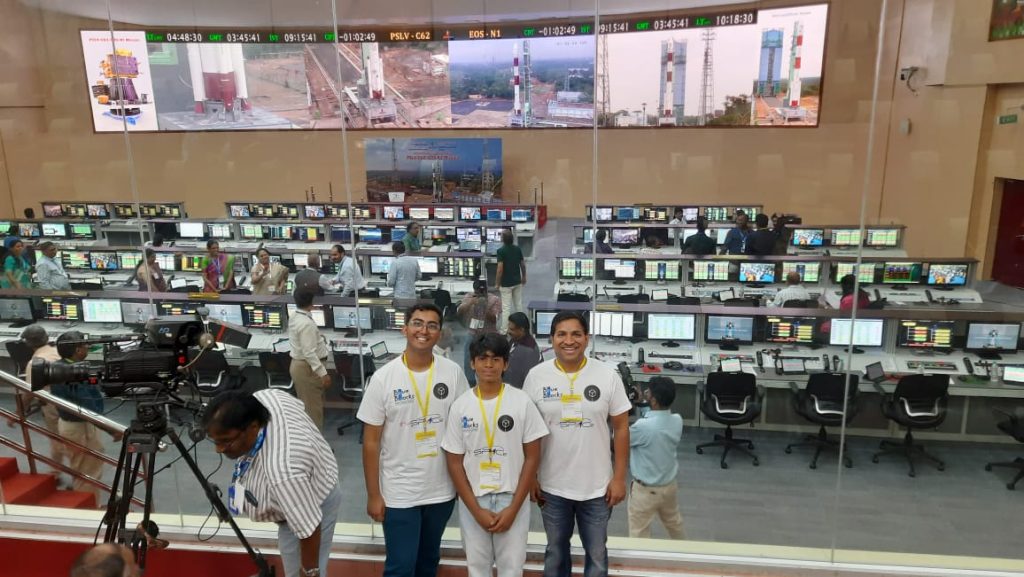
The published valorisation paper the seventeen students presented at the 7th National Montessori Conference in Mumbai documents the moment at Mission Control in their own first-person words:
A crushing silence filled the Gallery. It felt like the entire room exhaled at once — heartbroken.
The paper also documents how the adolescents arrived at the gallery in the first place. I felt my heartbeat change — like I was crossing into another world, one of them wrote about the moment of stepping into the Mission Control building. The sound tore through our chests about the launch itself. These are not the words of children who have been protected from significance. They are the words of children who arrived at Mission Control already capable of being there.
That arrival was not the work of the satellite mission. It was the work of fifteen years of education before it. Sanshray, again at the Mexico Congress:
We are Montessori adolescents. We don’t give up. We have been in Montessori environment since we were one and two year olds and we don’t get stopped by breakdowns and failures.
The capacity to handle failure at fifteen is the visible end of an arc we have written about earlier, in which raising curious children is described as a ten-year proposition that begins with the small daily resistant questions of a three-year-old. The same arc applies here. A child who has been allowed to encounter small things going wrong — projects that did not work, paintings that did not come out right, friendships that needed repair — across years of childhood does not arrive at adolescence unprepared for a satellite mission that fails. The preparation is the years before, not the project itself.
What happens when the adults around the children also fail?
The valorisation paper documents a second moment that matters as much as the first. After Stage 4 failed and the gallery exhaled, the IN-SPACe Assistant Director addressed the students directly. His response, the paper records, validated the students’ work as authentic aerospace engineering worthy of iteration, not a failed school project to be forgotten.
Sanshray described it in his own words for the Mexico Congress audience:
And then Ronak sir said don’t worry we will send the same satellite again. We received from ISRO team, asking us not to get disheartened, asking us to rebuild and send it again, and they extended their design lab and experts to collaborate with us directly.
This is the part of teaching kids to handle failure that most parenting writing underestimates. The adults around the children also experienced the loss. The hundred ISRO scientists whose ten-year satellite was lost in the same anomaly were grieving alongside the seventeen adolescents whose payload was lost. What the children saw was professional adults experiencing professional setback — and choosing, in the middle of their own loss, to reach down and help the children process theirs.
This is what the adults around the child can be when failure is real and shared. It is the developmental experience that conventional school programs structurally cannot provide, because conventional school programs do not place children in environments where adults are losing things alongside them. When adults are protected from failure in front of the children, children do not learn that grief can be carried alongside competence. They learn that grief is something adults hide.
What this means for parents
If you want to teach your child to handle failure, the question is not what small failures to engineer in their early childhood. The question is what real work you can let them carry as they grow, and what real adults you can let them be present with when those adults also encounter setbacks. The valorisation moment that Maria Montessori described as central to adolescent development is not achievable through simulation. It requires authentic risk. It requires real adults treating the child as a colleague. It requires the possibility that the work will be lost.
The same satellite SBB-1 is being rebuilt. The next launch is scheduled for later this year. The work continues — not because the loss was unimportant, but because the children, and the adults around them, decided together that the work was worth doing again.
Authors:
Pavan Goyal, Co-founder, Blue Blocks Montessori School; Founder and Principal Investigator, Blue Blocks Micro Research Institute. Holder of all four AMI Montessori diplomas (0–18) and Trustee of the Indian Montessori Foundation. ORCID: 0009-0009-8840-8505. LinkedIn.
Munira Hussain, Co-founder and Director of Pedagogy, Blue Blocks Montessori School; Secondary Investigator, Blue Blocks Micro Research Institute. AMI Auxiliary Trainer and co-author of Lining the Nest. Three decades of Montessori practice. ORCID: 0009-0003-5904-6206. LinkedIn.