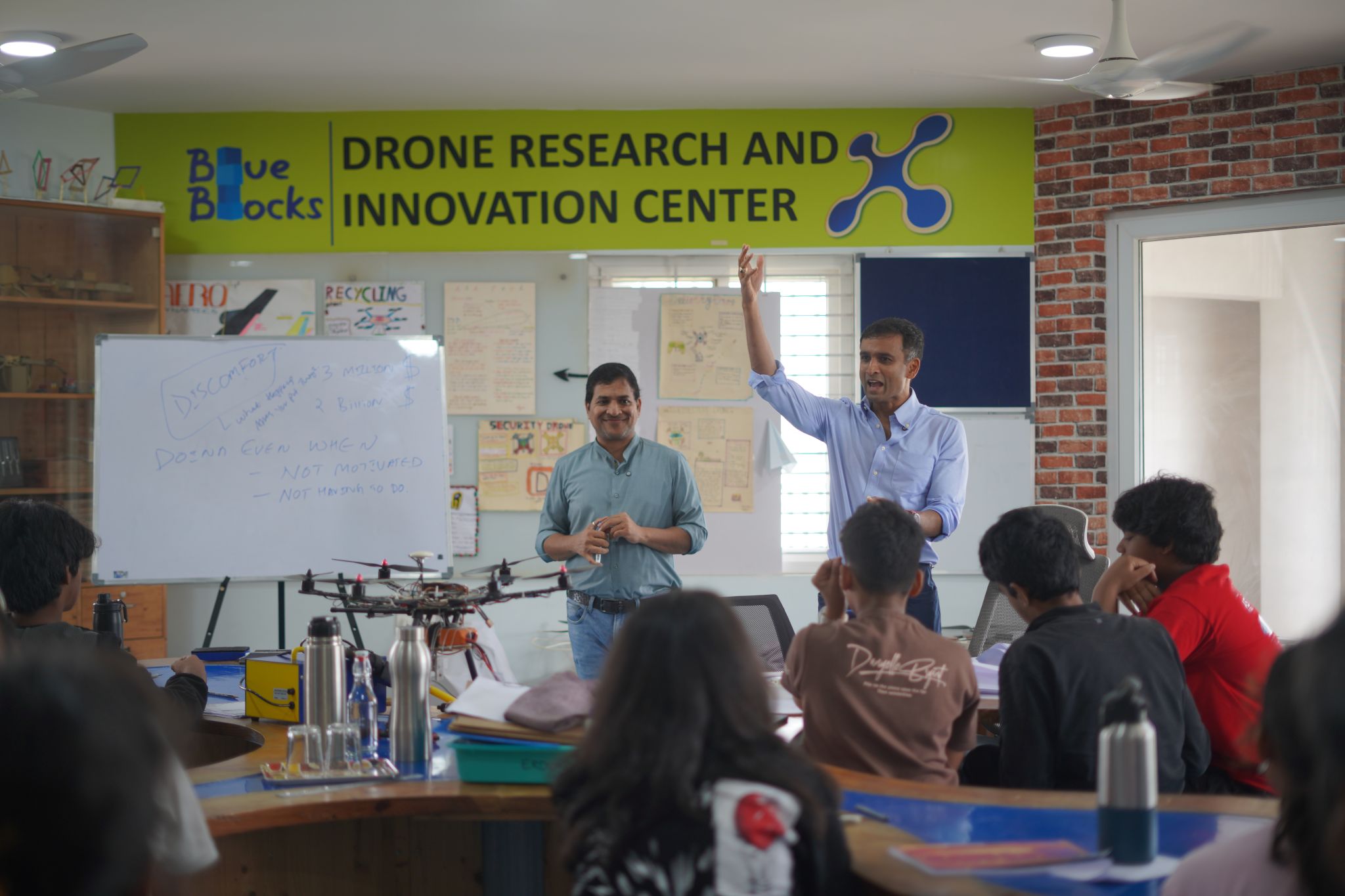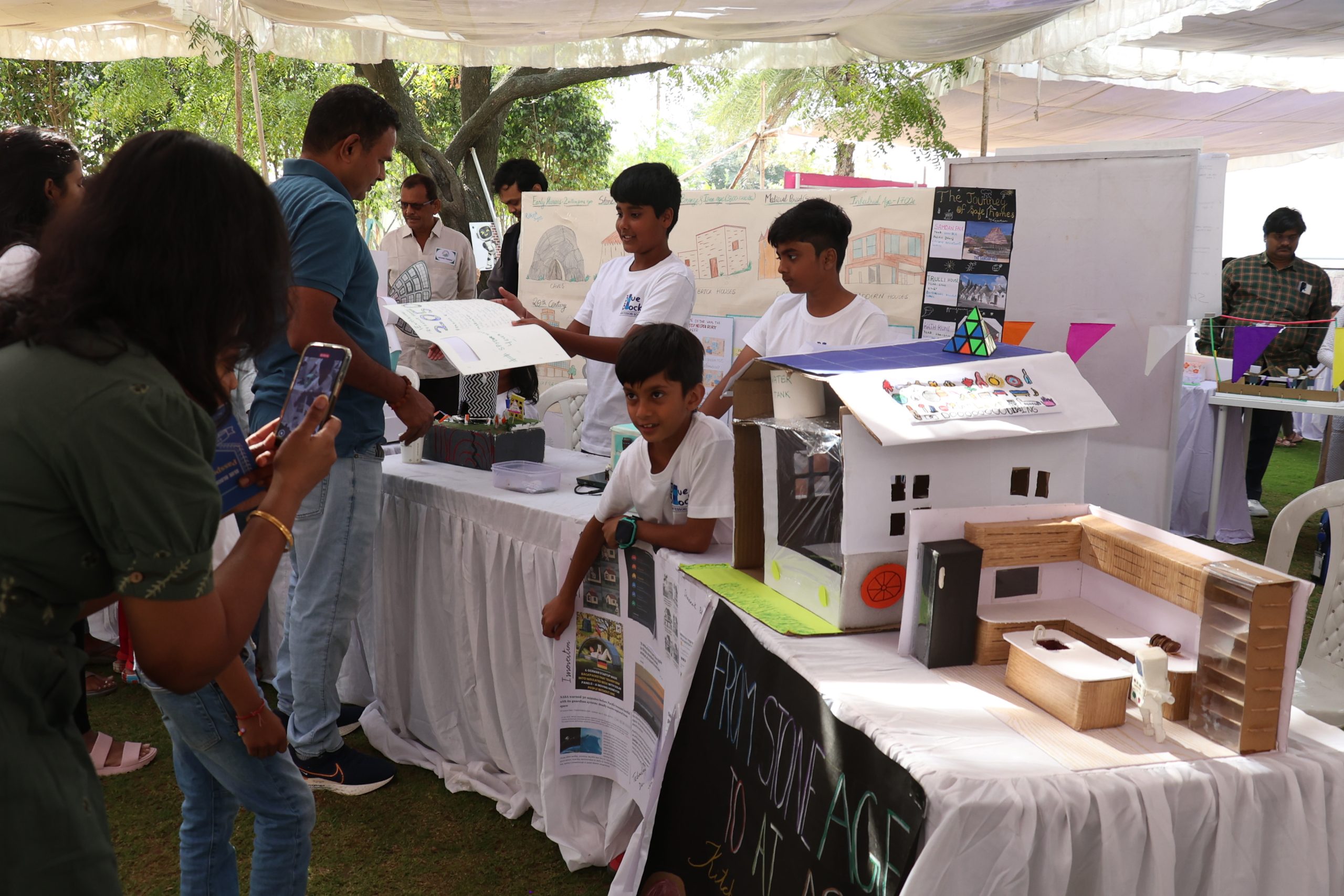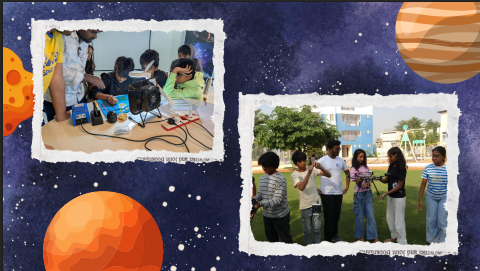
In the final session of a four-week palaeontology program I ran for the Erdkinder cohort at our school, one of the students asked me if she could have summer homework. The school year was about to close. She wanted, before it did, to know what she could keep working on through the holidays. She did not ask this as a question of obligation. She asked it as a request for privilege. This is the most useful single image I have from what a Montessori adolescent program can produce when adolescents are placed in genuine contact with a real research problem.
Twelve adolescents joined the first session. Three were still working with me by the fourth. The case study describing what happened across those four weeks is now part of Blue Blocks Micro Research Institute‘s published case study series. This post is about what those three students did that the other nine did not, and what it suggests about how research identity actually forms in adolescents.
What did the adolescents in this Montessori adolescent program actually do?
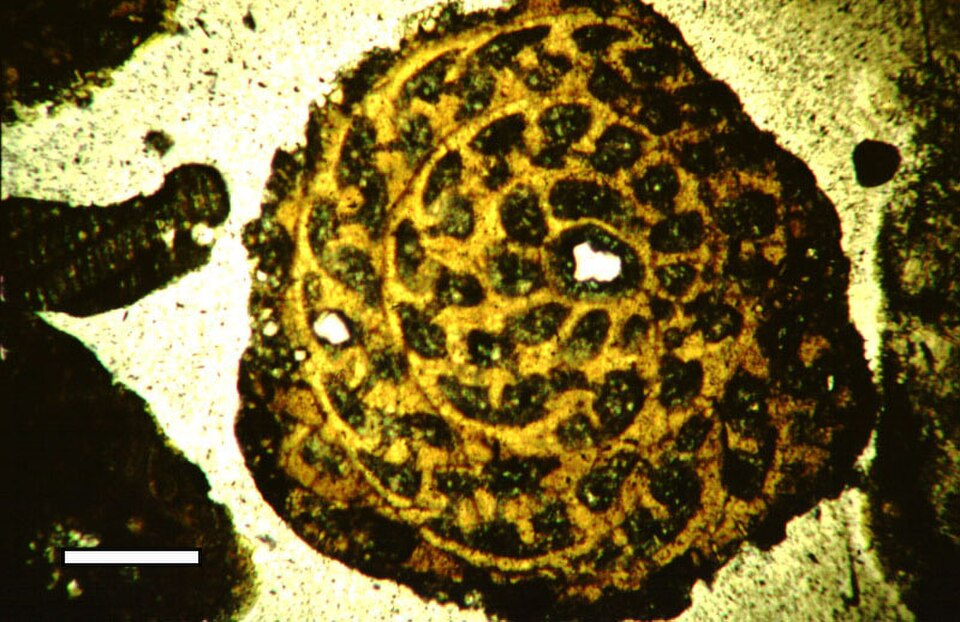
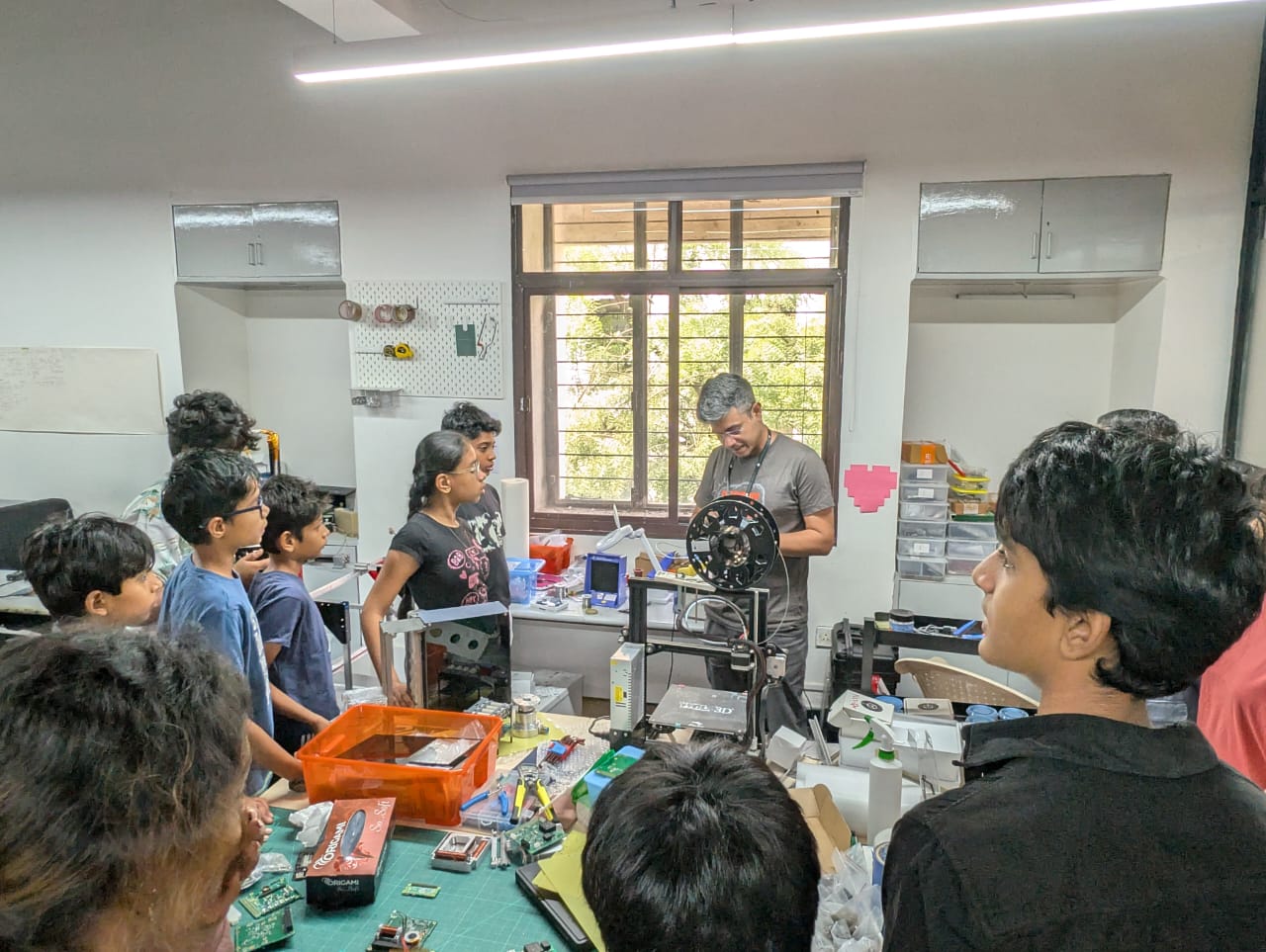
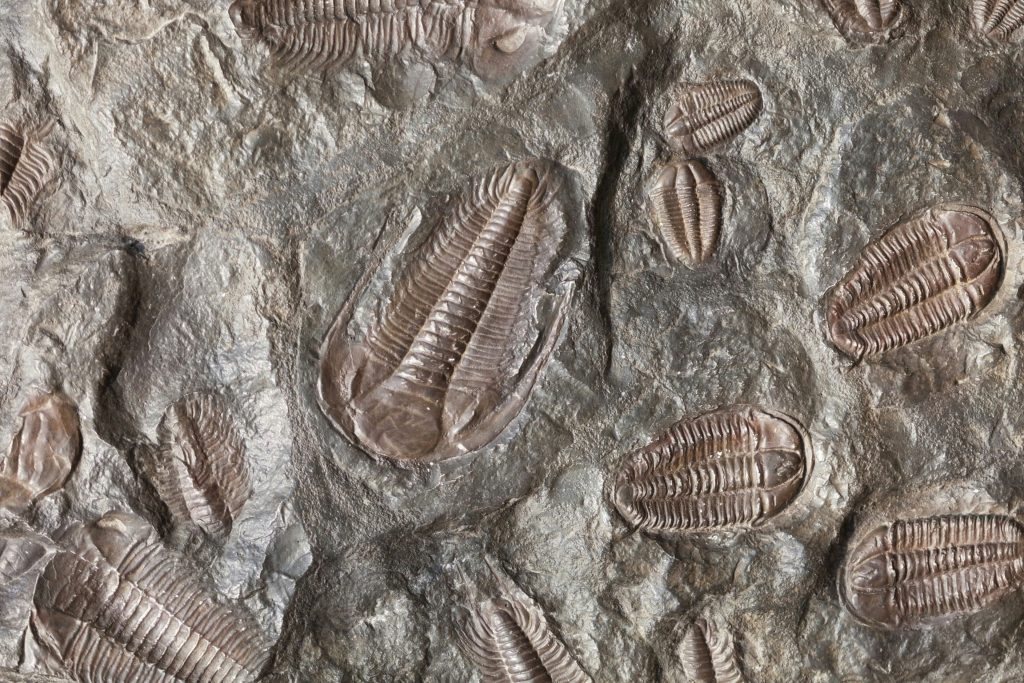
The four sessions, run between April and the end of the school year, introduced larger benthic foraminifera through thin sections from the Fulra Limestone of the Kutch Basin in western India. Across the sessions, the students worked through identification of five genera — Discocyclina, Nummulites, Asterocyclina, Assilina, and Alveolina — and learned to assess sectional orientation across axial, equatorial, and oblique cuts. These are the basic identification skills that any working palaeontologist needs to handle Eocene marine limestone, and they take a working palaeontologist years to develop.
The students were not given a simplified version. They were given the actual material, the actual microscope, the actual nomenclature. The expectation across the four sessions was that by the end, the students who continued would be able to identify these genera independently, recognise the geological context, and begin to think about what scientific questions might be asked of the material. Three of the twelve reached this position.
What did the three students who continued do that the other nine did not?

I want to be careful here. The nine students who left across sessions 2, 3, and 4 did not do anything wrong. Some had other commitments. Some realised that palaeontology was not what they wanted to spend their time on. Some came to the first session out of curiosity and discovered that the work was harder, slower, and quieter than they had imagined. All of those are honest reasons. The case study companion to this piece, forthcoming on attrition as evidence, addresses what their leaving means in more detail.
What I want to describe here is what the three who stayed did between sessions, without being asked. Three specific moments stand out.
One of the students conducted unsolicited research at home between Session 2 and Session 3, on a question about foraminiferal biostratigraphy that had not been part of any assignment. She came to the next session with a written report. The report was not graded, not requested, not expected. It existed because she had read past what we had covered in the session and wanted to bring back what she had found.
Another student asked, after Session 3, for field access. Not for more time with the existing material — she wanted to come to the site. She wanted to see how the rocks were collected, where the thin sections came from, what the field context looked like. She was asking to enter the methodology, not just the activity. This is a different request from I am interested in this. It is a request to enter the practice itself.
She was asking to enter the methodology, not just the activity. This is a different request.
And then there was the summer homework moment. The third student, who had stayed quieter through the four sessions but had reliably done every piece of work asked of her, asked me before the final session ended whether she could have something to work on through the summer. She framed it as a request, almost defensively, as though afraid I would say no. Can I please have summer homework? Can I keep working on this?
These three behaviours — done outside the session, unprompted, when no one was watching or grading — are the data this piece is built on.
How does research identity form in adolescents?
The question I have spent the most time with since the sessions ended is this: what produced the difference between the three who stayed and the nine who left? The honest answer is that I do not fully know, and I do not think the answer would be useful even if I did, because it would suggest we could engineer the conditions for retention. We cannot. The point of running a real research program with adolescents is that the work is supposed to select its participants honestly.
What I can describe is what the three behavioural moments suggest about how research identity actually forms when it forms. Identity is not motivation. The nine students who left were not unmotivated — most of them were curious, engaged, and capable through the first session or two. Motivation is not the variable. Something else is happening with the three who stayed.
What I think is happening is this: the work itself, when given without simplification, communicates to certain adolescents that this could become mine. The student who wrote the unsolicited report had moved past I am interested in foraminifera to I am someone who finds out things about foraminifera. The student who asked for field access had moved from I want to do more of this to I want to be inside this practice. The student who asked for summer homework had moved from I want to keep doing what we did in class to I do not want this to stop just because the school year does.
Identity is not motivation. The three students who continued were not more motivated than the nine who left. They were claiming the work as theirs in a register the others were not.
This is what the case study calls research as identity. It is structural, not emotional. It cannot be encouraged or engineered. It happens when an adolescent is placed in genuine contact with a real problem, given real tools, treated as someone whose contribution matters — and then, in their own time and without external prompting, begins to act as though the work has become part of who they are.
What this means for parents looking at adolescent education
If you are considering a Montessori adolescent program for your teenager — or any other secondary program that claims to integrate real research — the question to ask is not whether the program generates enthusiasm. Most secondary programs can generate enthusiasm. Enthusiasm is a session-level reaction. The question is whether the program produces moments like the three I have described, in which adolescents act, outside the school day and without external incentive, as though the work has become theirs.
This is what an AMI-guided Erdkinder program is structurally designed to do at its best. Maria Montessori called the adolescent task valorisation through real work — the adolescent finding their own value by encountering work that genuinely matters. Valorisation in this register is not a feeling. It is a structural relationship between an adolescent and a body of work that has been offered to them seriously enough that some of them will claim it.
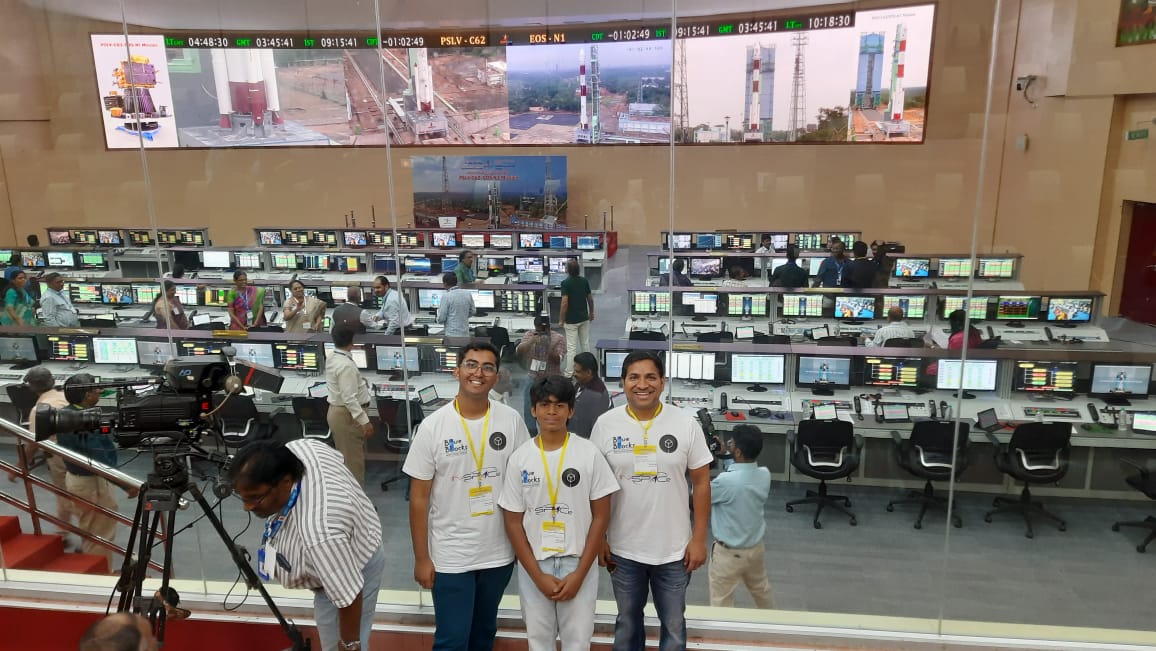
The three students who continued in this palaeontology program are now working towards what may become a co-authored publication. The forward arc — preprint, peer review, conference presentation — is the same arc our adolescents walked on the main stage of the 30th International Montessori Congress earlier this year for a different project. The pattern is consistent. When adolescents are given real work, some of them become researchers. Not all of them. Not most of them. Some.
The summer homework request, the unsolicited home report, the request for field access — these are what research identity looks like when it begins to form. The program’s job is not to produce them. The program’s job is to create the conditions in which they can occur, and then to recognise them when they do.
Authors: This piece was prepared by Blue Blocks Micro Research Institute. Co-author: Sreemoyee Chakraborty, Research Head, who designed and ran the palaeontology program described in this piece. ORCID: 0000-0001-5180-156X.The case study companion to this piece is published as DOI 10.5281/zenodo.20019376.