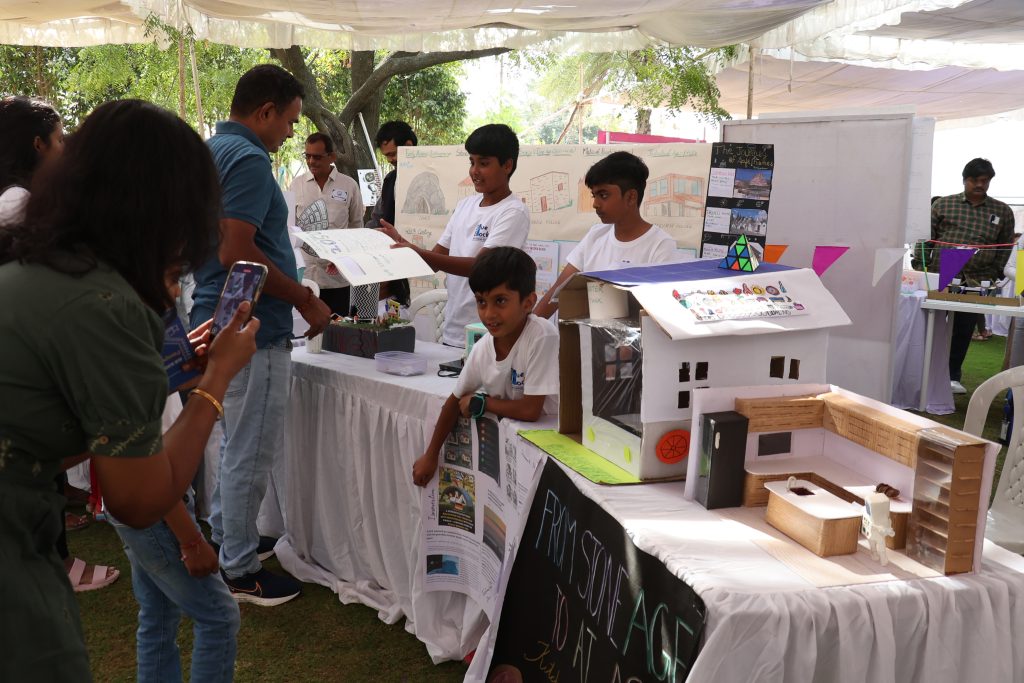
How to prepare children for the future is the question every parent is now asking, and asking it more urgently every two years as the world shifts in ways adults were not ready for. A father at our annual school event in November put it plainly. The skill his children would need most in 2050 is not a particular subject, not a particular language, not a particular technology. It is the ability to absorb change quickly and become part of what comes next. “How you can quickly adapt to it, and then be part of it. That, I think, 2050 will make sure the children should have.”
Across seventeen years of running a Montessori environment in Hyderabad, we agree with the father. Adaptability is the skill of 2050. But there is a problem with how most schools propose to build it. You cannot teach adaptability directly. It cannot be added as a subject, packaged as a course, or covered in a chapter. Adaptability is a by-product — what emerges in a child who has spent years pursuing her own questions, shifting between subjects on her own initiative, and following inquiry wherever it leads. This is what Maria Montessori recognized more than a century ago, and what her method builds today. The schools that produce adaptable adolescents are the ones that did not try to.
This piece is for parents who want to understand what adaptability actually requires, and what to look for in a school that claims to prepare children for the future.
Why adaptability cannot be taught directly
Adaptability sounds, on first hearing, like a skill that can be packaged. Schools have started to advertise future-readiness and 21st-century skills curricula. Children are asked to complete adaptability worksheets. Workshops on resilience are scheduled into the timetable.
The problem is that adaptability is not a piece of knowledge. It is a developed disposition — the underlying way a person responds to a situation she did not expect. Dispositions cannot be installed through instruction. They have to be built through repeated, unforced experience of doing the thing the disposition refers to.
A child who has been told, every Monday morning, what topic she will study that week, by which method, to what assessment, has been trained for compliance with structure. A child who has been allowed, across years, to pursue her own questions — to start with one subject and follow it into another, to spend longer than expected on something that interests her, to set work aside when it no longer leads anywhere — has been trained for something different. She has been trained, by daily practice, to adapt her work to what her own thinking turns up. By the time she reaches adolescence, the disposition is already there.
A child who has been told every Monday morning what to study, by which method, to what assessment, has been trained for compliance with structure. That is not adaptability. It is patience for instruction.
Adaptability in 2050 is the second kind of child grown up.
What this looks like in the early years
In a well-run AMI Montessori environment, a six-year-old is already practicing the underlying movements of adaptability without being told they are skills.
She is choosing what to engage with each morning. She is shifting between mathematics, language, geography, and biology in the same week, often in the same morning, following her own curiosity. She is staying with a piece of work for as long as it holds her attention and moving on when it does not. She is encountering questions she did not anticipate and pursuing them rather than waiting for an adult to answer them. She is, in small ways, doing the work of adapting her attention to what she finds.
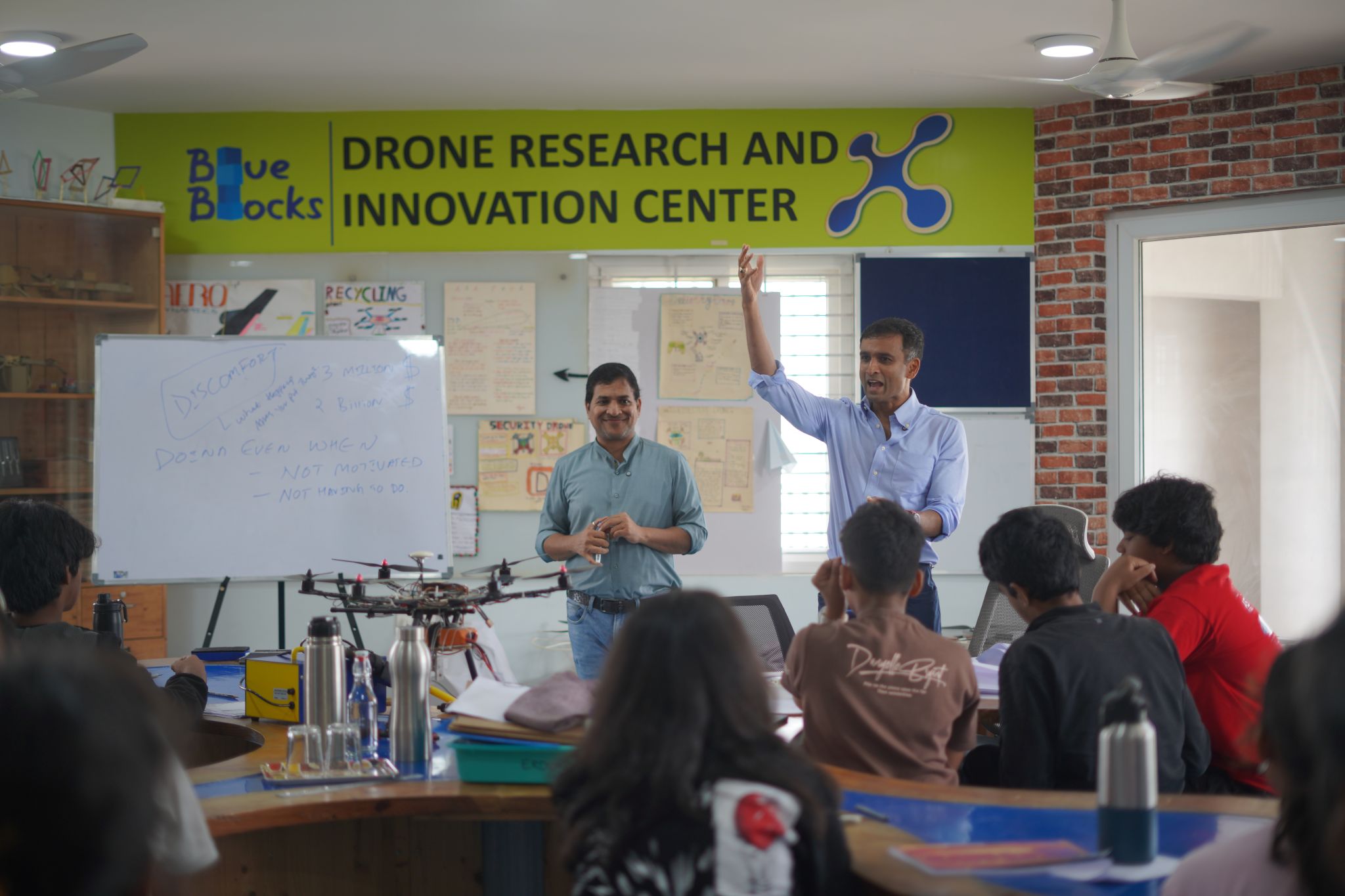
The father at our event noticed something further. His children, he said, were doing real research without realising they were doing research. They were waking him at twelve-thirty at night to ask why something they had observed was happening. They were not part of a research project. They had not been assigned a topic. They were following their own curiosity into questions they could not let go of, and the result was a body of work that took on the character of inquiry without ever being called that.
This is what adaptability looks like at age seven. The child has not been taught to be adaptable. She has been allowed to be one. We have written separately about how curiosity at age three becomes a project at age thirteen in a Montessori environment — the same underlying process, seen across a longer timescale.
The child has not been taught to be adaptable. She has been allowed to be one.
Why do curriculum-led schools struggle to build adaptability?
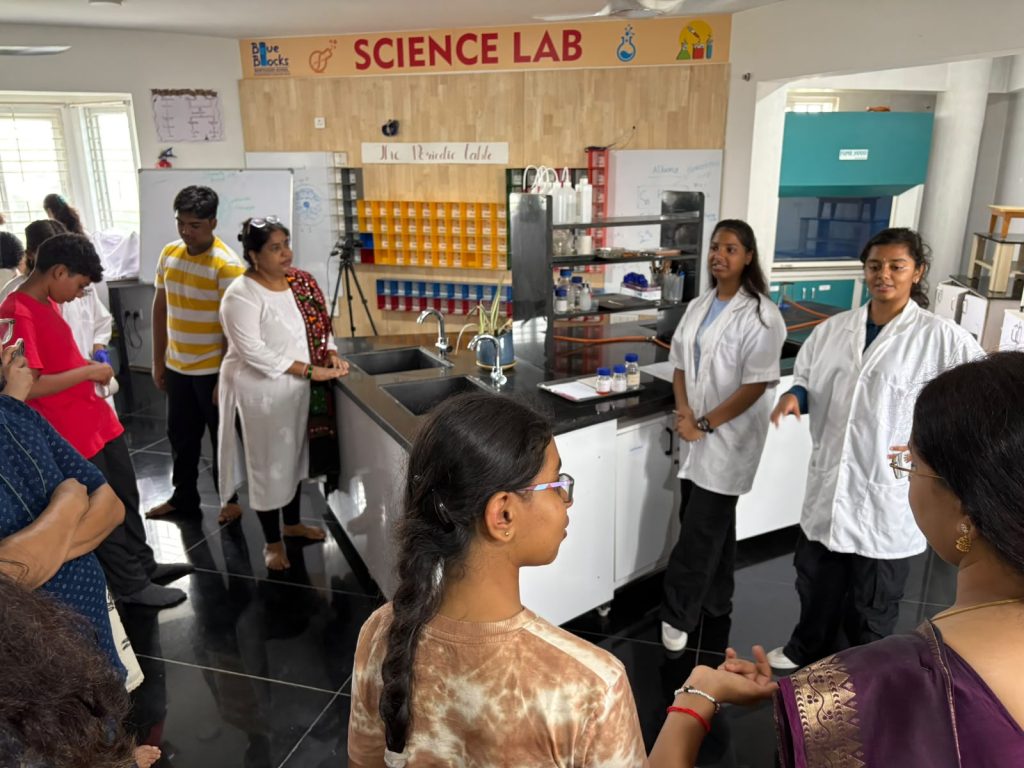
When a school operates curriculum-first — the same syllabus, the same chapter, the same pace, for every child — three structural features make adaptability harder to develop, not easier.
First, the child does not choose what she works on. Her practice in agency is reduced to almost zero across her school years. By the time she is fifteen, she has spent a decade waiting for adults to tell her what to study next. The disposition she has built is not adaptability — it is patience for instruction.
Second, the child cannot stay with what holds her. The schedule moves on. A topic that genuinely engaged her in the third week of October becomes a closed chapter in the fourth. The disposition she builds is not pursuing what matters — it is letting go of what matters when the timetable says so.
Third, the child does not encounter unexpected questions in her own work. The questions are the syllabus’s questions. She becomes competent at answering them and uncertain about how to handle a question no one has set. The disposition she builds is not handling the unexpected — it is recognising the expected.
None of this is the failure of any individual school. It is the structural cost of building education around curriculum-first delivery, which we have explored more fully in our comparison of Montessori and conventional schooling. By the time the world asks for adaptability, the disposition the school built is something else.
How to prepare children for the future: what parents can look for
If adaptability is the skill of 2050, the question is not whether your child’s school teaches adaptability. The question is whether the school’s daily structure builds it as a by-product. Two practical signs help.
Watch what happens when your child notices something at home. If she follows it for a week — asking, observing, drawing, sometimes waking adults to ask — and the school treats this as continuous with her education, the school is supporting adaptability. If the school redirects her back to the syllabus topic of the week, the school is undoing it.
Watch how your child handles unstructured time. A child who has spent years adapting her own attention will fill unstructured time with her own interests, her own questions, her own work. A child who has been trained to follow adult-set schedules will need someone to set the next thing.
These two signs are not verdicts. Most children carry both habits in different proportions. The question is which is being built more consistently — and the answer determines what disposition your child carries into a 2050 that almost no one can predict.
We have spent seventeen years making sure ours builds the first.
Authors:
- Pavan Goyal, Co-founder, Blue Blocks Montessori School; Founder and Principal Investigator, Blue Blocks Micro Research Institute. Holder of all four AMI Montessori diplomas (0–18) and Trustee of the Indian Montessori Foundation. ORCID: 0009-0009-8840-8505. LinkedIn.
- Munira Hussain, Co-founder and Director of Pedagogy, Blue Blocks Montessori School; Secondary Investigator, Blue Blocks Micro Research Institute. AMI Auxiliary Trainer and co-author of Lining the Nest. Three decades of Montessori practice. ORCID: 0009-0003-5904-6206. LinkedIn.