
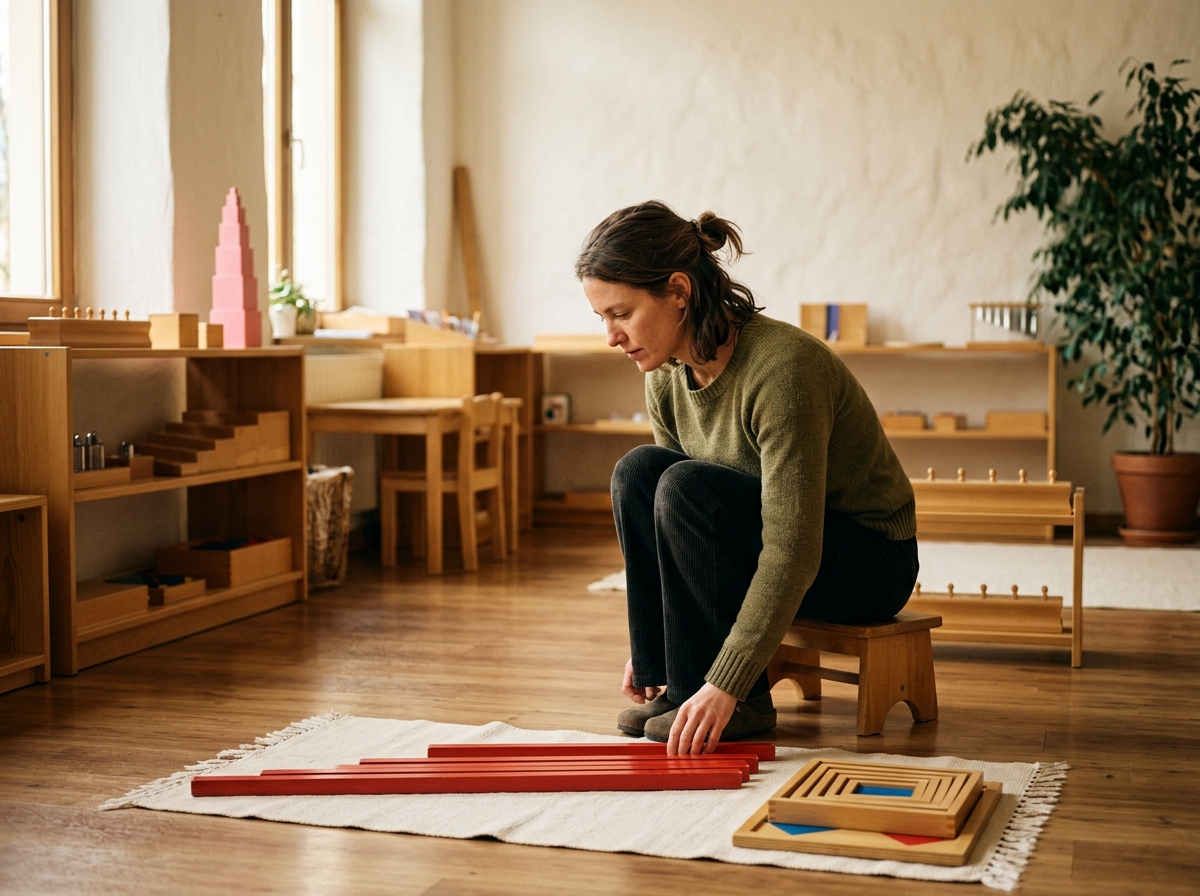


The Toddler Community
First steps toward independence
A Montessori preschool program for children aged 1–3 in Hyderabad, designed around how toddlers actually learn: by living, moving, and doing. Every chair, spoon, and shelf is proportioned to their size. This is a carefully designed toddler environment where a 2-year-old can say and mean "I can do it myself."
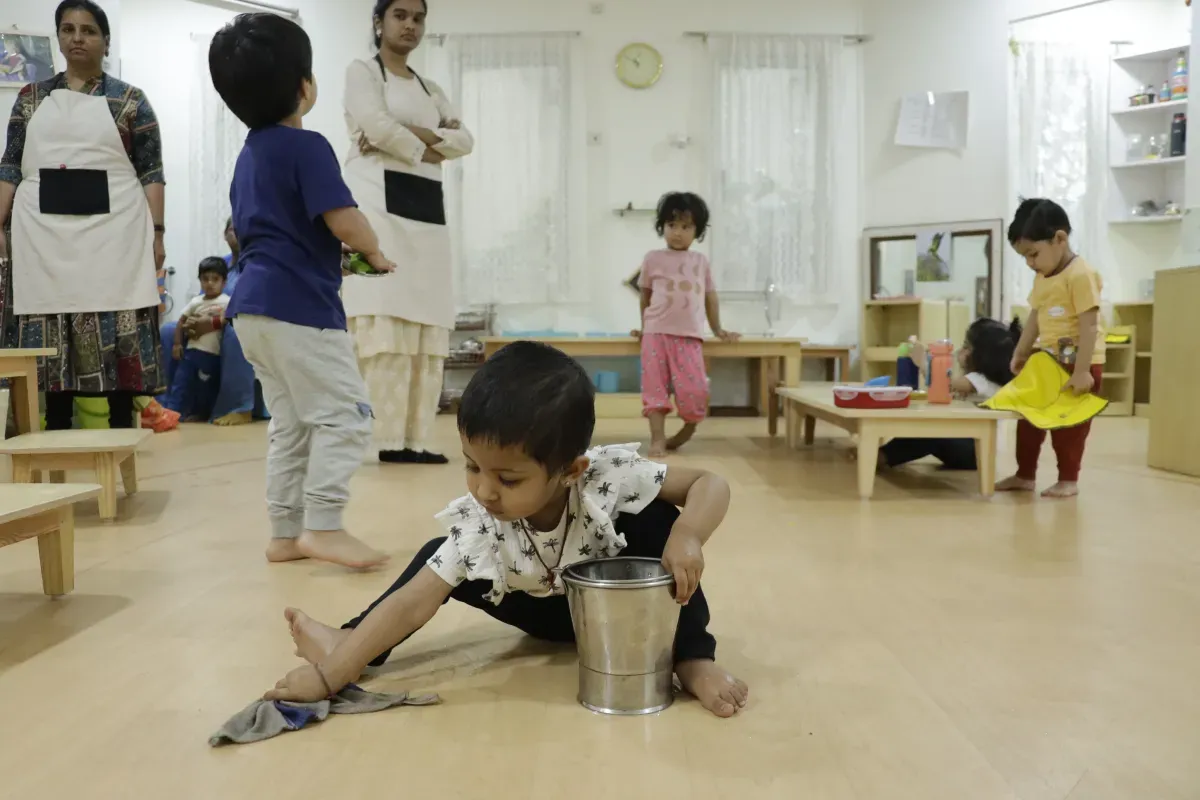
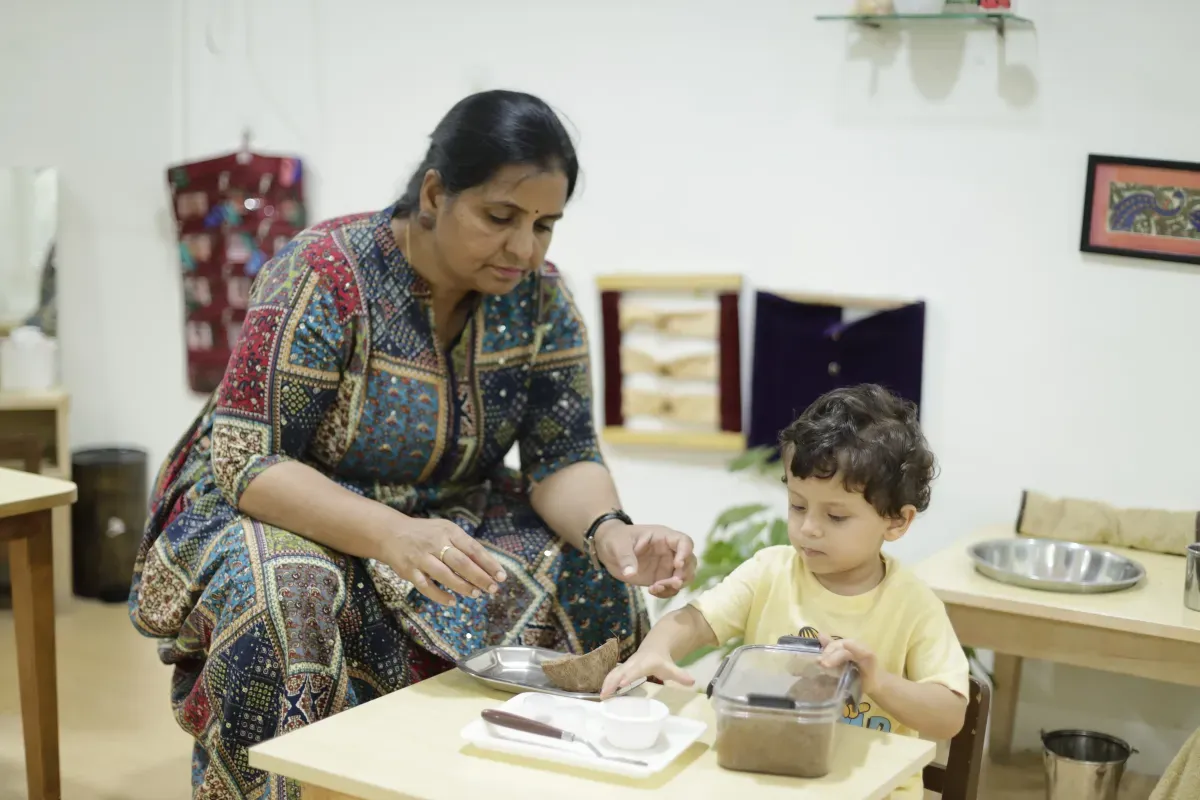
Ages 1 – 3 Years
Readiness is developmental, not exact age-based. A walker ready to explore.
1:6 Guide-to-Child Ratio
Close supervision, individual attention, and gentle guiding daily.
AMI-Certified Guides
Guides hold the rigorous AMI Assistants to Infancy (0–3) qualification.
The Absorbent Mind
Peak phase of language, movement, and order absorption.
Prepared Environment
Safe, beautiful, and simple. Child-sized chairs, spoons, and shelves.
Toilet Learning
Natural curriculum integration from day one. Calm, non-pressured.
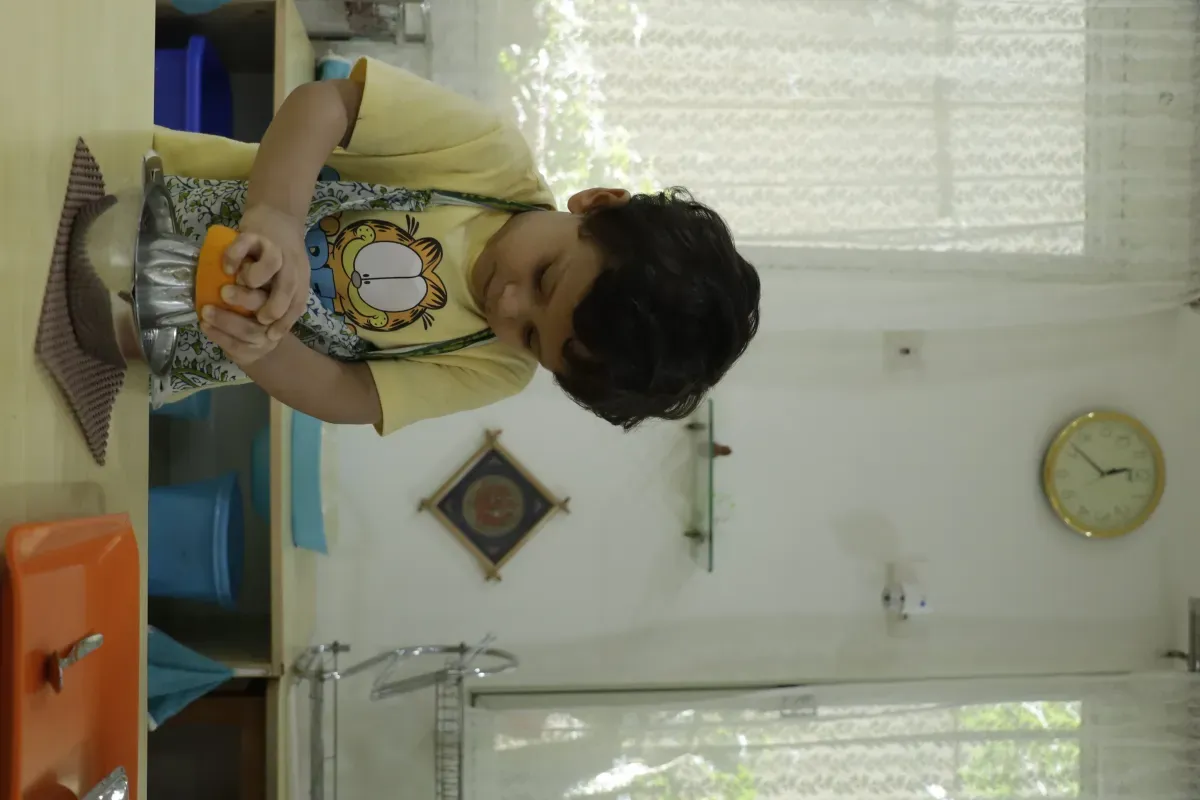
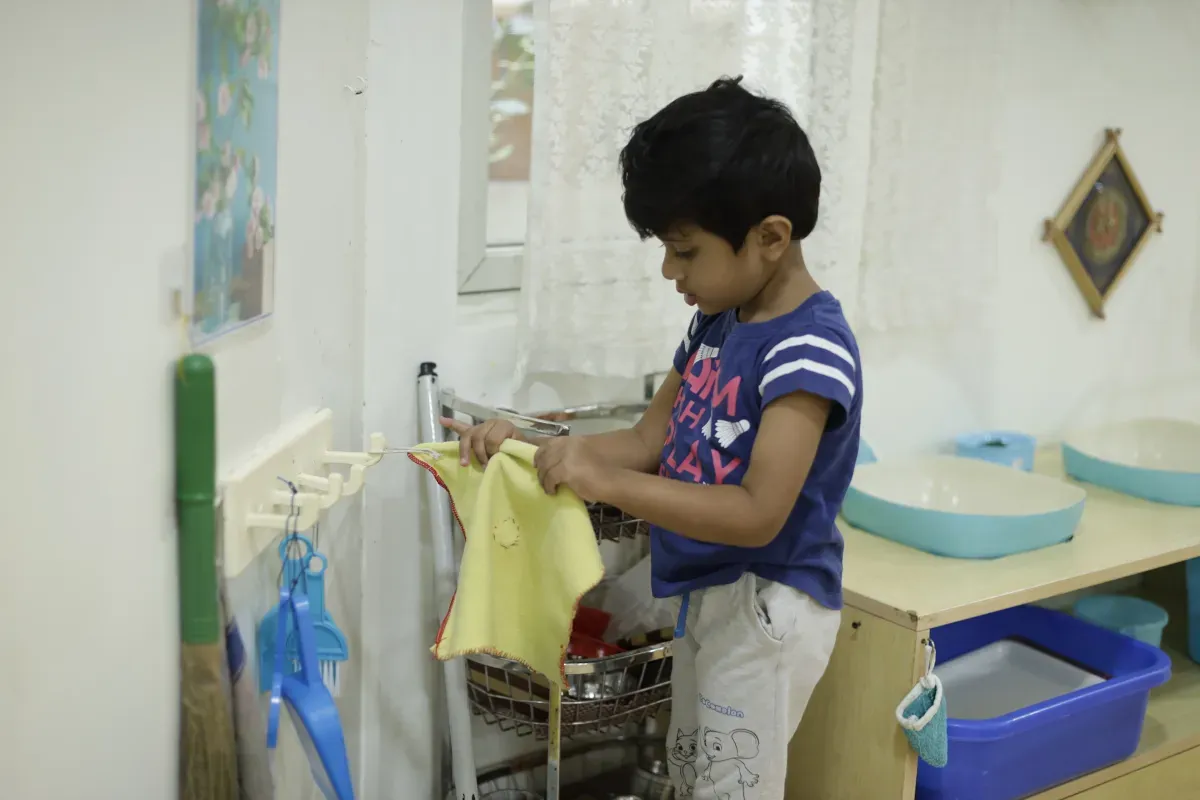
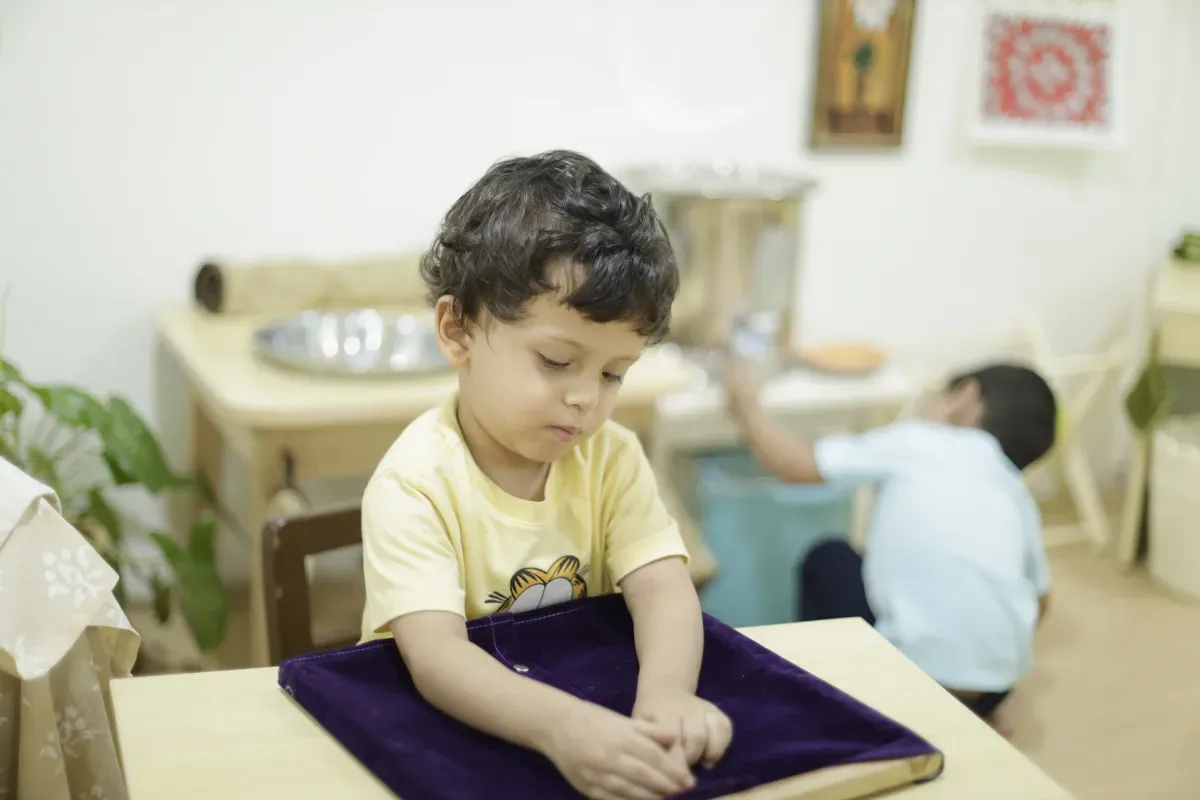
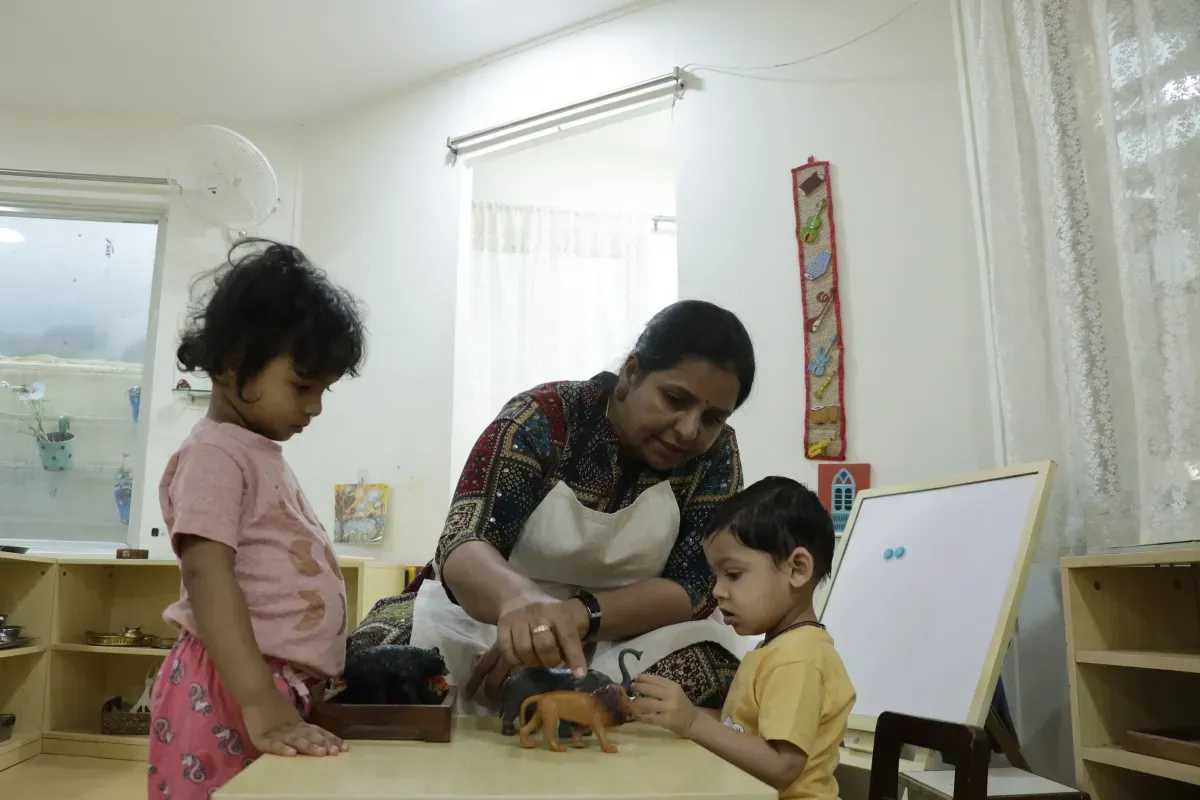
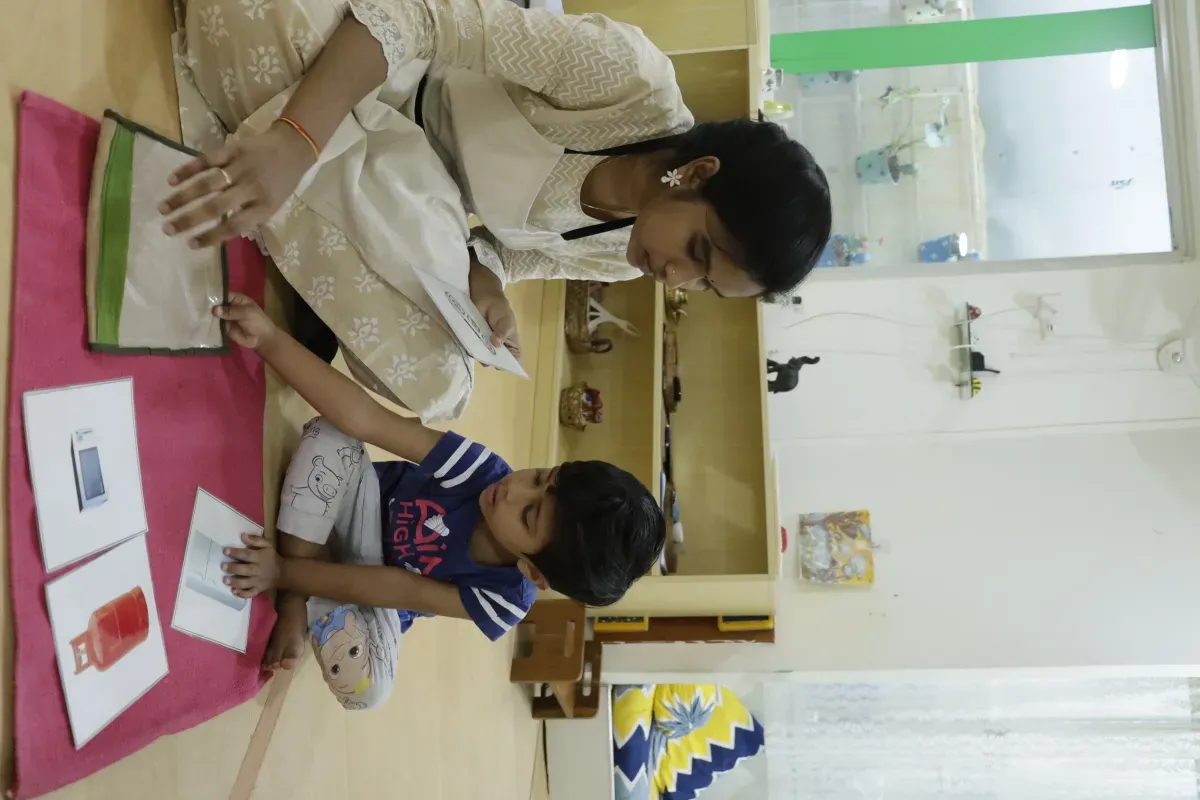
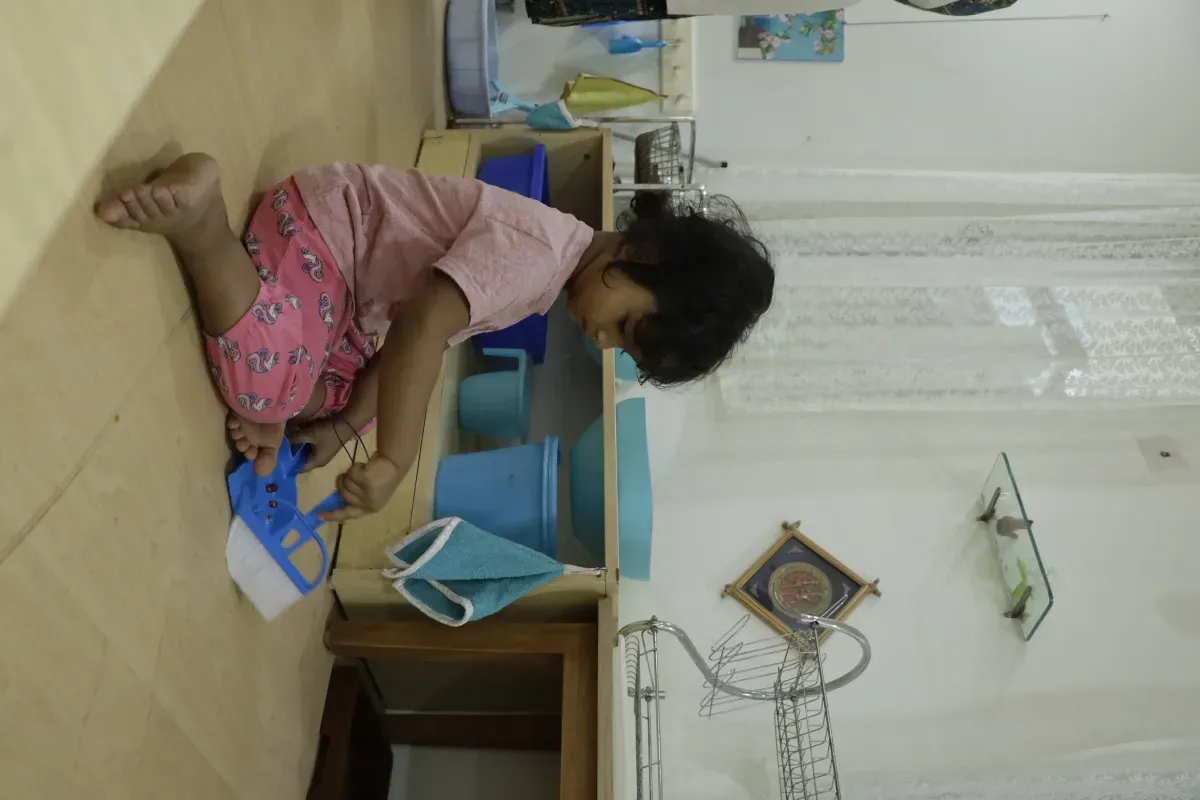
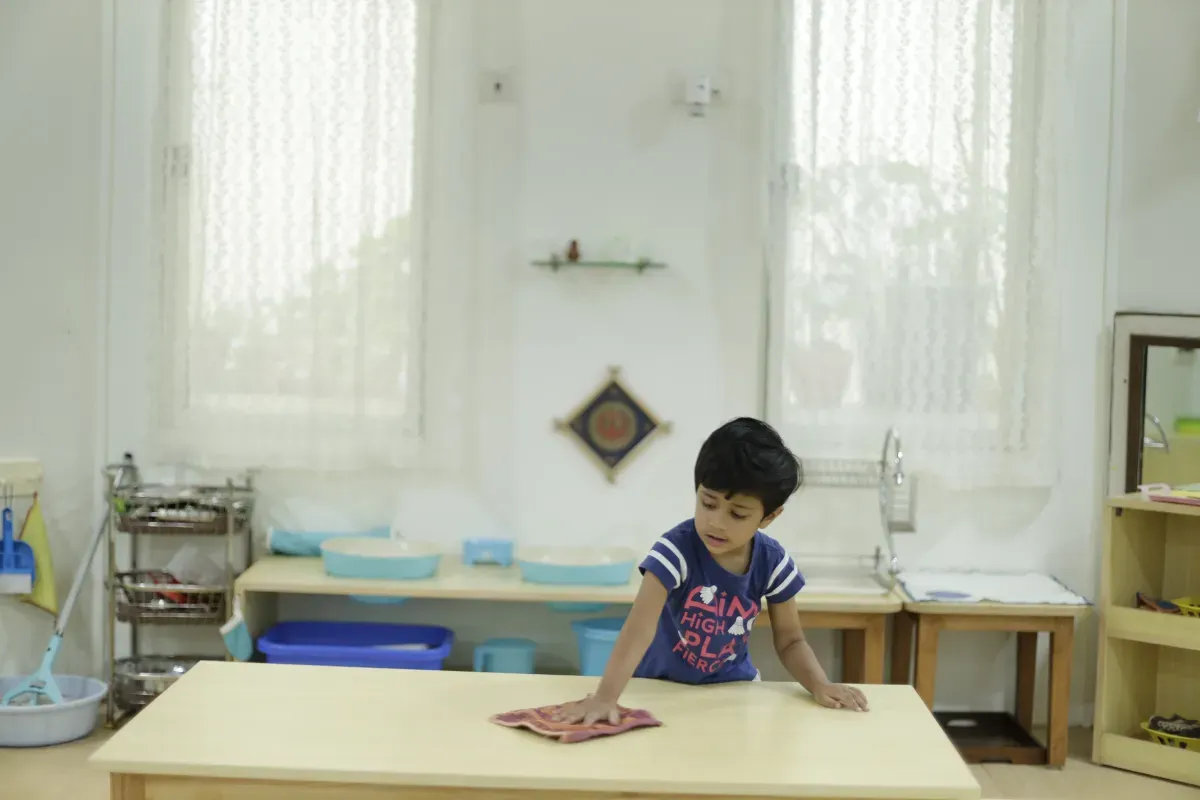
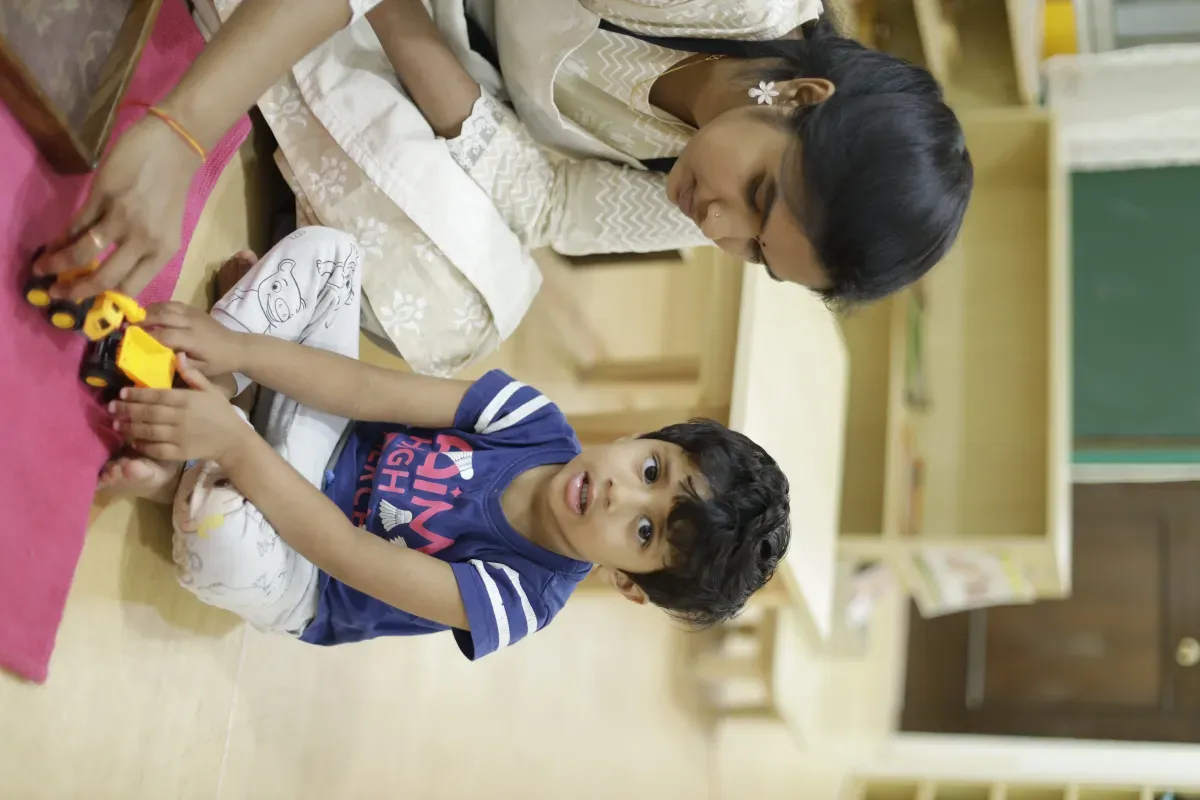
Life in the Toddler Community
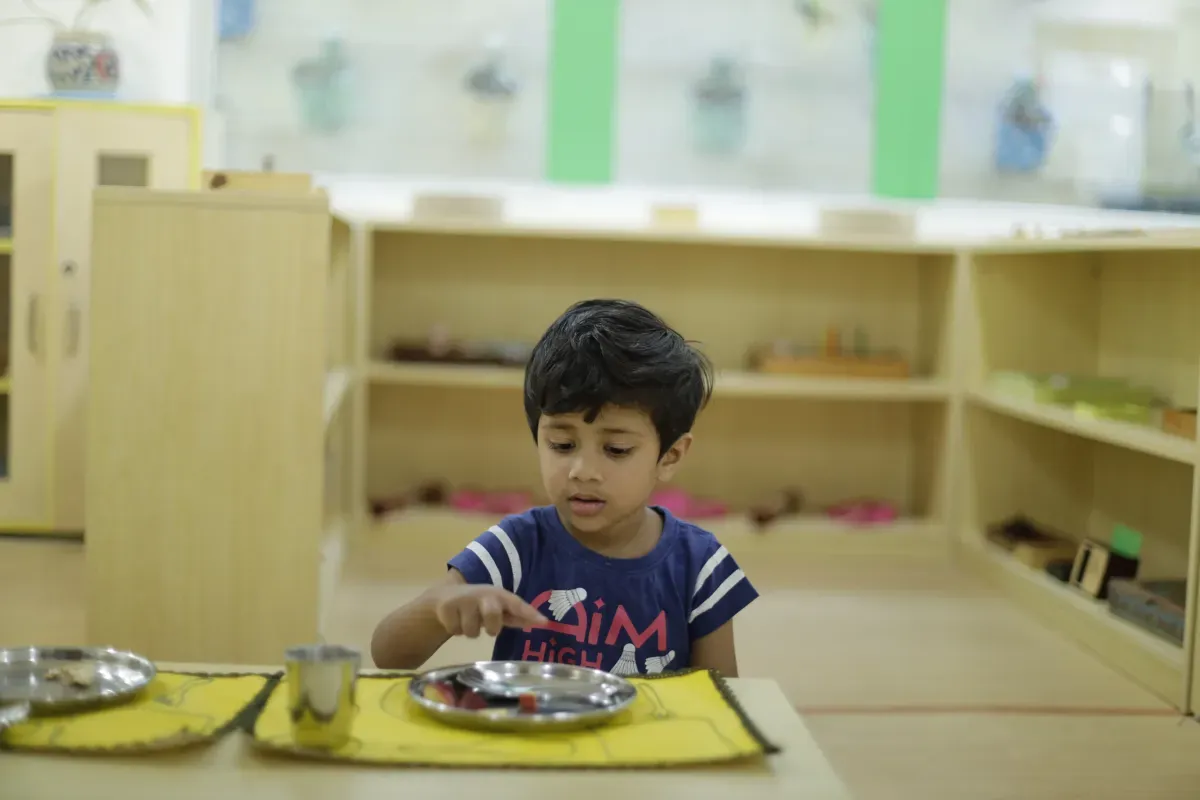
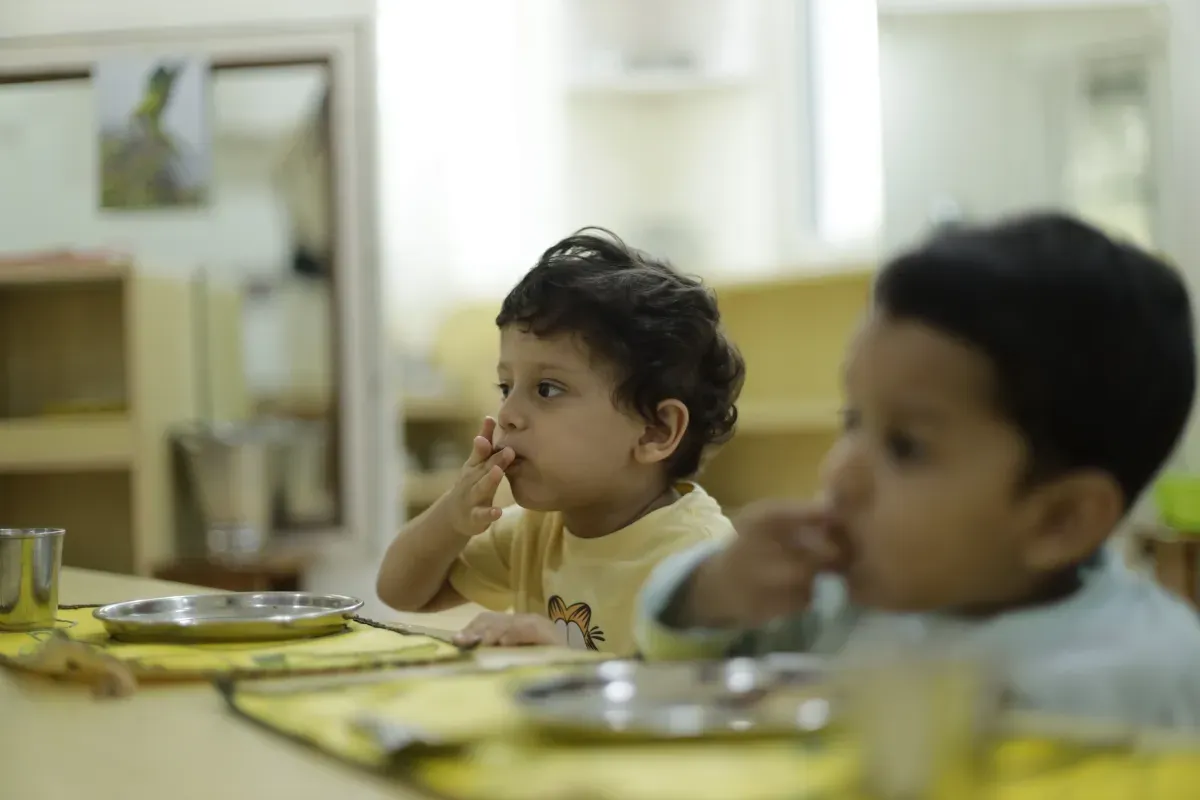
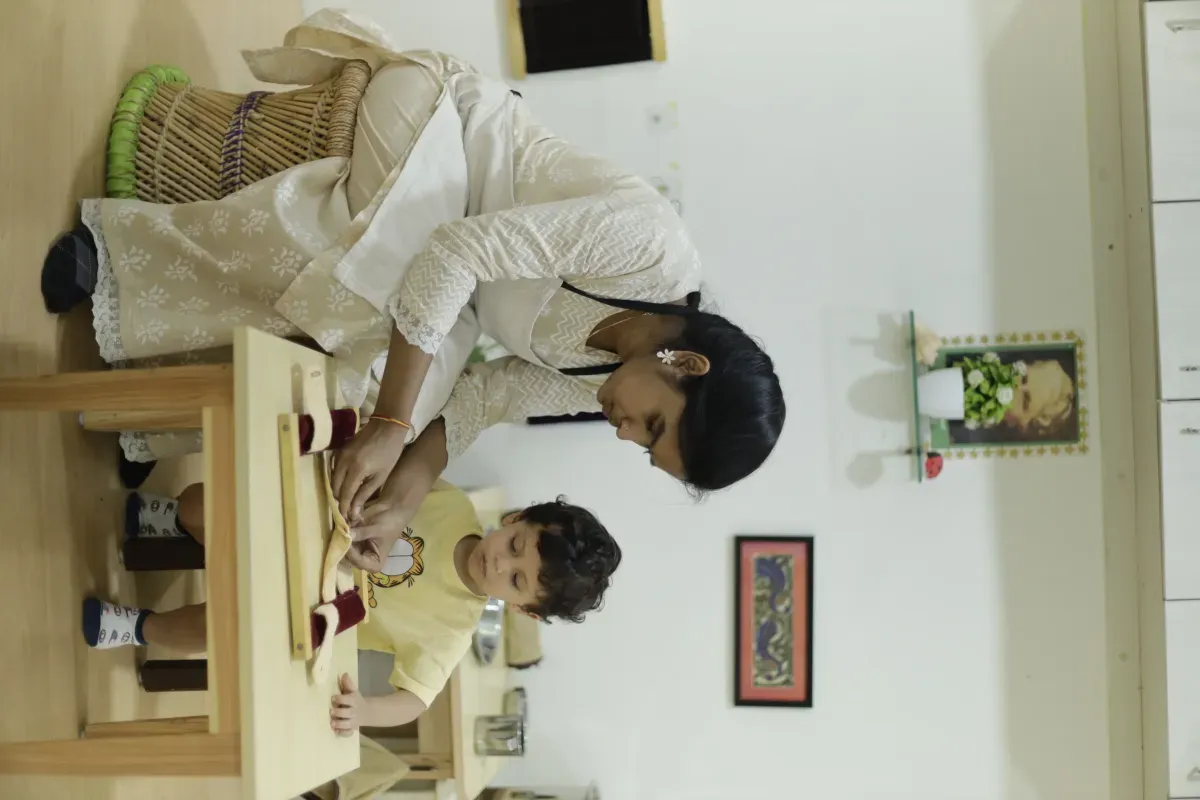
PARENT VOICE
"I came in skeptical — my daughter was 22 months and I wasn't sure she was ready. By week three she was setting the table at home and asking to water our plants. I left wondering why we don't design all of childhood this way."— Parent, Blue Blocks Toddler Community
Developmental Pillars
Four Pillars of Development
Our toddler program is built around four developmental areas, each grounded in Montessori science and tailored for the specific needs of children aged 1 to 3. Rather than teaching abstract concepts, we focus on lived experiences.
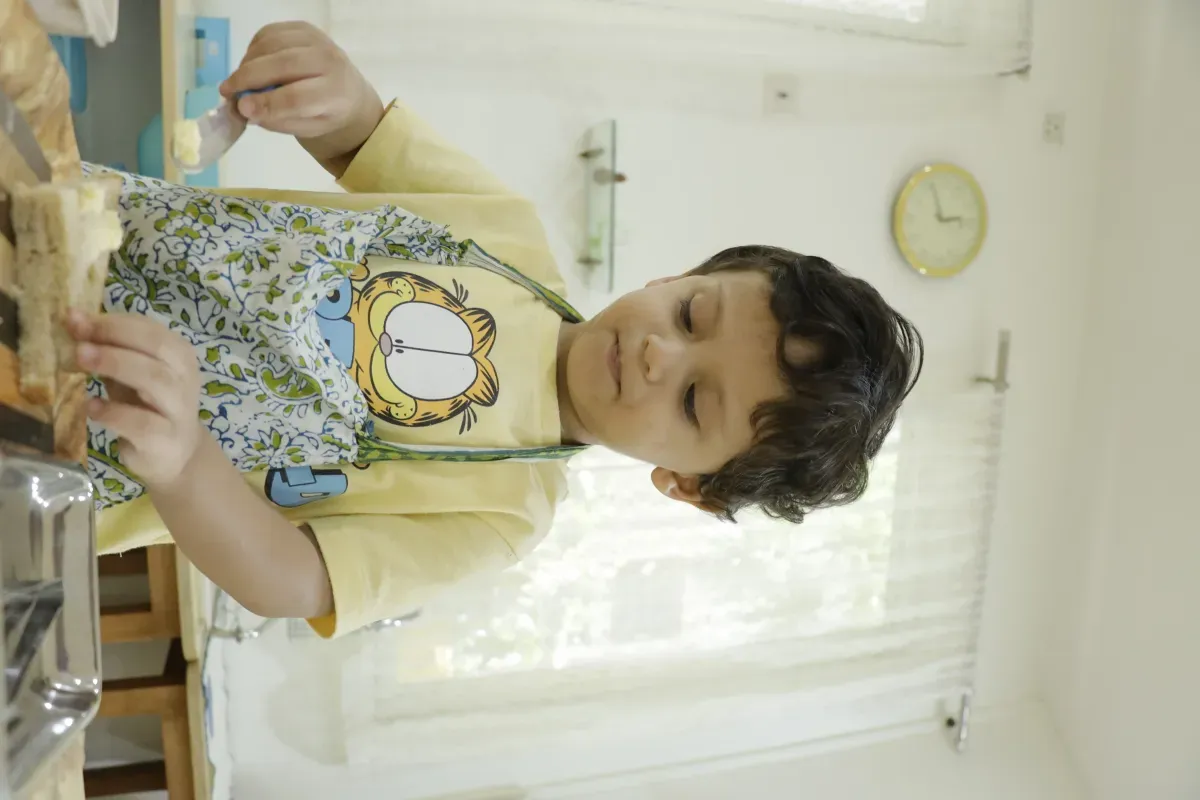
Pillar 01: Movement (Psychomotor Development)
Concept Details
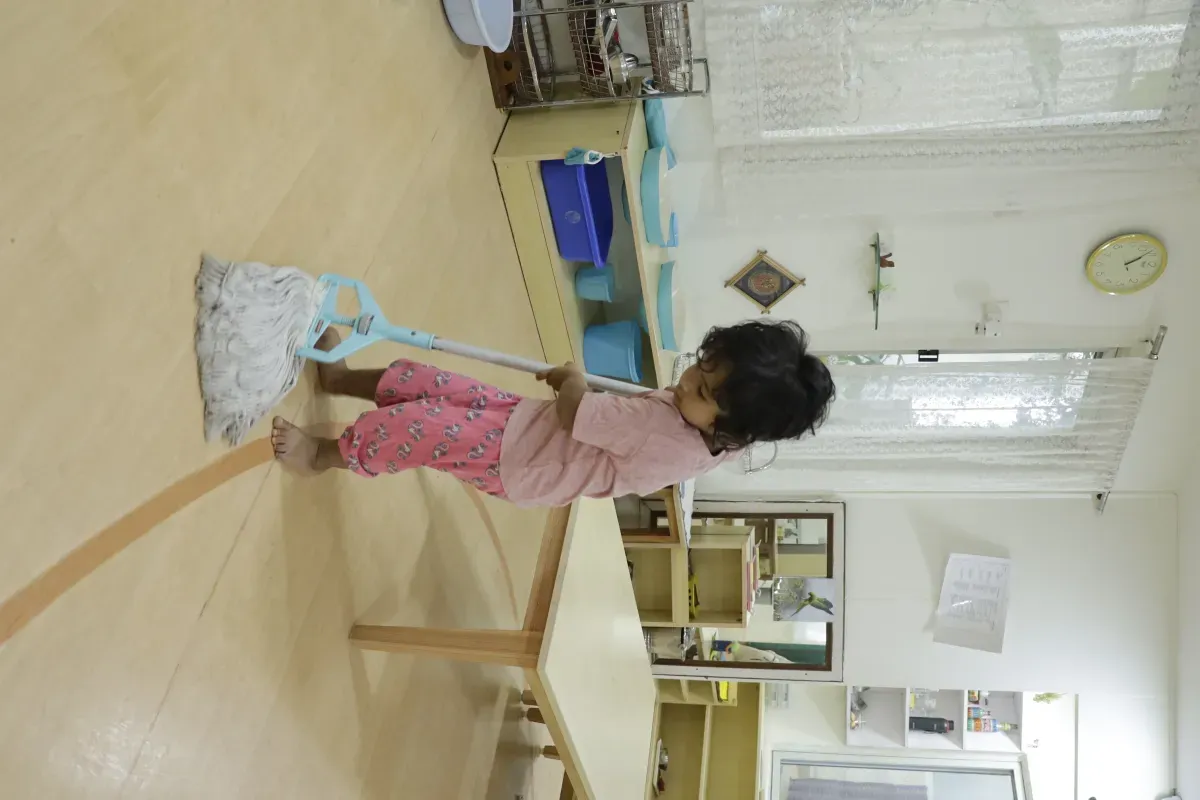
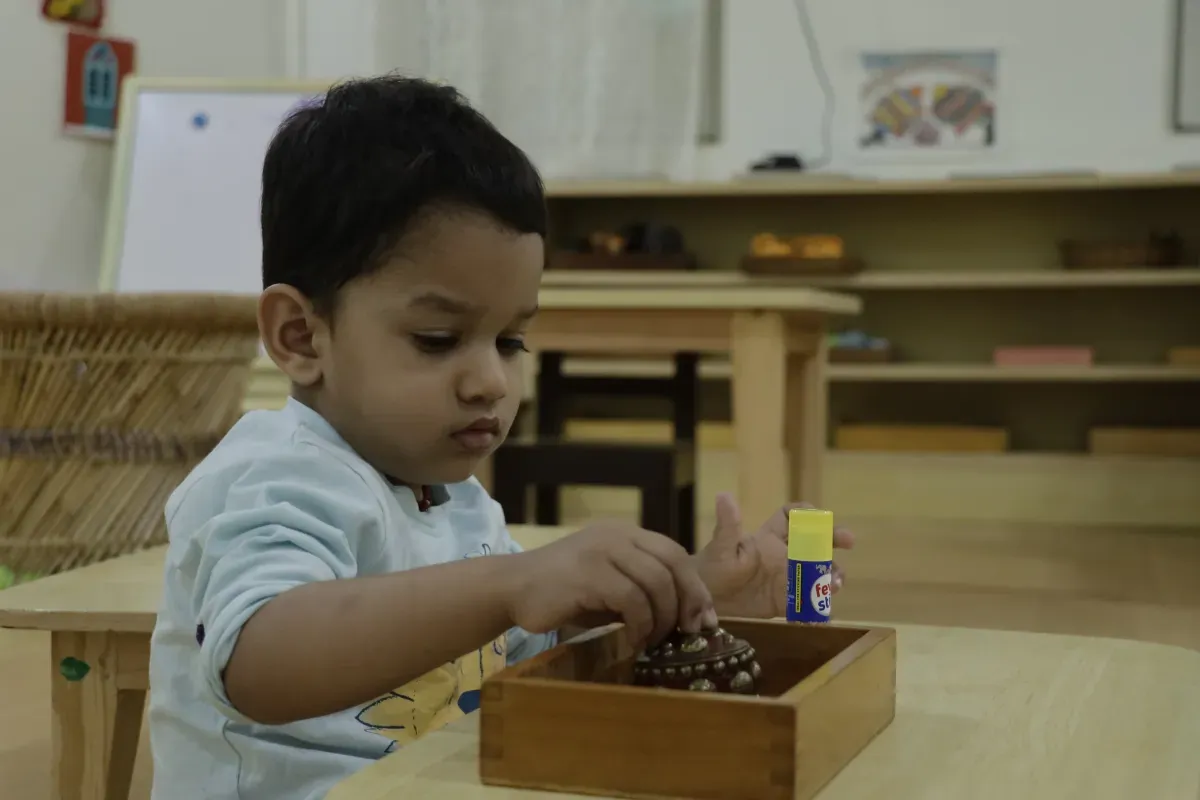
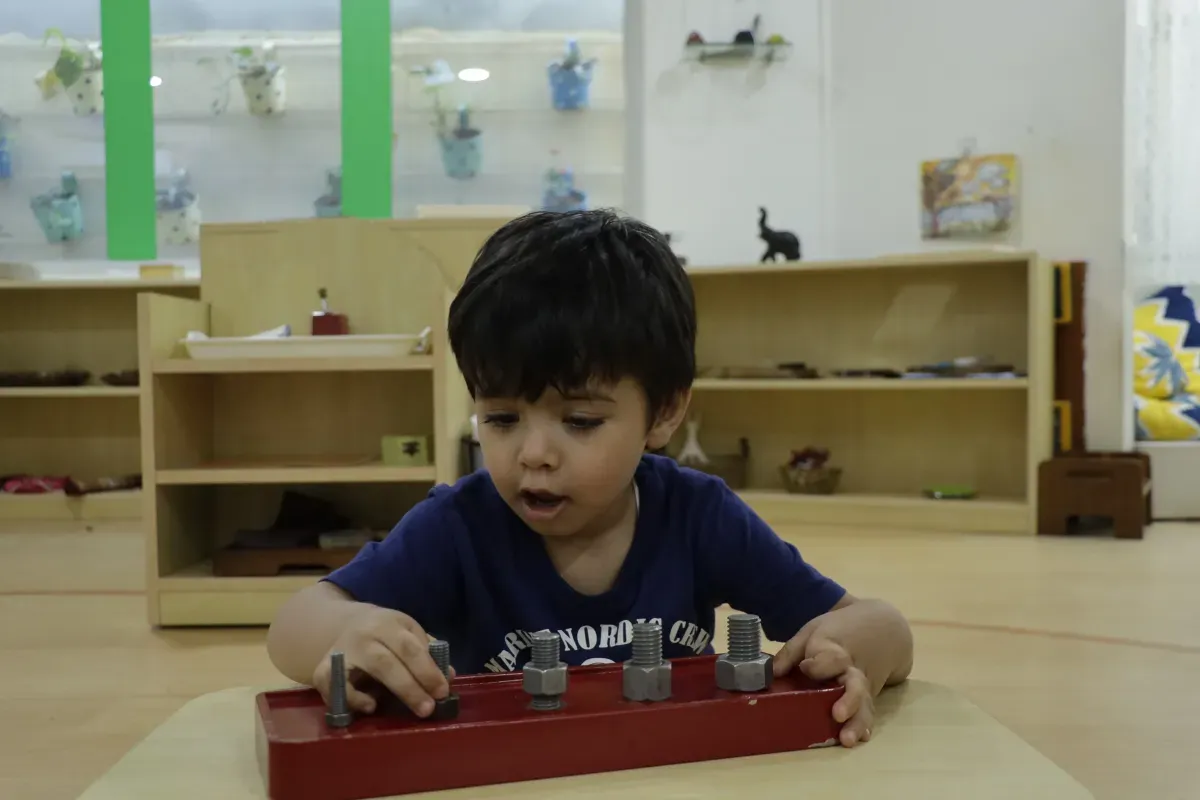
The brain develops faster between 1 and 3 years than at any other point in time, and movement is what drives that development. We do not use high chairs or playpens. Instead, the environment allows for free, purposeful movement through low shelves, heavy stools for balance, and materials chosen for fine motor development.
Settling In: What to Expect
For many families, this is their child's first step away from home. Our settling-in process is gentle and gradual; we work with you, not around you, to make that transition feel safe for both parent and child.
- •
Gradual Onboarding: Toddlers join for shorter sessions during the first one to two weeks.
- •
Caregiver Presence: Parents or caregivers are welcome to stay until their child becomes comfortable.
- •
No Rushed Transitions: We move at the child's speed, building trust organically.
Parent Communication
At pickup, your guide shares a brief verbal observation. You will never wonder what happened during their day.
Holistic Growth
What Your Child Develops
Through their time in the Toddler Community, children develop not just specific skills but a confident way of being in the world.
Trust
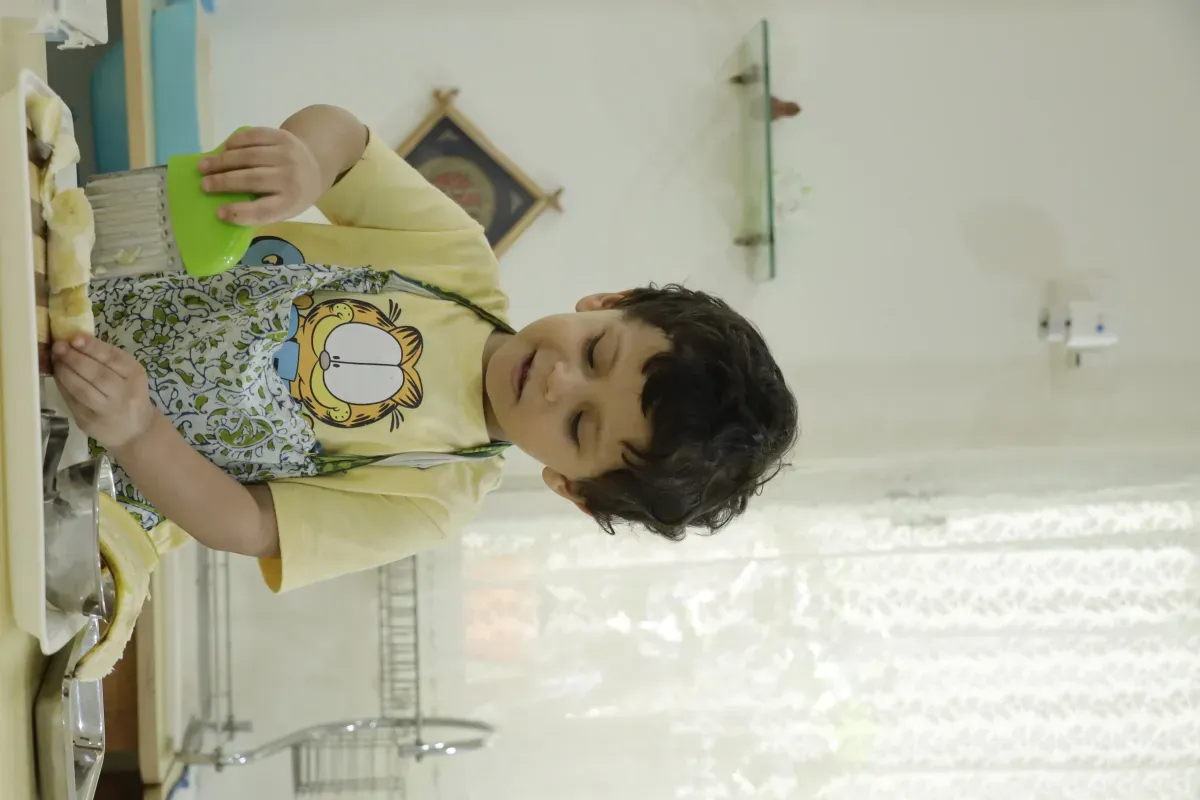
Before a child learns anything, they need to feel safe. Through the gentle, consistent presence of their guide, the same face, tone, and unhurried response every day, the toddler builds the inner security that allows them to explore. A child who trusts their environment will try. A child who doesn't, won't.
Emotional Development
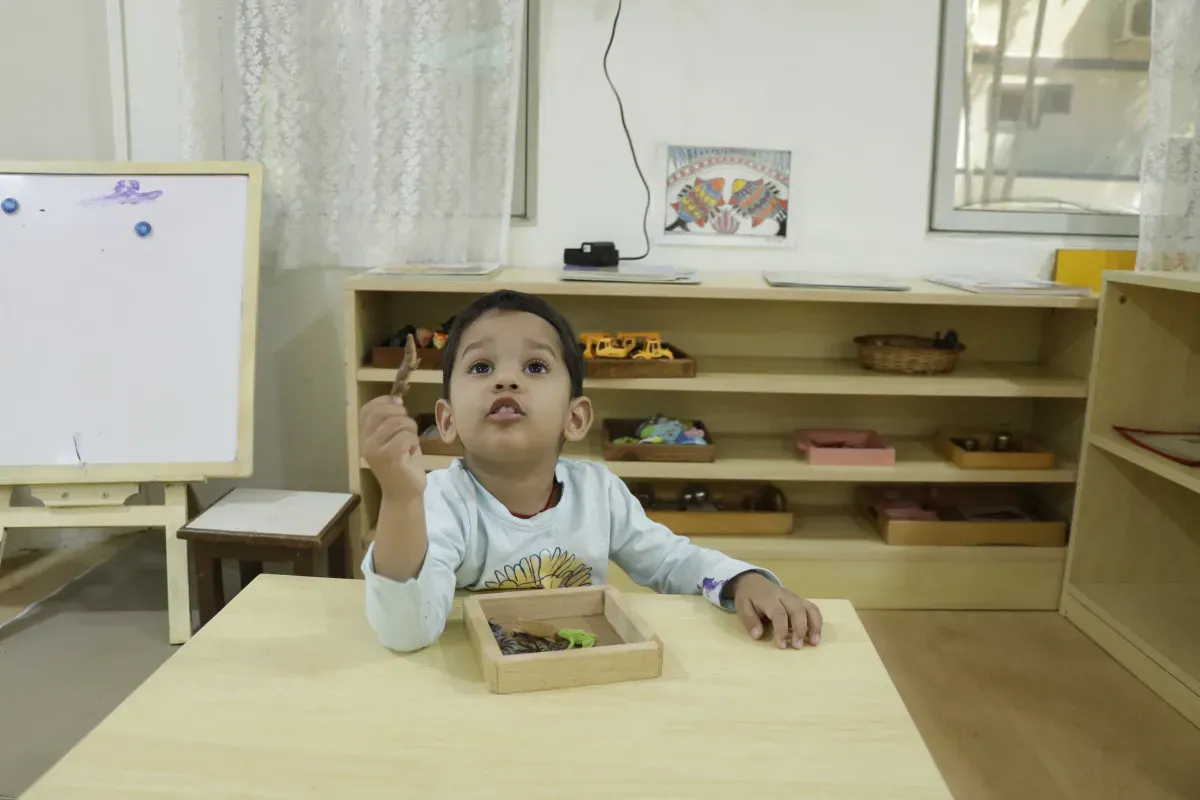
Below age 3, a child cannot yet name what they feel but they feel everything. One of the quietest and most important things in the Toddler Community is that children begin to recognize their own emotional states (Frustrated, Disappointed, Proud, Happy) and find words for them, beginning emotional regulation.
Sense of Responsibility & Belonging
A toddler who waters the plants, sets the table, or comforts a crying friend is discovering that they are needed and that their presence makes a difference. This sense of belonging, arrived at through contribution rather than praise, is the earliest form of empathy.
Functional Independence
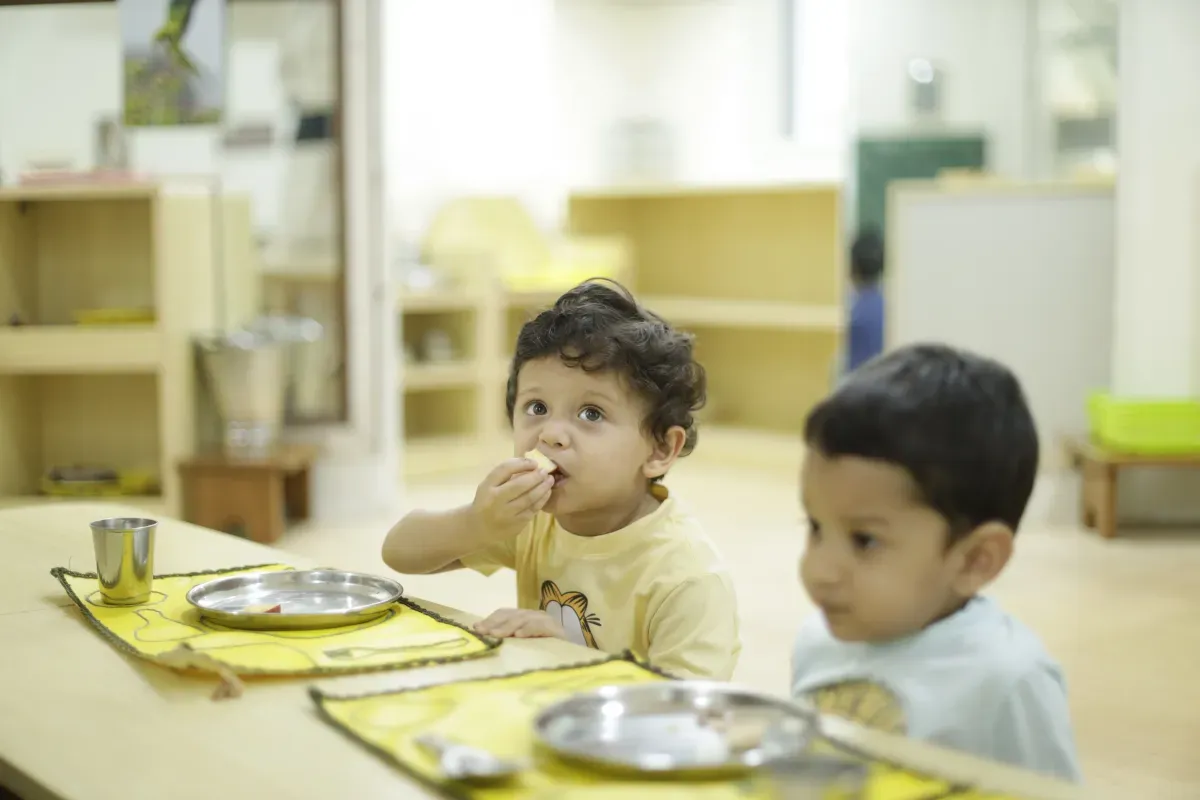
The ability to eat, dress, and care for themselves without waiting for an adult, a capability most parents don't expect at this age. Independence at this age isn't about doing things alone. It's about knowing you can.
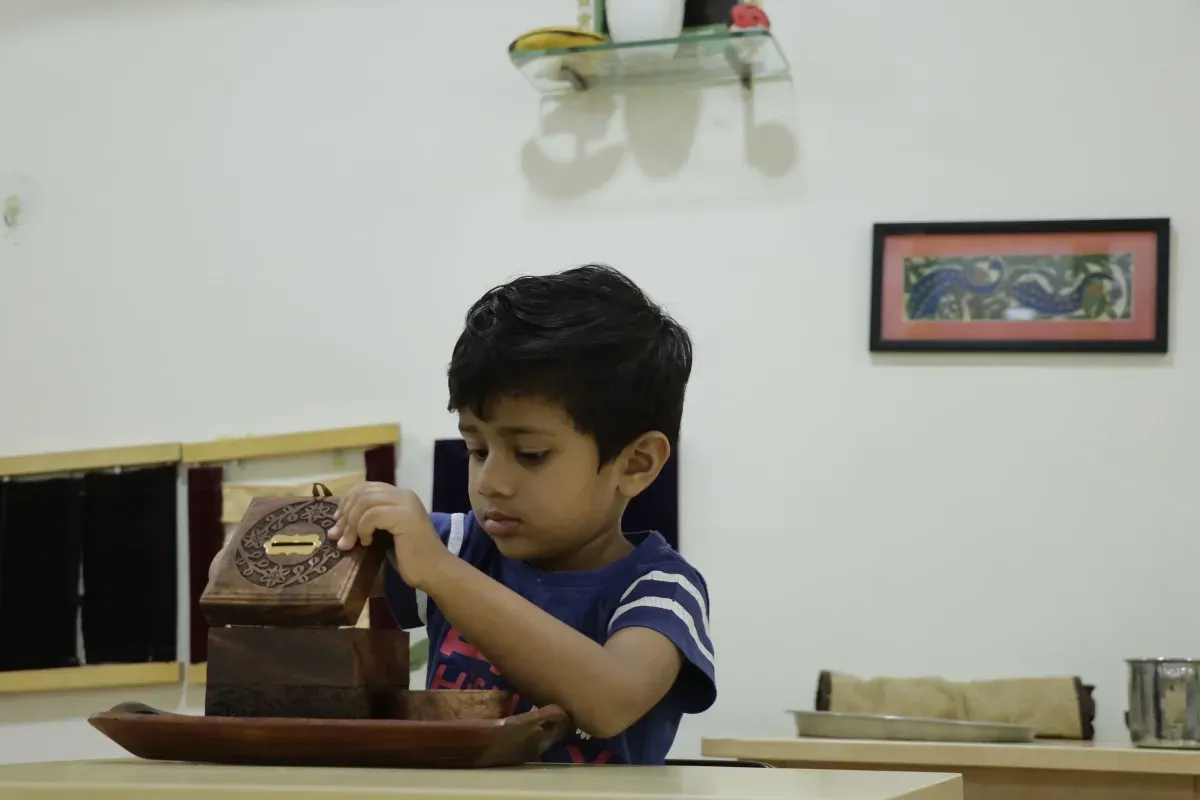
Concentration
Even at 18 months, a toddler can focus deeply when the activity meets their developmental needs. We see it every day: a child returning to the same work four, five, six times, absorbed completely, unbothered by the room around them. This is what children do under the right conditions.
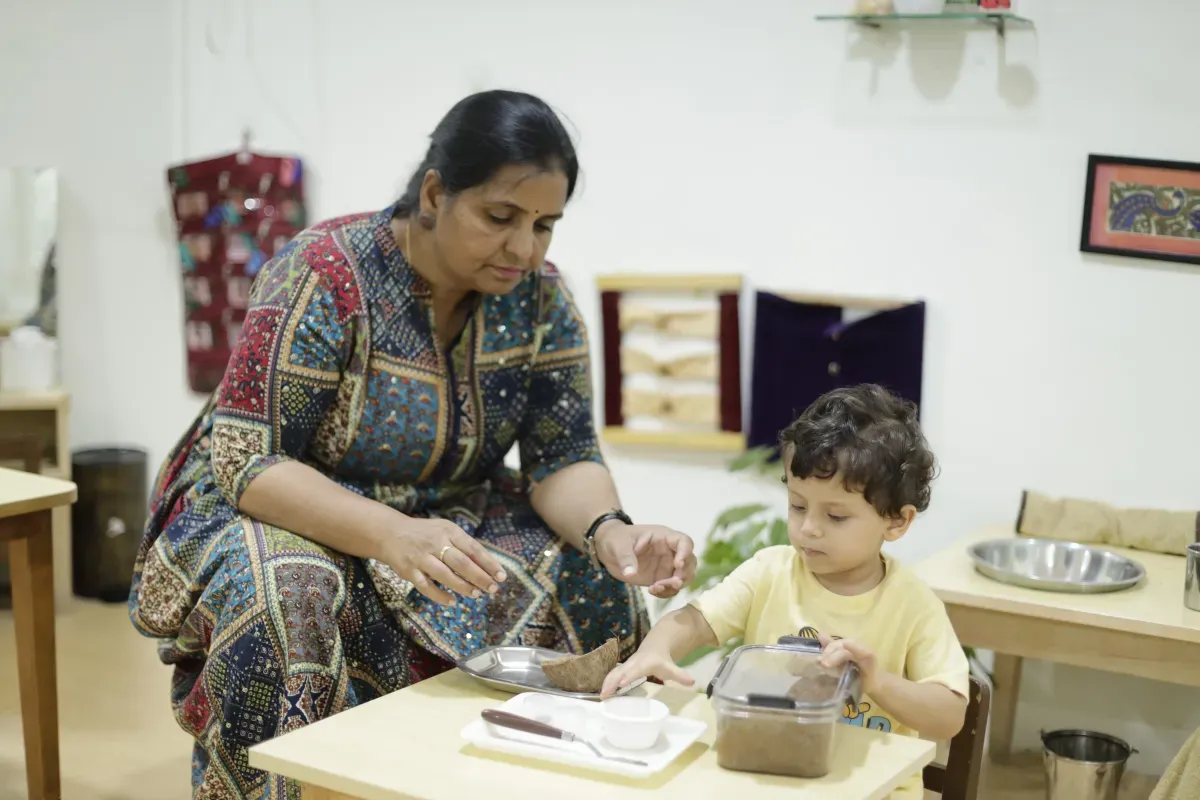
Joy
Not the joy of being entertained or praised. The quiet, unmistakable joy of having done something by yourself, with your own hands, and knowing it. That is the joy we work for every day.
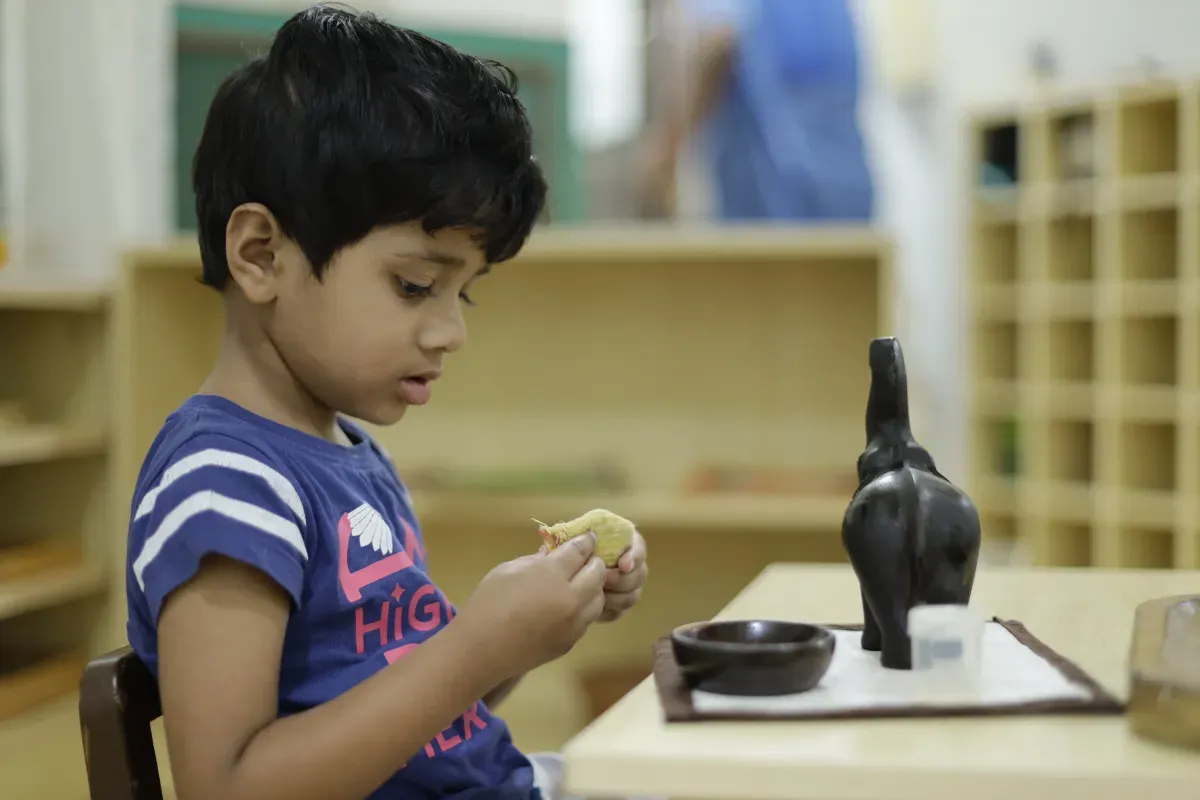
Sensorial Environment
Every material has a purpose. Every purpose has a child.
Daily rhythm
A Day in the Toddler Community
Batch Timings
Our program operates in two batches daily. Each session is an unhurried 2 hours, carefully configured for deep engagement without causing fatigue.
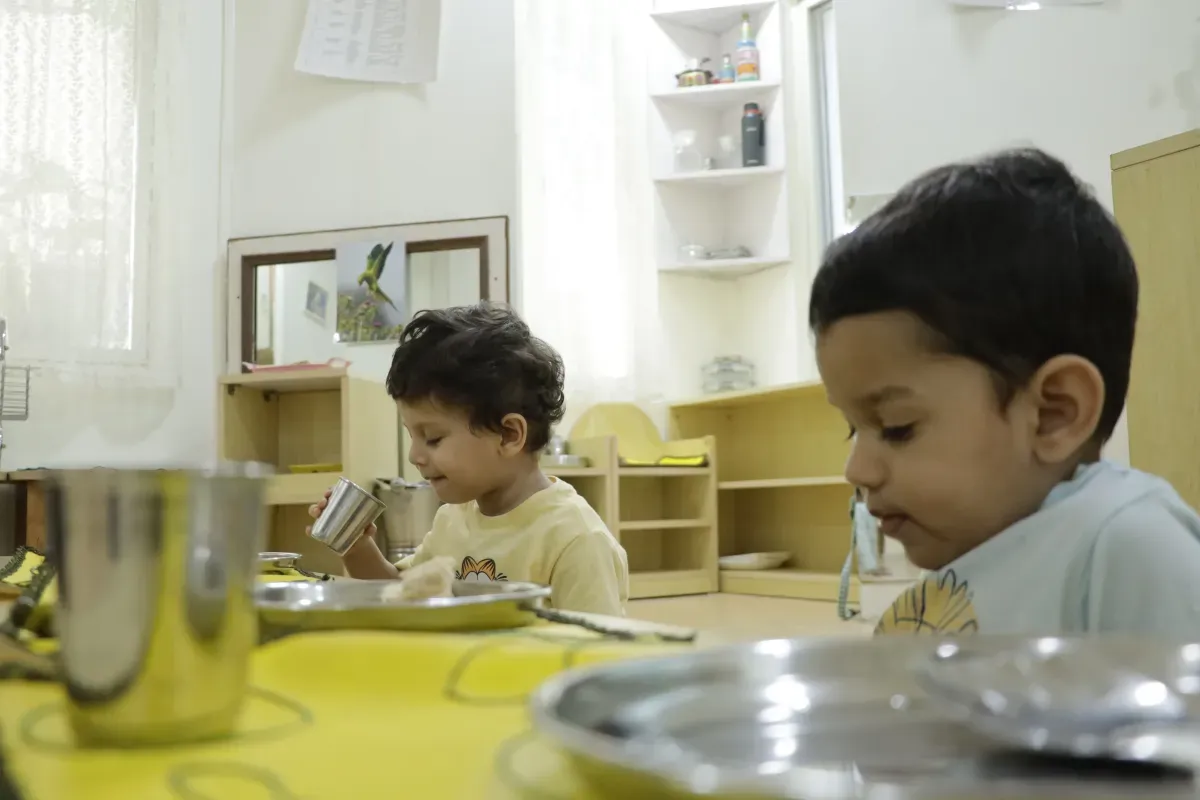
Real food prepared independently by the children during community snack time.
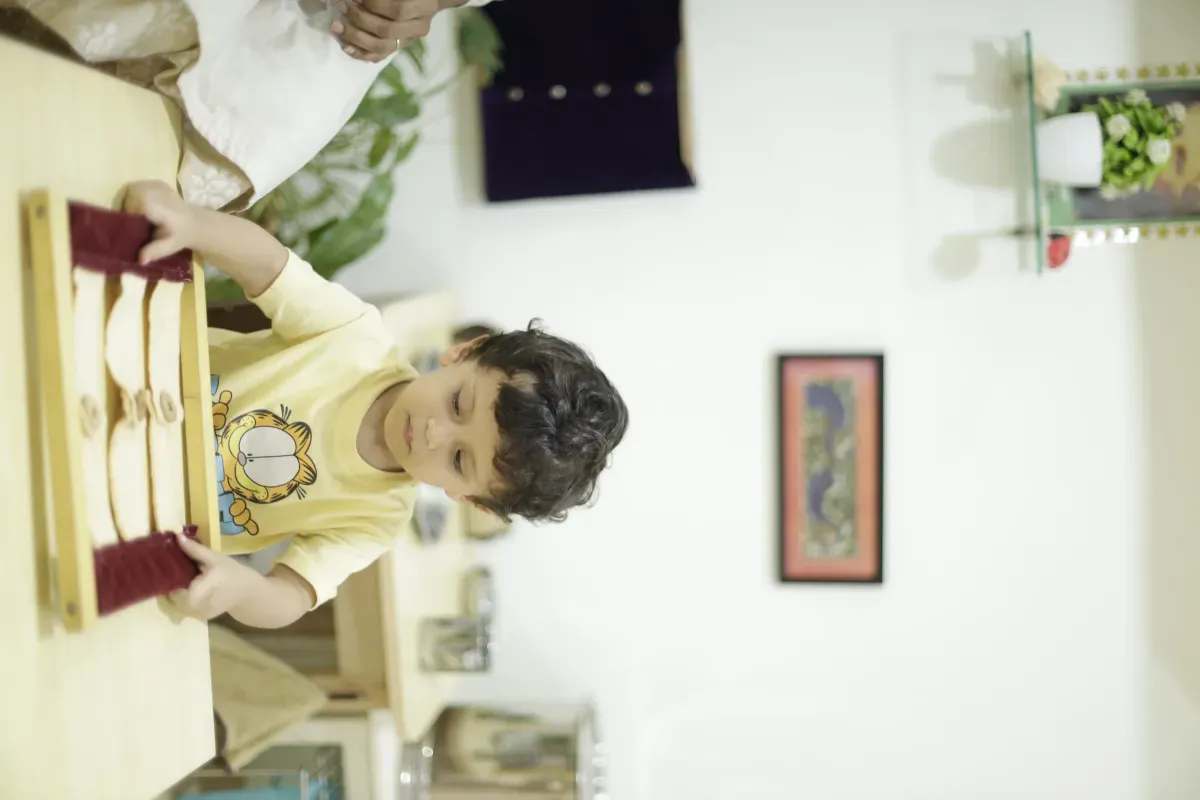
Prepared Environment
Every chair, table, shelf, and utensil is proportioned to the child's size, allowing them to gain control over their movement.
The Prepared Adult
Guided by Observation, Not Instruction
In the Toddler environment, the adult is not a teacher who delivers lessons. They are a guide who prepares the environment and then steps back. The art of working with 1-3 year olds lies in knowing when to offer help and when to wait.
AMI Assistants to Infancy (0–3)
Our guides undergo the most rigorous training available for early childhood development. They are certified by the Association Montessori Internationale (AMI) specifically for the Assistants to Infancy level, focusing on child development from birth to three years of age.
"I prepare myself through stillness and reflection. My role is to step back when the child is capable, and step in only to offer support — ensuring every child feels safe, respected, and deeply valued."
— Toddler Guide CommitmentFAQ
Frequently Asked Questions
Witness It for Yourself
Most people are surprised by what a two-year-old can do when given the right environment. We invite you to come, sit quietly, and watch. Observations are free, unhurried, held at our Hyderabad campus, and require no commitment.
Read
Is Montessori Right for Your Family?
A practical guide for parents evaluating Montessori education, developmental independence, and home-school alignment.
Montessori vs Traditional Education: What the Research Shows
Understanding how self-directed work and multi-age classrooms build lifelong focus, critical thinking, and intrinsic motivation.
How to Keep Children Connected to Nature: Six Small Habits at Home
Simple, daily habits parents can introduce at home to foster a deep connection to nature and sensorial learning.

What Do Children Draw When Asked About Life? Trees and the Sun
Observations from our art and cosmic education environments on how children perceive the living world.