

AMI Montessori Teacher Training in India
The AMI diploma is the internationally recognised standard for Montessori teacher training. This page covers every diploma available in India, all seven AMI-affiliated training centres, eligibility, duration, and what an AMI qualification means for your career.
Blue Blocks Montessori School in Hyderabad is guided by AMI principles across all levels from birth to 18. Our founder Pavan Goyal holds all four AMI diplomas; 0–3, 3–6, 6–12, and 12–18; one of the few educators globally to have completed the full continuum.

Association Montessori Internationale
Founded 1929 by Dr. Maria Montessori
What Is the AMI Montessori Diploma?
The AMI diploma is issued by the Association Montessori Internationale — the organisation founded by Dr Maria Montessori in 1929 to protect the integrity of her method. It is the only Montessori teacher qualification issued directly under the authority of the organisation Montessori herself created.
An AMI diploma is not a certificate course. It is a rigorous professional qualification spanning nine to twenty-two months of full-time study. Training covers child developmental science, observation methodology, hands-on material mastery, and supervised classroom practice. It is recognised by Montessori schools in over 110 countries.
Which AMI Diploma Do You Need?
AMI diplomas are structured around the four planes of human development. Each diploma qualifies a guide to work with one specific age group.
AMI Assistants to Infancy
AMI Primary Diploma
AMI Elementary Diploma
AMI Adolescent Orientation
| Diploma | Age Group | Environment |
|---|---|---|
| AMI Assistants to Infancy | 0–3 years | Infant and Toddler Community |
| AMI Primary Diploma | 3–6 years | Pre-Primary — Nursery, PP1, PP2 |
| AMI Elementary Diploma | 6–12 years | Primary School |
| AMI Adolescent Orientation | 12–18 years | Secondary School |
Most aspiring Montessori teachers in India begin with the AMI Primary Diploma (3–6). It covers the most widely available age group and the broadest range of schools. The AMI Elementary Diploma (6–12) is the natural second qualification for those wanting to follow children through the continuum.
What AMI Montessori Training Involves
Every AMI diploma programme covers four components regardless of age level.
Theoretical Study
Dr Montessori's texts on child development, social philosophy, and human tendencies. Developmental science as it relates to each plane of development.
Material Study and Album Preparation
Detailed instruction on every Montessori material — its purpose, its sequence of presentation, and its position in the child's developmental arc. Trainees prepare a complete written album documenting every presentation. This is the primary assessed work product of the diploma.
Supervised Practice
Hands-on practice of material presentations under AMI trainer supervision. Presentations are repeated until mastery. This is active, corrected practice — not observation.
Classroom Observation
Verified passive observation hours in accredited AMI Montessori environments. Trainees observe real children working in prepared environments and record what they see systematically.
AMI Diploma Eligibility
20 years
Bachelor's degree in any discipline — preferred; exceptions considered for motivated candidates
Proficient spoken and written English — all coursework, albums, and examinations are in English
Application form and personal interview required at all centres
| Requirement | Detail |
|---|---|
| Minimum age | 20 years |
| Education | Bachelor's degree in any discipline — preferred; exceptions considered for motivated candidates |
| Language | Proficient spoken and written English — all coursework, albums, and examinations are in English |
| Admission | Application form and personal interview required at all centres |
Candidates without a Bachelor's degree are not automatically excluded. Most AMI centres in India consider applications from candidates with significant relevant experience. Contact the centre directly before assuming ineligibility.
AMI-Affiliated Training Centres in India
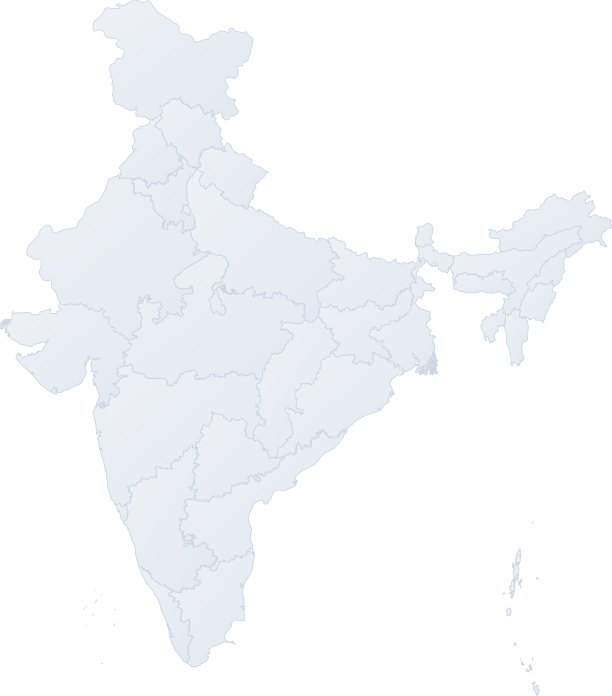
All seven centres below are listed on the official AMI global training centre directory at montessori-ami.org. This is the complete confirmed list as of September 2026.
Schedules and intake dates change annually. Always confirm directly with the centre before applying.
Jeedimetla, Hyderabad, Telangana
- AMI Assistants to Infancy Orientation (0–3)
- AMI Primary Diploma (3–6)
- AMI Elementary Diploma (6–12) — delivered in partnership with Medha Montessori Institute
- AMI Adolescent Orientation (12–18)
- AMI Core Principles Certificate
- Orientation and Assistants Adjunct courses
Offline, full-time for all diploma courses
Monday–Friday, approximately late August to April. Current cycle: August 2026 – April 2027.
Minimum age 20. Bachelor's degree preferred. Working English. Admission by application and interview.
| Address | Jeedimetla, Hyderabad, Telangana |
| Website | montessorihyderabad.org |
| Contact | info@montessorihyderabad.org |
| Courses offered |
|
| Mode | Offline, full-time for all diploma courses |
| Schedule | Monday–Friday, approximately late August to April. Current cycle: August 2026 – April 2027. |
| Eligibility | Minimum age 20. Bachelor's degree preferred. Working English. Admission by application and interview. |
Source: AMI Global Training Centre Directory — montessori-ami.org/training-programmes/training-centres. Last verified: September 2026.
AMI vs Non-AMI Montessori Training; What Is the Difference?
Qualification depth
An AMI diploma requires nine to twelve months of full-time study, a complete written album of material presentations, supervised practice, and verified observation hours in live AMI environments. It is a professional qualification, not a certificate course.
School recognition
AMI-affiliated schools in India and internationally require an AMI diploma for lead guide positions. If your goal is to work in a school operating authentic AMI Montessori, the AMI diploma is the relevant qualification.
International career portability
An AMI diploma qualifies you to teach in AMI-affiliated schools in over 110 countries. No other Montessori qualification in India offers this.
The honest answer
If you want to work in authentic Montessori, in India or internationally — train with AMI.
AMI Training and Blue Blocks, Hyderabad
Blue Blocks supports aspiring Montessori guides in two ways.
Observation in a Live AMI Environment
Prospective trainees and current trainees completing observation hours are welcome to apply for observation sessions at Blue Blocks. Our environments cover the full 0–18 continuum — Infant and Toddler, Pre-Primary, Primary, and Secondary, giving trainees access to every age-level environment in one school.
Guide Sponsorship
Blue Blocks sponsors selected guides through AMI diploma training. Sponsorship is offered to candidates joining the school's team who are committed to completing the relevant diploma. Enquire through our team via our Careers page.
Sponsorship
Working on this. Will add here soon.
Formal guidelines and application criteria for candidate guide sponsorship are currently in development. If you are an aspiring guide or diploma applicant seeking sponsorship support, please consult our team via the Careers page or connect directly with our training coordinator below.
Frequently Asked Questions
About AMI Qualifications
About Training Format and Duration
About Careers and Outcomes
Train in an Environment Where the Method Is Lived
Blue Blocks is one of the few schools in India where AMI Montessori is practised continuously from 15 months to 16 years. If you are considering AMI training or completing observation hours, we welcome enquiries from serious candidates.
Training Coordinator: Ramya Devi
+91 9154160971Read
Is Montessori Right for Your Family?
A practical guide for parents evaluating Montessori education, developmental independence, and home-school alignment.
Montessori vs Traditional Education: What the Research Shows
Understanding how self-directed work and multi-age classrooms build lifelong focus, critical thinking, and intrinsic motivation.
How to Keep Children Connected to Nature: Six Small Habits at Home
Simple, daily habits parents can introduce at home to foster a deep connection to nature and sensorial learning.
What Do Children Draw When Asked About Life? Trees and the Sun
Observations from our art and cosmic education environments on how children perceive the living world.