


What Do Children Draw When Asked About Life? Trees and the Sun
Some research findings surprise us. Others confirm what most parents already sense but have never had the numbers to say out loud. This one is the second kind.
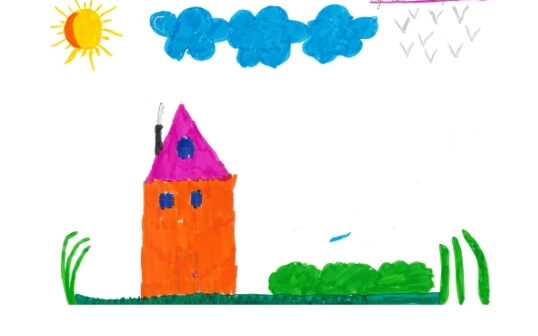
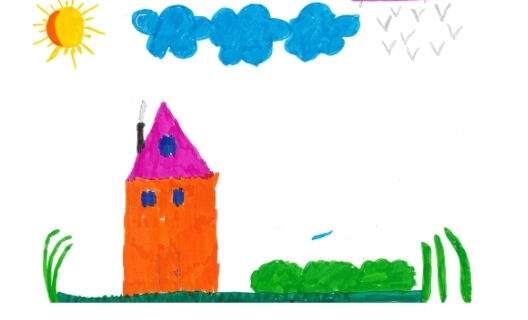
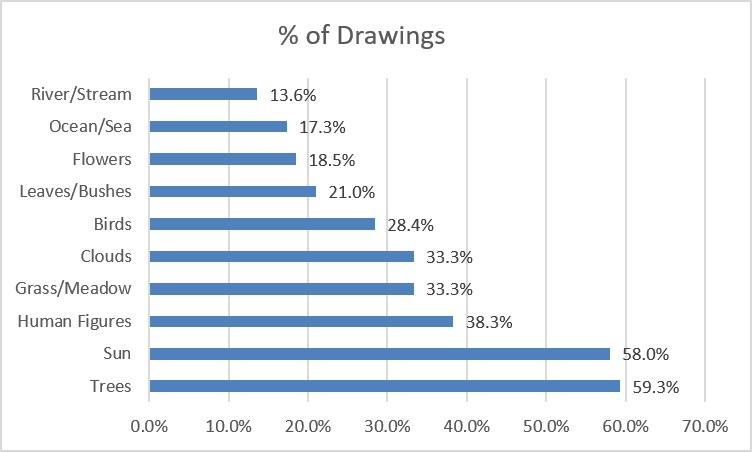
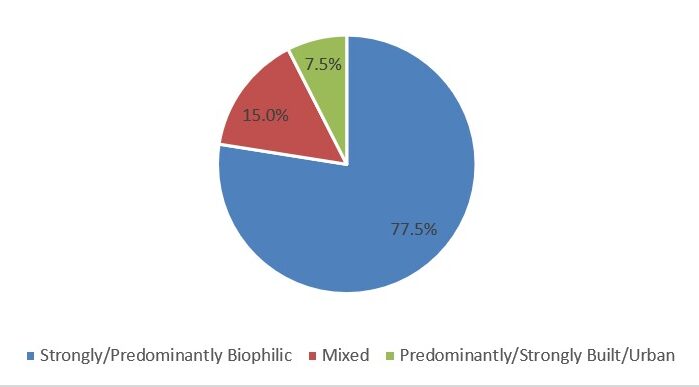
What do children draw when a prompt does not tell them what to draw? When we asked eighty-one children at Blue Blocks Montessori School to draw a place where life can exist, without prompting them toward nature or away from it, 77.5 percent drew nature. Trees appeared in nearly six of every ten drawings. The sun in almost as many. The full dataset is publicly available on Harvard Dataverse.
What do children draw? Nature, most of the time. This is what our study of eighty-one children found, and what we think it means.
Read on to reach the Try This At Home section for a practical, real-time example.
The prompt and what we wanted to know
The biologist Edward O. Wilson argued in his 1984 book Biophilia that humans carry an evolved affinity for other living things. Not a cultural preference, but something shaped over millions of years of living inside natural environments. If Wilson is right, we should be able to see it in what children draw when a prompt does not push them anywhere in particular.
Carl Jung made a related prediction in 1964. Certain images, including trees, water, and the sun, recur across human cultures because they carry meaning the human imagination has always found weight in.
Two theories from very different traditions, one shared prediction: when children imagine life, we should see them draw nature on their own.
What do children draw when asked about life? What we found
Of the eighty-one drawings, 77.5 percent were classified as predominantly or strongly showing nature. Trees appeared in 59.3 percent of drawings. The sun in 58 percent. Water, which Jung named as one of the deepest symbols of life, appeared in 60.5 percent.
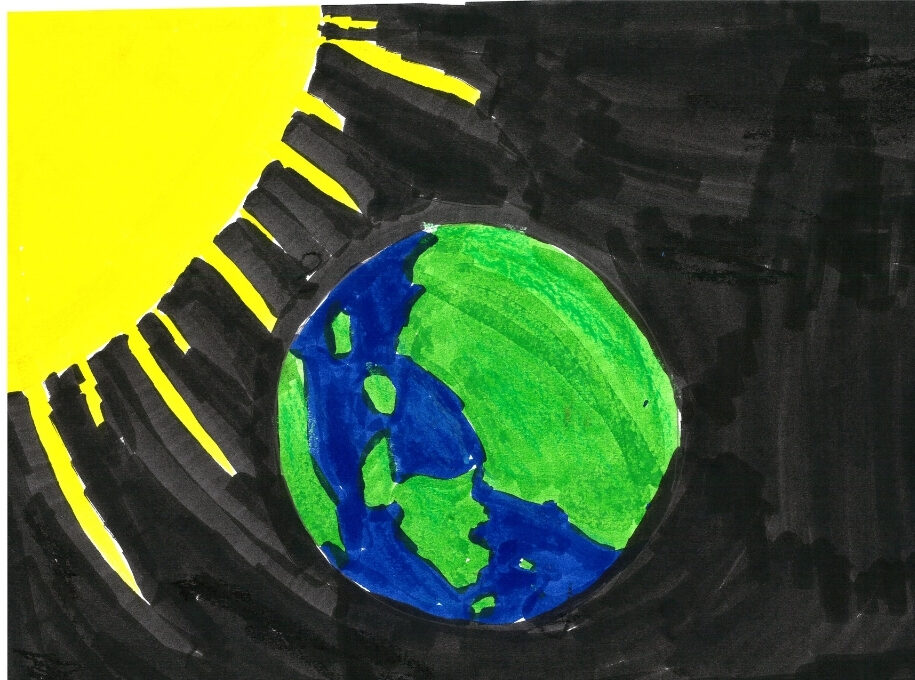
Some children took the prompt further than we expected. One six-year-old produced a drawing with every one of the twenty-three categories we measured. Another drew the whole planet Earth as her answer. A third drew a spiderweb on a tree, ecologically specific in a way that surprised the observers on the day.
These are not random distributions. What do children draw when asked to imagine life? The elements humans have always associated with it.
Why trees and the sun
A tree is where growth happens. A tree offers shelter. A tree connects the earth and the sky in a single form. Children draw them without being taught the symbolism because trees carry it in the world itself.
The sun is more direct. Where the sun reaches, things grow. Where it does not, they do not. A child placing the sun above a scene is not making a decorative choice. She is placing life inside the conditions that make life possible.
Jung’s argument was that certain images are so foundational to human experience that they appear repeatedly across cultures without being taught. The drawings suggest he was right about which images children reach for first.
What this suggests
What do children draw when their school has kept them close to real materials for years? At Blue Blocks, we have watched children work with real glasses, real plants, real earth from age 15 months onward. The drawing study confirms something we have seen for seventeen years but could not put into numbers.
Children are not detached from nature and needing to be introduced to it. Nature is where their imagination already lives. Which means the practical implication is not to teach children to care about nature. It is to protect the conditions in which what they already carry is not lost.
Try this at home
What do children draw when a parent tries this exercise at home? On our reading of eighty-one drawings, almost always some version of nature.
Hand your child a piece of paper and a pencil. Say only what we said: Draw a place where life can exist. Do not add examples. Do not tell her what you mean. Just watch what she draws.
Trees. The sun. Water. Perhaps a bird or a flower. Sometimes a house, but usually a house nestled inside something greener. It is not a diagnostic exercise. It is a window into what her imagination already contains.
What we take from this
What do children draw when the prompt lets them choose? Trees and the sun. A river running through it. A bird flying overhead. When we ask children where life is, they show us in the images they already carry. The question worth keeping is whether the world we build for them, in schools and homes and cities, keeps faith with what they already know.
Related reading
- How to raise a curious child
- Catching up to your child: a parent guide to staying relevant
- Follow the child vs helicopter parenting: what the Montessori difference really is
Authors:
Pavan Goyal, Co-founder and Principal Investigator, Blue Blocks Micro Research Institute. Trustee, Indian Montessori Foundation. Holds all four AMI Montessori diplomas. ORCID: 0009-0009-8840-8505. LinkedIn.
Munira Hussain, Co-founder and Director of Pedagogy, Blue Blocks Montessori School; Secondary Investigator, Blue Blocks Micro Research Institute. AMI Auxiliary Trainer. ORCID: 0009-0003-5904-6206. LinkedIn.