


How to Keep Children Connected to Nature: Six Small Habits at Home
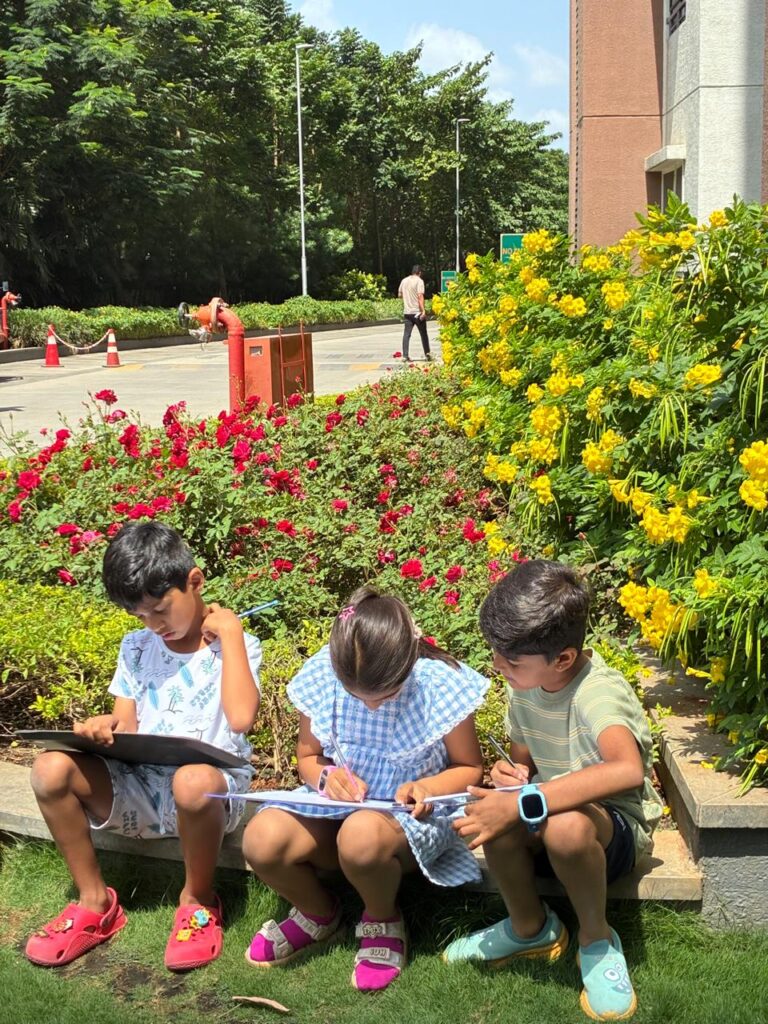
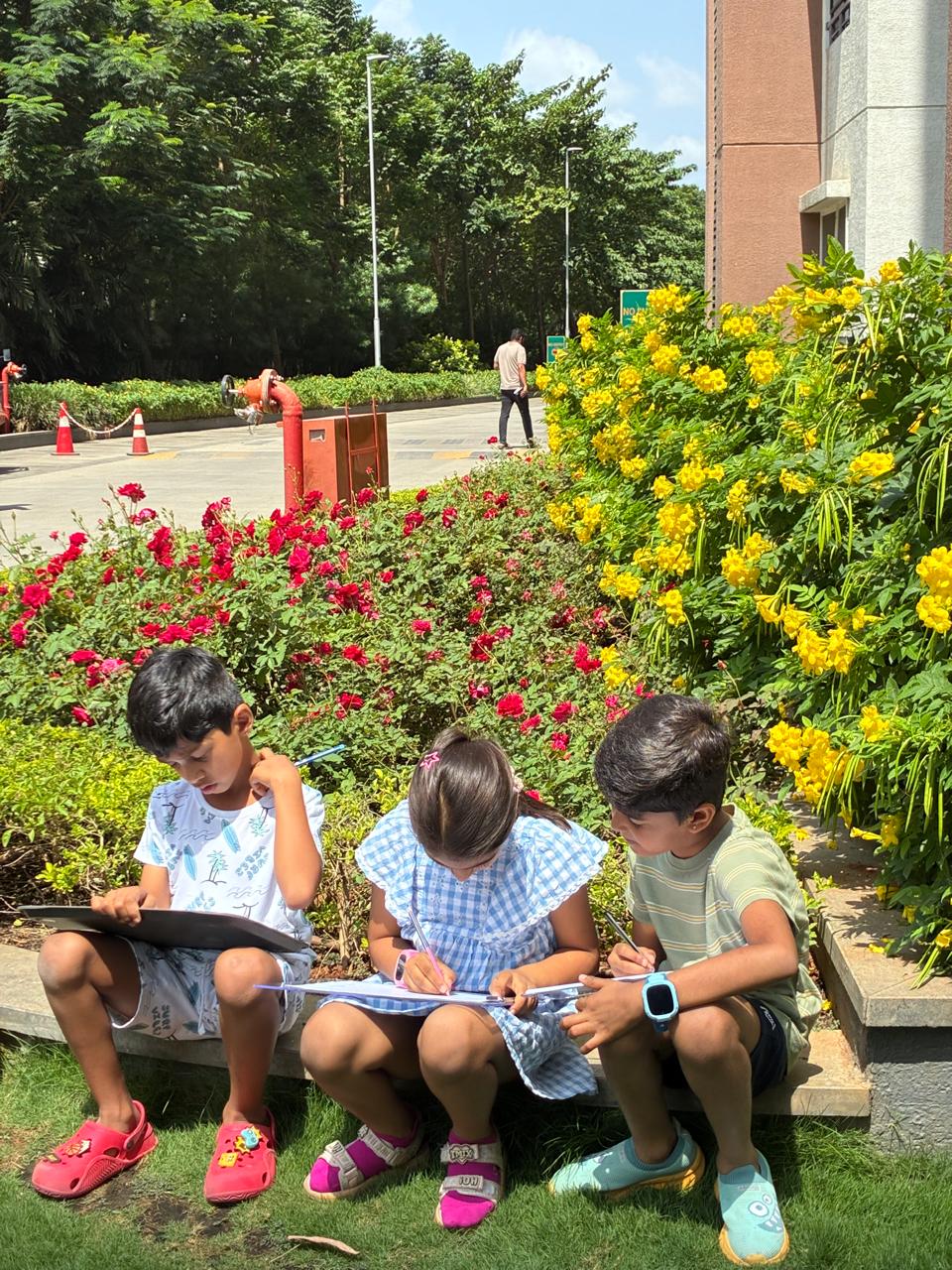
Our recent pilot study of 81 children found something that most parents already sense but rarely see confirmed. When children are given a piece of paper and asked to draw a place where life can exist, 77.5 percent draw nature. Trees, the sun, water, animals, and sky, in that order.
This piece answers a different question. How to keep children connected to nature at home, as they grow, as urban life competes for their attention, as screens beckon. Not what children draw. What you can do to keep them drawing it. Six small habits, none of them dramatic, each of them practical, all of them about how to keep children connected to nature through the years of childhood.
What we know from the research
The idea that human beings carry an evolved affinity for other living things has a name: biophilia. The biologist Edward O. Wilson introduced the term in his 1984 book of the same name, arguing that our attraction to trees, water, animals, and open landscapes is not a cultural preference we pick up. It is something deeper.
Twenty years later, the American author Richard Louv described the modern problem in his book Last Child in the Woods. He called it nature-deficit disorder, meaning the pattern in which modern urban children lose their natural contact with the living world, and lose something important with it. The framework has been widely discussed in early childhood research since.
What is worth naming honestly: the attenuation is not inevitable. Every parent has more influence at home, on this specific dimension, than most parents realise.
How to keep children connected to nature: six habits at home
This is the practical core for bringing nature into everyday home life. Whether you have a garden, a terrace, or just a small apartment window, these habits require no special conditions to work:
Habit 1: Real things over representations
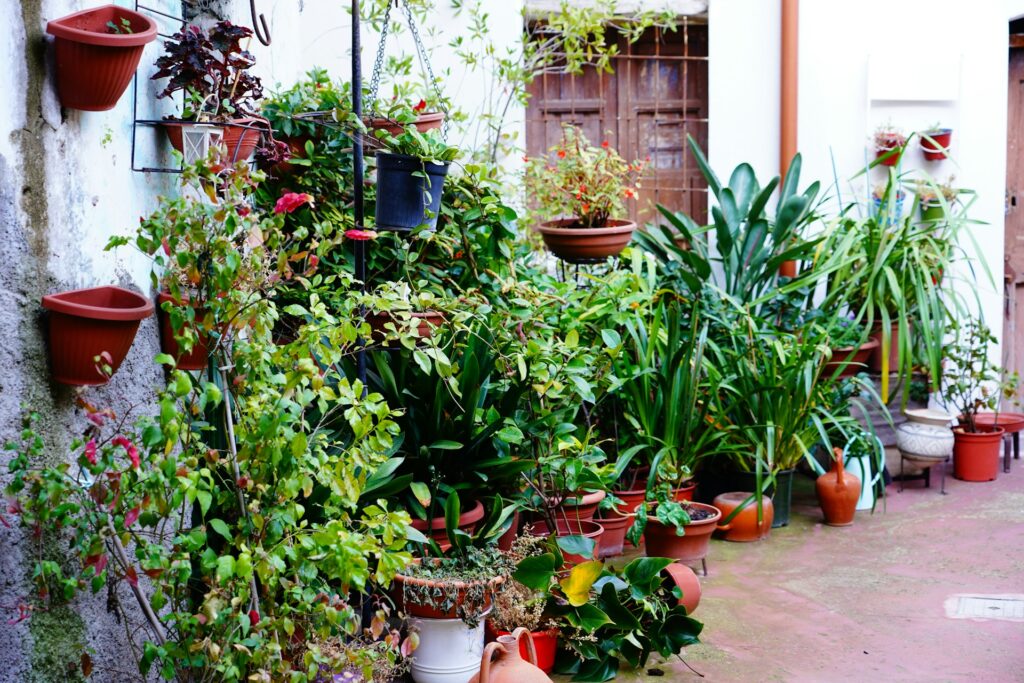
Choose a real plant over a plastic one, and real materials for a child to hold and smell. Even the smallest apartment has room for a living plant. Direct contact builds a lasting connection to the world, whereas learning through representations thins out over time.
Habit 2: A window as a daily practice
Swap screens for windows. Spend ten quiet minutes a day with your child watching birds, shifting weather, or changing light. Don’t feel the need to narrate everything; let noticing be the activity itself. This quiet observation builds an attention span that structured activities cannot.
Habit 3: Outdoor time built into the daily rhythm
Incorporate nature into the ordinary flow of your day through a daily walk or morning terrace time. Consistent, everyday exposure teaches a child that nature isn’t just a scheduled weekend treat, it is the foundational background of their life.
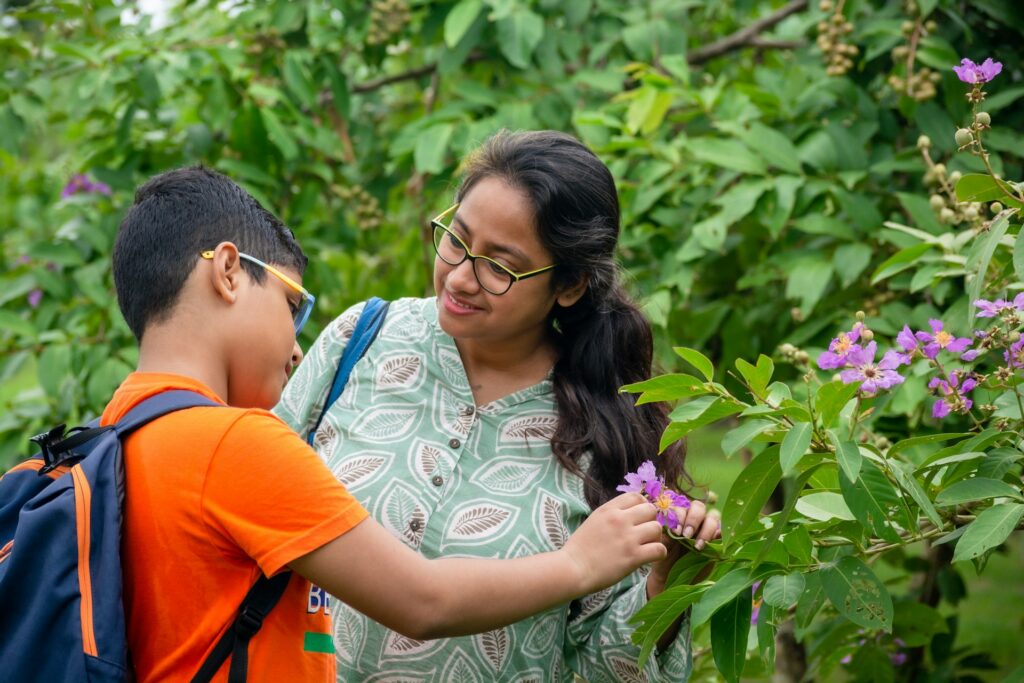
Habit 4: Talk about the weather and the light
Notice aloud when it rains, mention when the sun sets earlier, or ask what they think when the wind shifts. Children learn to pay attention to the natural world by watching adults who do. It costs nothing, it only takes an invitation to notice.
Habit 5: Let children participate in caring for something alive
Let them water a plant, feed a pet, or weed a small garden bed. When a child takes responsibility for the well-being of another living thing, their imagination of what is alive expands. This simple act builds a relationship that observation alone cannot achieve.
Habit 6: Reduce screens to make room for the other five
Screens aren’t the enemy; they are just a substitute. When a child has unstructured time, they fill it with what’s most available. The realistic approach isn’t to eliminate screens entirely, but to ensure that nature is consistently there first.
What to do if you live in a city
Most families reading this live in cities. Small flats. Apartments without balconies. Neighbourhoods without gardens. The advice above still works. None of it requires a large space or a rural setting.
Small spaces hold real plants. Windows exist in every home. Terraces, when available, become powerful daily-rhythm spaces. Urban parks are enough. A small potted tomato plant on a kitchen windowsill counts. A weekly visit to a neighbourhood park counts. Frequency of contact matters more than the scale of any single moment.
Children in cities can and do develop deep connections with the natural world when the home practices support it. The question is not where you live. The question is what you choose to make available.
Why this matters
If children begin life naturally reaching for nature, then everyday parental choices about screens, walks, and windows carry immense weight. This is where the question of how to keep children connected to nature moves from an abstract concern to a daily choice.
Research consistently shows that children with regular nature contact develop their capacity to observe carefully much earlier. They also show measurable differences in attention, mood regulation, and creative problem-solving, maintaining a richer connection to the wider living world.
Ultimately, these six habits aren’t about raising environmental scientists. They are practical, daily choices designed to preserve an innate connection the child was already born with, keeping it alive during the years when the modern world tries hardest to disconnect them.
What to take from this
Your child is already reaching for nature every time she is given the chance. She was born reaching for it. What you do at home either keeps that reach open or slowly closes it. None of the six habits above require special resources or perfect conditions. They require noticing, and choosing, and doing them again tomorrow.
That is how to keep children connected to nature over the long stretch of childhood. Not through grand gestures. Through small habits, held steadily, over years.
Related reading
- What Do Children Draw When Asked About Life? Trees and the Sun
- How to raise a curious child
- Follow the child vs helicopter parenting: what the Montessori difference really is
Author:
Munira Hussain, Co-founder and Director of Pedagogy, Blue Blocks Montessori School; Secondary Investigator, Blue Blocks Micro Research Institute. AMI Auxiliary Trainer. ORCID: 0009-0003-5904-6206. LinkedIn.