


Biomimicry for Children: Inside the Park Where Families Became Researchers
Biomimicry for children starts with a sentence most people get wrong.
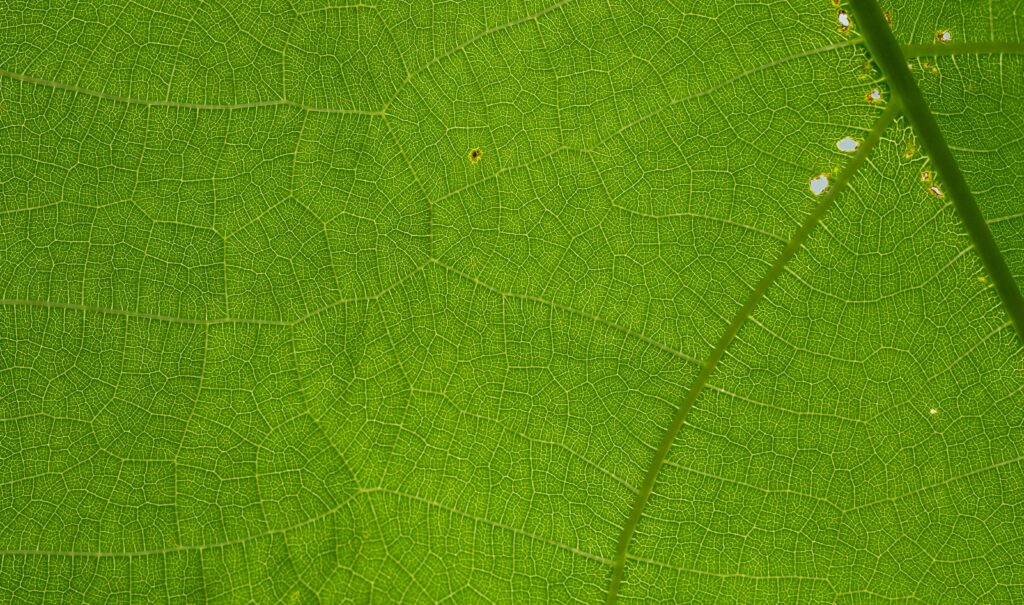
Drawing a leaf on a building is not biomimicry. Studying how a leaf manages sunlight, heat and water, and using those principles to design a more efficient building, is.
That single distinction is where most conversations about biomimicry for children go wrong. The leaf becomes a motif, nature becomes a decoration, and the actual work of learning from how living things solve problems gets left behind.
At Blue Blocks Montessori School, biomimicry for children is not a theme. It is a research practice. On 28 November 2026, we open the Biomimicry Park to the public, built from original research investigations undertaken by Blue Blocks elementary parents and children together, through a model the institute’s research team has called child-parent research collaboration: a structured partnership where the child leads the study, the parent guides without supplying answers, and the Blue Blocks Micro Research Institute carries the method, review, and publication.
This piece explains what we mean by biomimicry for children, why we think children are its ideal practitioners, and what visitors to the Park will see.
 Drawing a Leaf Is Not Biomimicry
Biomimicry is the practice of studying how living things solve problems, understanding the principles behind those solutions, and applying those principles to human challenges. Janine Benyus, who coined the modern term in 1997, described it as the discipline of consulting the organisms around us before we try to engineer a new one.
Three parts, in that order. Observe how. Understand why. Apply the principle.
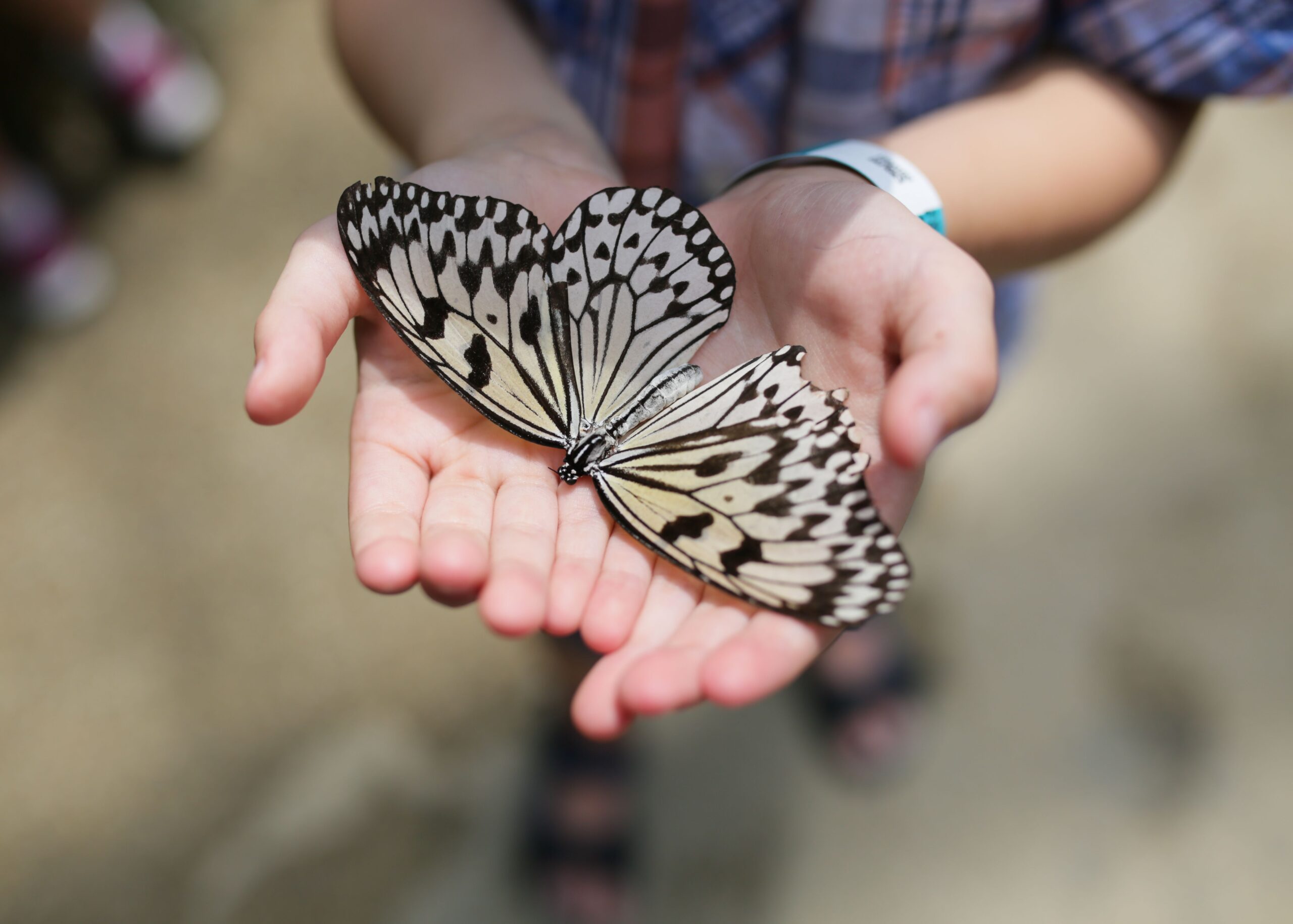
Most of what the design and education worlds call biomimicry stops at the first step. A leaf-shaped wall panel. A seashell-inspired logo. A butterfly motif on a classroom wall. These are aesthetic imitations of nature. They may be beautiful, but they are not biomimicry, because they do not involve learning from the mechanism of how nature solves a problem.
Real biomimicry asks a sharper question: How has nature already solved this problem?
Spider silk is five times stronger than steel, by weight, and the spider produces it at room temperature in water. A gecko can hold its own weight on glass with no adhesive. A termite mound regulates its internal temperature within a narrow range in a desert where the outside air swings by thirty degrees. Each is a solved problem. The engineering is already done. The work of biomimicry is to study the mechanism carefully enough to extract the principle, and then to ask whether that principle can inform a human design.
That work begins with observation. It cannot be shortcut.
Biomimicry for Children Begins With the Questions They Already Ask
Children ask the right questions by default.
How does it work? Why does it work this way? What happens if I change this? What is it trying to do?
These are the questions biomimicry demands. They are also the questions most school science quietly teaches children to stop asking, by rewarding memorization of what the answer already is instead of investigation of how the thing works.
Montessori education makes a different wager. As Angeline Lillard’s work on the science of Montessori practice documents, the method treats the child’s own curiosity as the engine of real learning, and gives the adult the job of protecting it, equipping it, and offering it work worthy of its ambition. In a Montessori classroom, a six-year-old studying a plant is not completing a worksheet about plant parts. She is observing one plant, over days, writing down what she sees, asking why it behaves the way it does, and following the question where it goes.
Biomimicry for children is what happens when that native curiosity is pointed at the entire living world and asked to produce something useful.
Blue Blocks’ own research on biophilic imagery in children’s drawings has documented the predisposition toward nature that young children already carry. The Explore Montessori programme asks what happens when that predisposition is given a method.
In most schools, nature is a subject. Children are taught about it. In biomimicry for children, nature is the teacher. Children are taught from it.
The reversal is quiet but complete. The ant becomes a logistics expert. The lotus becomes a materials engineer. The honeycomb becomes an architect. Three billion years of evolutionary problem-solving sits waiting in the organisms around a six-year-old, and the only question is whether anyone has shown her how to look.
The Six Stages of Thinking Behind the Park
The Biomimicry Park is not an exhibition of models. It is designed as a six-stage thinking journey, and visitors walk through it in the same order the children did.
Nature.
Every project begins with an organism, a structure, or a system found in the natural world. A gecko, a mangrove root, the pattern of a flock turning, the way a seed releases itself when the wind is right. The child chooses what to study, and the choice itself is already a question.
Observation.
The child spends ten to fourteen days observing. Not watching, observing. Writing down what the organism does, when it does it, how often, under what conditions. The datasheet in every Blue Blocks biomimicry kit asks for latitude and longitude for the location of the observation. The point is to teach the child that scientific observation happens somewhere specific, and someone else, somewhere else, could repeat it.
Prompts arrive in sequence. Reflection questions appear from Day 7. A biomimicry question from Day 8. A prototype idea from Day 10. The staging is deliberate. Neither child nor parent can rush to a design before the looking is done.
Question.
From observation comes the question. Not a general question about nature, but a specific one about the mechanism. How does the gecko hold on? Why does the mangrove root grow upwards into the air? What triggers the seed to release? The question is where biomimicry begins to diverge from ordinary nature study.
Research.
The child, with help from a parent and a Blue Blocks mentor, investigates how the mechanism works. What is the structure doing physically? What forces are involved? What is the biological function it serves?
Principle.
The research produces a principle. Not a description of the organism, but a transferable rule. Micro-scale hair structures using van der Waals forces hold a gecko on glass. Pneumatophores allow mangroves to breathe in oxygen-poor soil. Dehiscence timing in seeds responds to humidity drops. The principle is portable. It can be applied elsewhere.
Human Application.
Finally, the child asks: what human problem could this principle solve? A climbing robot that uses dry adhesion. A building ventilation system modelled on a mangrove’s gas exchange. A packaging material that opens itself when humidity changes.
That chain, from Nature to Human Application, is the architecture of the Park. Each child’s project is one walk through it. Every walk is slightly different, every one honest about where the thinking got easy and where it got hard.
This is what we mean when we say the Park is not an exhibition.
Visitors are not there to look at finished objects. They are there to walk through the thinking, step by step, with the children who did it.
The Parent’s Discipline: Scaffold the Process, Withhold the Explanation
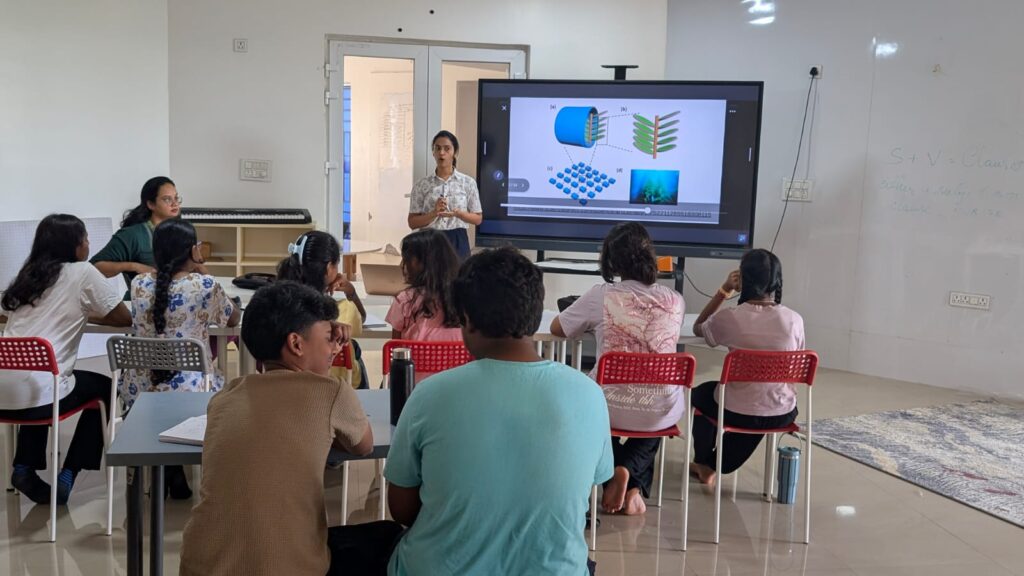
The investigations did not begin only with the children. Before the kits went out to families, every participating parent attended a design thinking workshop built around the same six-stage chain their children would later walk.
The workshop set a single discipline: find a principle, not a shape. Any idea that borrowed a leaf’s silhouette or a honeycomb’s hexagon was redirected. The question returned each time to what the organism is actually doing, and why that mechanism works.
What the parents produced in a few hours suggests how far the method travels when it is set up seriously.
A self-sustaining micro-community for humans, modelled on how natural ecosystems close their nutrient loops and treat the waste of one organism as the input of the next.
A toll-gate traffic control system, using iridescent bar codes and sensors inspired by the structural colour mechanism in a peacock’s tail feathers. Not pigment on paint. Interference optics on film.
A baby monitor with personalized voice data, drawn from the observation that birds do not share a universal language and neither do pre-verbal babies. The idea proposes training a per-infant translation model on sampled vocalizations.
None of these is a shape borrowed from nature. Each is a principle extracted from how a specific organism solves a specific problem, then redirected toward a human one. That is the distinction the blog opened with, carried out by adults who had never been asked to think this way before.
The team member who facilitated the workshops reflected afterwards: “Pausing and slowing down can give a whole new perspective. Parents seemed quite interested, many seem to have known themselves and their children better in the process.”
That reflection matters. It is one of the quieter outcomes of this work.
Biomimicry for children does not only change what children can produce. It changes what the adults around them can see.
What the Park Holds
The investigations are organized across the Starfish Model that Blue Blocks uses to guide children into five arms of discovery. The model and its implementation are documented in the institute’s recent preprint on child-parent research collaboration.
Arm 1: Nature’s Designs. Structures. Shapes. Patterns. How a honeycomb packs space with the minimum material. Why bamboo bends without breaking.
Arm 2: Nature’s Behaviours. How organisms act and respond. How ants collectively route food traffic. How plants communicate chemically through roots.
Arm 3: Nature’s Rhythms. Cycles and timings. How a fig tree times its fruiting to its pollinator. How intertidal species organize their lives around the tide.
Arm 4: Nature’s Movements. Locomotion and mechanical motion. How a dragonfly stays stable mid-hover. How a kingfisher enters water with almost no splash.
Arm 5: Nature’s Systems. Whole-system behaviour. How a forest manages water across species. How a coral reef maintains its own chemistry.
Each child in the programme picks one arm and one organism, and spends four months on it.
Across the five arms, Blue Blocks parent-child research teams have registered eighty-one investigations and have begun seventy-three biomimicry prototypes for the Park.
One project under Arm 2 is a study of fragrance as communication in nature. A parent-child pair are building a 100 percent natural botanical fragrance across eight categories of plant material: peel, fruit, leaf, flower, seed, resin, wood, root. They are testing brief exposure to the fragrance, against a scent-free control, on prefrontal oxygenation using a consumer fNIRS device, and on self-rated calmness in healthy adult volunteers.
The question behind the study is simple. Plants have been communicating with other species through volatile organic compounds for a hundred million years. What happens inside a human brain when it meets that language briefly?
This is a child’s project. It is also real research. Both of those sentences are true.
Why Biomimicry for Children Here Is Not a Science Fair
Every project at the Park produces three things: a biomimicry research paper, a two-dimensional sketch, and a three-dimensional prototype or model.
The research paper carries a DOI. It is published through Zenodo, the open-access research repository used by CERN and thousands of research institutions worldwide. Each parent and each child has their own ORCID iD, the global identifier used by professional researchers. The paper cites the Blue Blocks Micro Research Institute methodology framework, the institute’s biomimicry pedagogy papers including the recent study of how Montessori and traditional schools engage children’s connection to nature, and whatever external literature the investigation drew on.
In other words, when a child at Blue Blocks completes a biomimicry project, she becomes a citable co-author on open-access scientific literature at the age of seven, nine, or eleven. Her paper has an address other researchers can find. If someone, somewhere, builds a device on the principle her study investigated, they can cite her as a source.
A seven-year-old becomes a citable co-author on open-access scientific literature. Her paper has an address other researchers can find.
The Park holds the output of a research pipeline, not an exhibition.
Who the Park Is For
Explore Montessori is open to everyone. Scientists, researchers, educators, academicians, nature enthusiasts, designers, parents, and students will each find a different way to engage with the Park.
A scientist walks the chain and recognizes what rigorous observation looks like in a seven-year-old’s hand. A designer sees how a child extracts transferable principles from a mangrove or a dragonfly. An educator understands what a classroom can produce when curiosity is treated as a resource instead of a management problem. A parent discovers what their own child is capable of when the questions are real.
If you have ever wondered what children’s research looks like when the research is honest, this is the morning to come find out.
Visiting the Park on 28 November
The Biomimicry Park opens on 28 November 2026 at Blue Blocks Montessori School, Tellapur, Hyderabad. Visit slots, directions, and the registration form are on the Blue Blocks Montessori School page.
Nature Has Already Solved It
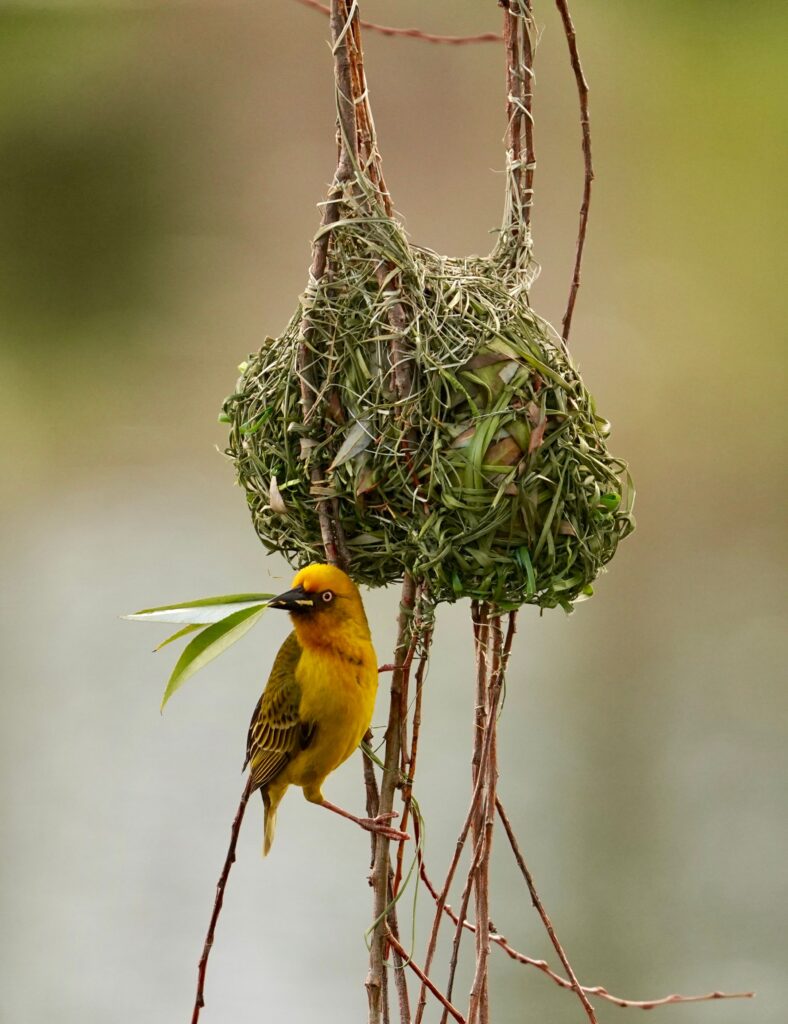
Biomimicry for children is not a classroom activity. It is a stance toward the world. It assumes nature has already solved most of the problems humans are still trying to solve, and that the right response is to observe carefully enough to learn how.
On 28 November, one hundred Blue Blocks families will show what this stance looks like when children take it seriously.
The question the Park leaves visitors with is the same one it asked at the start of the year:
Nature has already solved many problems. The question is: are we observing closely enough to learn from it?