





Montessori Nursery vs Preschool: A Practical Parent Comparison
When parents look into the difference between Montessori nursery and CBSE preschool, or between a Montessori nursery and any regular preschool, they often start with ideas they have picked up along the way: that one is serious and the other is play, or that one has a curriculum and the other does not. Some of these ideas are partly true. Most are not. This guide takes five common assumptions and sets each one beside what actually happens in the classroom.
How is Montessori nursery different from regular preschool?
Both are now expected to teach young children through play and activity, so the real difference is not play versus learning. It lies in how the three preschool years are organised. A Montessori nursery keeps children of about three to six together in one community, lets each child choose their work from a carefully prepared environment, and uses materials designed to teach one idea at a time. A regular preschool usually moves children through a new class each year, with the teacher leading the group through planned activities.
That is the short answer. The longer one is easier to see through the assumptions parents most often bring with them.
The difference between Montessori nursery and CBSE preschool: five assumptions, tested
“A regular preschool is academic; a Montessori nursery is just play.”
This is the most common assumption, and it is now out of date on both sides. Regular preschools, including the pre-primary sections of CBSE schools, are expected by their own guidelines to teach through play and hands-on activity rather than early worksheets. And a Montessori nursery is far from unstructured play.
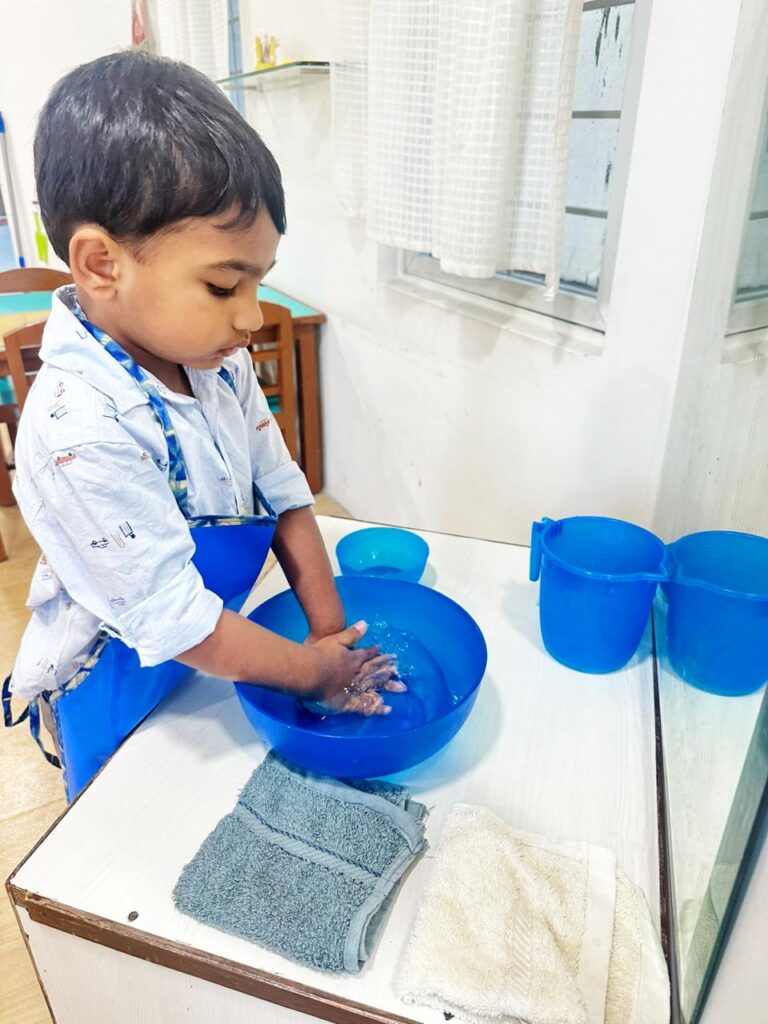
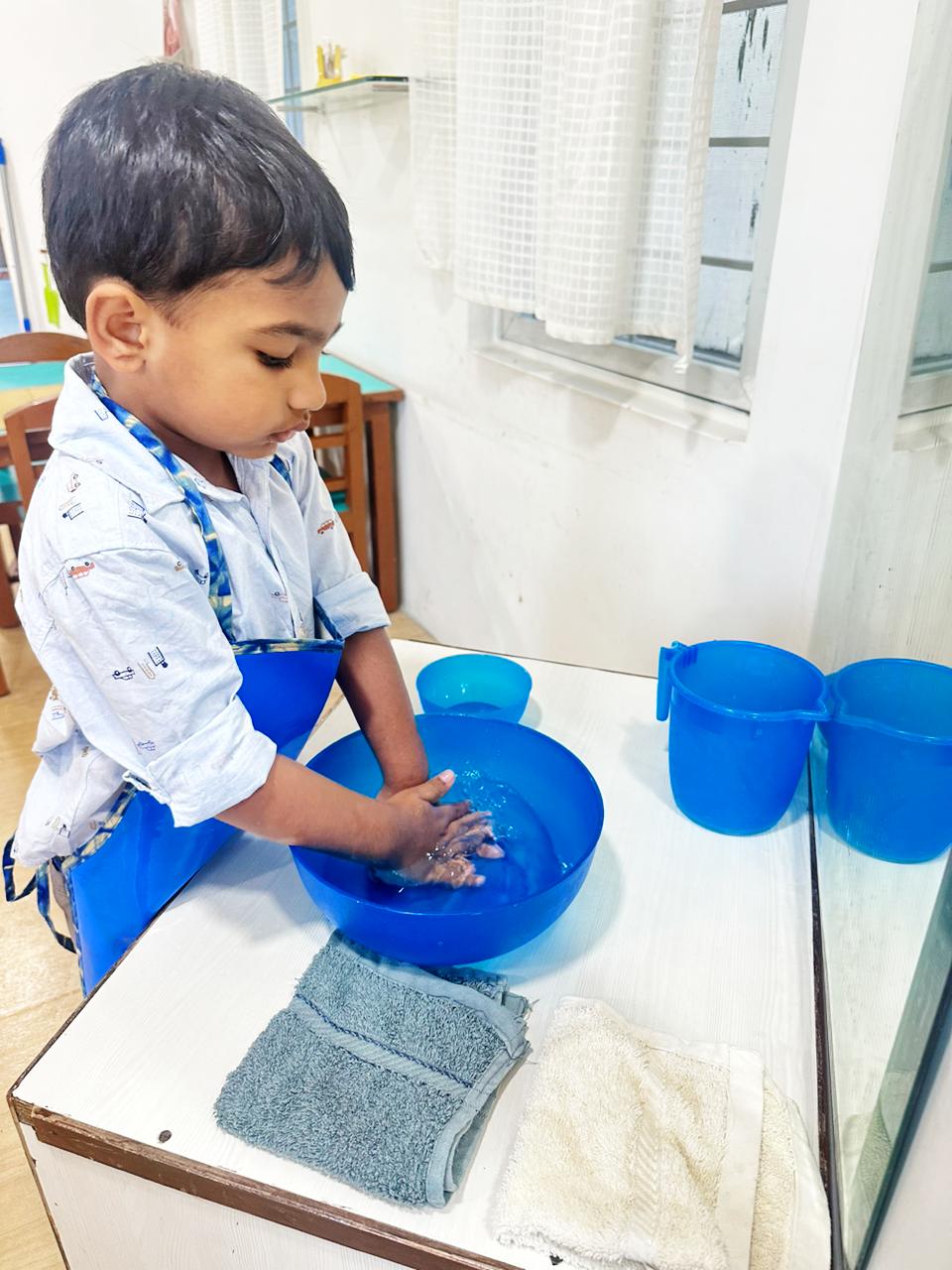
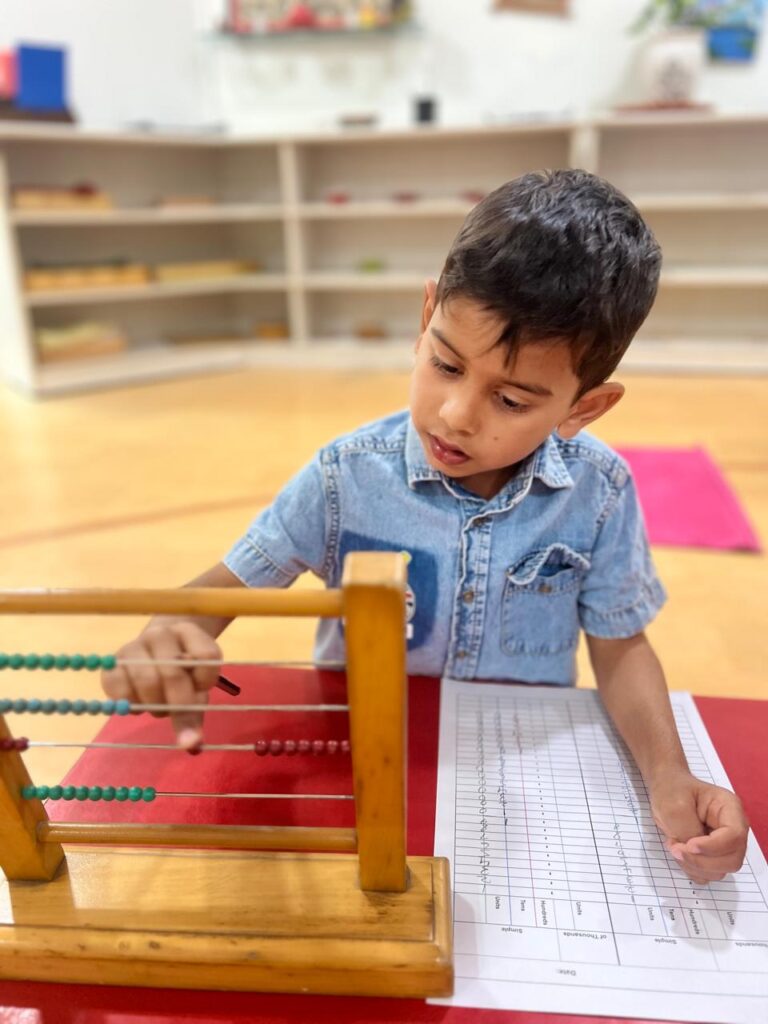
What differs is how the learning is organised. In a regular preschool, the whole class usually moves through the same activity at the same time: a rhyme, a craft, a number exercise. In a Montessori nursery, one child may be counting with beads while another traces letters and a third prepares a snack, each working on what they are ready for. You can read more about how the two approaches compare in our article on Montessori vs traditional education.
“In a Montessori nursery, children just do whatever they want.”
Freedom in a Montessori classroom is real, but it works within clear limits. Before children arrive, the guide observes each child and prepares the environment around that child’s individual plan: what they have mastered, what they are ready for next, and which materials will help them get there. During the morning, the guide presents an activity, invites the child to take their turn and then steps back.
So the child chooses, but from a set of possibilities the guide has prepared with them in mind. A child cannot take over a material someone else is using, must return work to its place, and is expected to respect the people around them. The approach rests on a simple idea, set out in our Montessori learning philosophy: children concentrate most deeply on work they have chosen themselves. Our research institute has also reviewed how self-directed learning environments relate to the development of skills such as planning, attention and self-control.
In Lining the Nest, Chapter 10: Freedom and Discipline: Strong Wings, Firm Roots, Pavan Goyal and Munira Hussain offer parents three useful tests for a rule: is it necessary, sufficient and consistent? That is a helpful way to understand freedom within limits. A boundary can protect another child’s work or keep everyone safe without deciding every action for the child.
“Montessori materials are just expensive toys.”
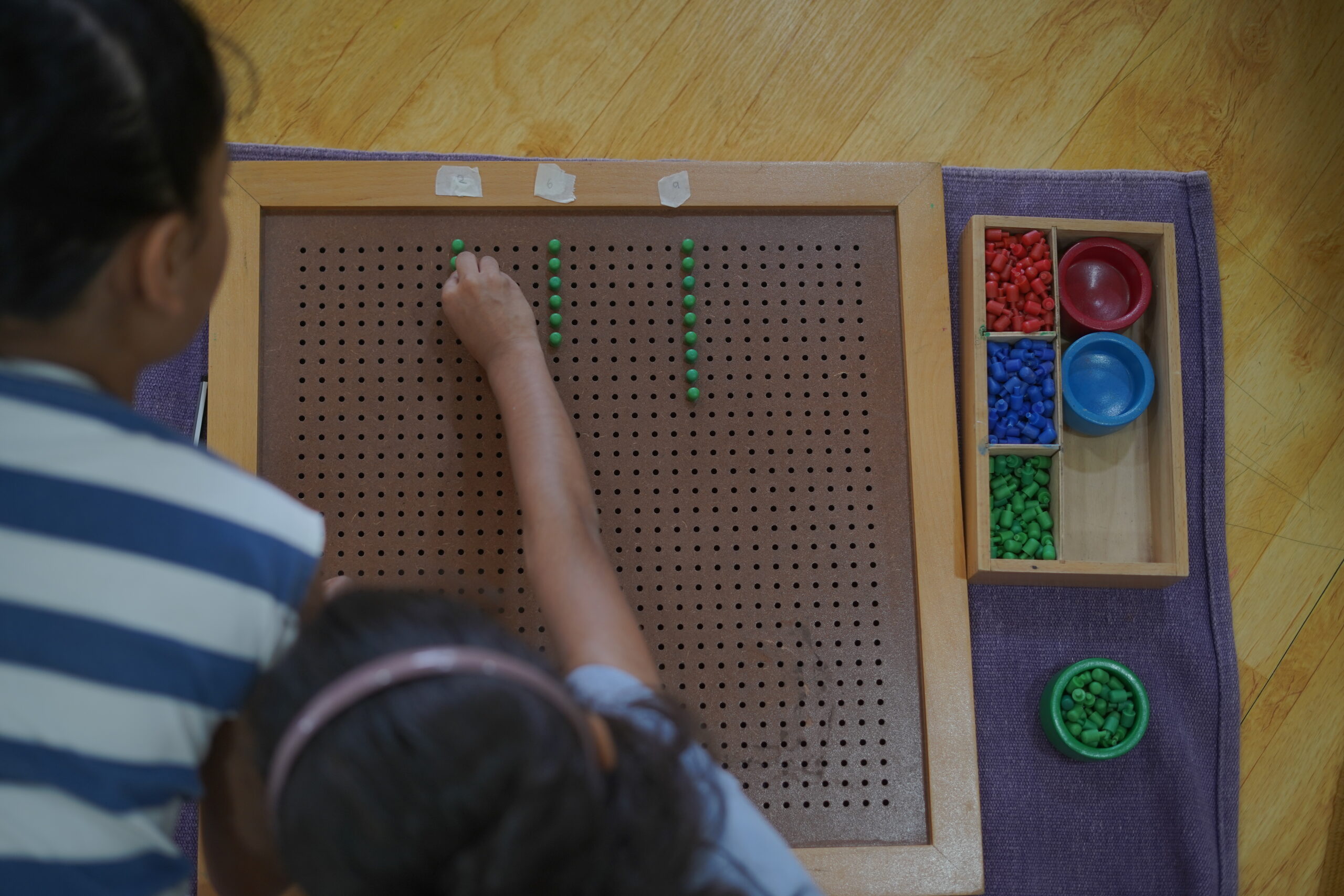
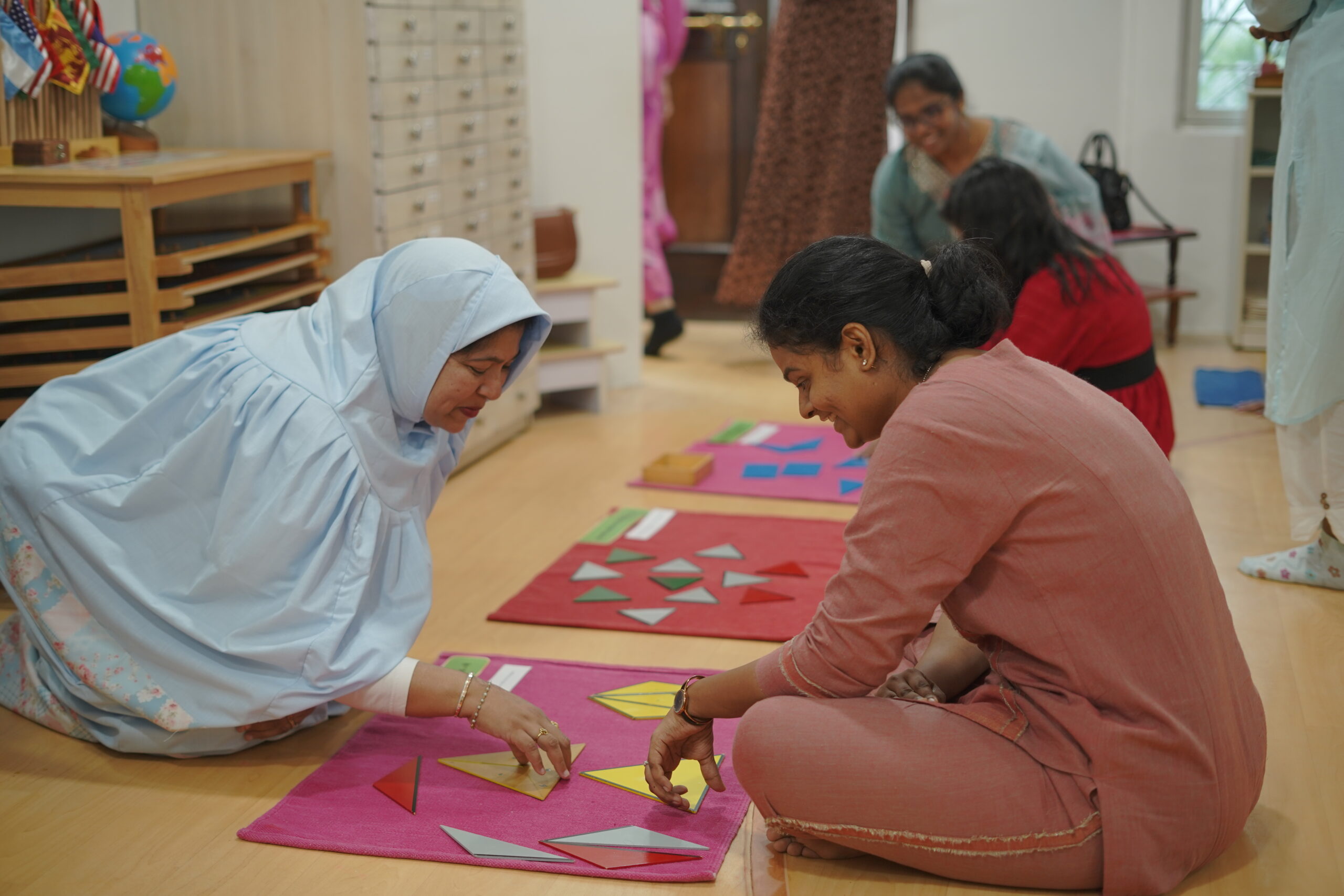
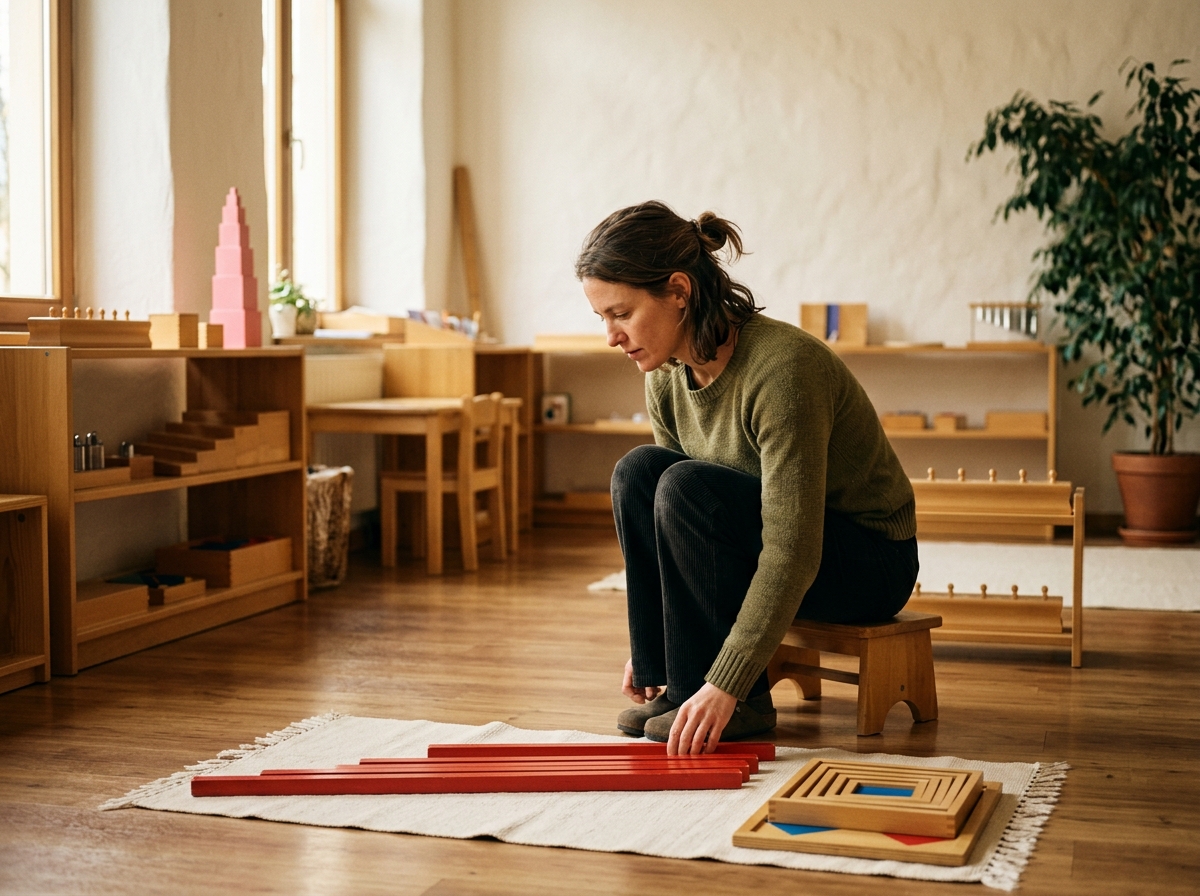
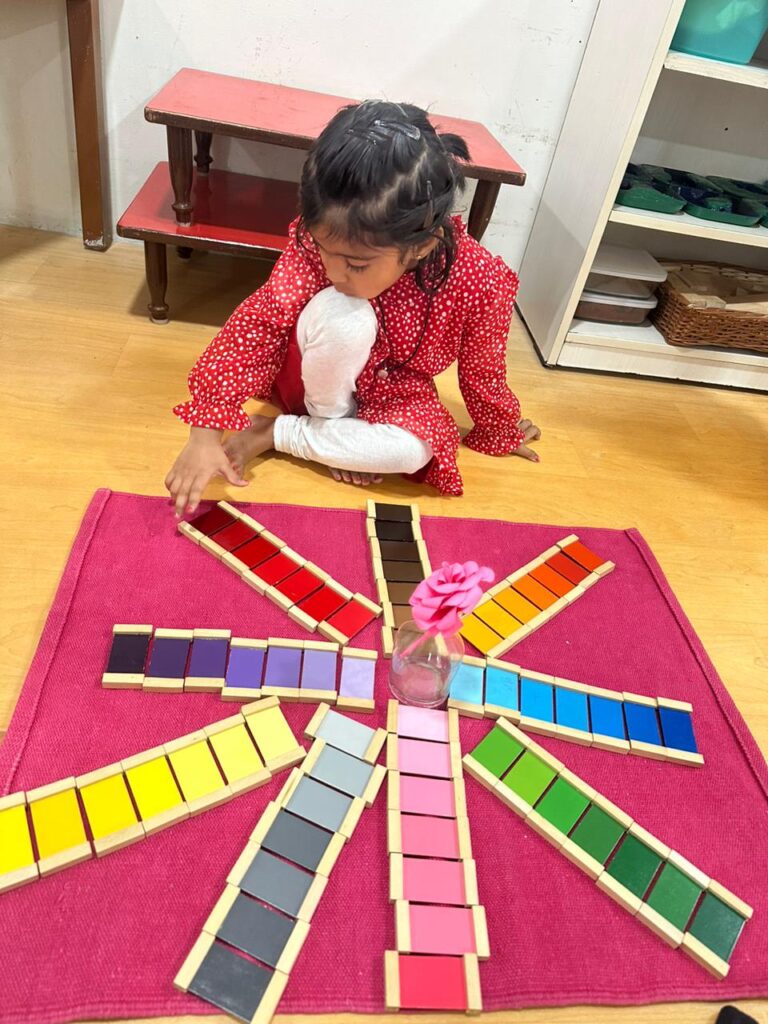
Montessori materials look like toys, but each one serves a specific purpose. Most isolate a single quality, so the child can focus on one idea at a time. A set of knobbed cylinders varies only in size. A tower of pink cubes varies only in dimension. Golden beads allow children to experience quantities through touch and movement.
“We often celebrate when a child can count to a hundred. But counting to a hundred and understanding what a hundred means are two very different things. A child may learn to say ‘one hundred’ or write 100 without having experienced the quantity it represents.
Now imagine that child holding one bead, then a bar of ten, arranging ten such bars into a hundred square, and eventually stacking ten hundred squares to form a thousand cube. Through these sensorial experiences, the child begins to understand how quantities grow and how numbers relate to one another. When they later encounter 100 or 1,000 written on paper, those symbols have a meaning rooted in something they have experienced and understood.” — Pavan Goyal, Founder, Blue Blocks Montessori School
Many materials are also self-correcting. If a cylinder does not fit, the child can see the mistake and try again without an adult pointing it out. Over time, this builds concentration and skill. Our parents’ observations of sensorial development and concentration at home show how these habits carry beyond the classroom, and our research on the Montessori sensorial approach looks at why refining the senses matters so much in these years.
Did you know? The sandpaper letters are letters cut from fine sandpaper and mounted on smooth boards. A child traces each one with two fingers while saying its sound, so the hand learns the shape of the letter at the same time as the ear learns its sound. Many children are writing letters with confidence before they read whole words.
“A Montessori nursery has no real curriculum.”
A Montessori nursery has a detailed curriculum. It is simply organised around the child rather than the calendar. At our Montessori nursery near Gachibowli, it covers five areas of learning: Practical life, sensorial, mathematics, language, and culture. Each area moves in a clear sequence, from simple to complex and from concrete to abstract.
A regular preschool also follows a curriculum, usually built around shared goals for each year. The difference is pace. In a regular preschool, the whole class tends to move through the curriculum together. In a Montessori nursery, each child moves through it at their own pace, so a child who is ready for more complex work can take it on, and a child who needs more time with something can have it.
Our internal daily classroom observation logs offer a glimpse of what this looks like in practice. The guides in Blue Blocks’ Self-Interpretive Environment recorded the morning work of a mixed-age community of 25 to 28 children, aged 3.3 to 5.6 years. Within the same room and morning session, children aged 3.3 to 3.4 worked with materials such as the Pink Tower, Cylinder Blocks, Red Rods and buttoning frames. Four-year-olds, aged 4.0 to 4.6, were exploring the Decimal Beads, Spindle Boxes and Movable Alphabet, while children aged 5.0 to 5.6 independently worked with the Stamp Game for multi-digit arithmetic, the Addition and Subtraction Snake Games, and the Puzzle Maps.
The logs also recorded 3 to 6 self-chosen transitions, each made by the child’s own independent choice, within individual children’s three-hour uninterrupted morning work cycles, across areas such as Practical Life, Sensorial, Mathematics and Language. These are internal classroom observations from a single environment, and they are not intended as findings that apply to every classroom. They illustrate something important for parents: a three-year-old refining coordination through the Cylinder Blocks need not be rushed towards arithmetic, while a five-year-old ready for multi-digit calculations need not wait for the rest of the class. Both can progress meaningfully within the same environment.
Language is a good example: work with spoken language begins from the very first day, and our home observation study of language development and the literacy environment shows how much the home adds to this.
“My child will struggle if they move to a regular school later.”
Children move between Montessori and regular schools in both directions, and the start of Class 1 is a transition in any setting. What helps most is a child who is confident, independent and used to concentrating on a task, which is what the three years in a Montessori nursery are designed to build.
Over those three years, a child grows from one of the youngest in the room, learning by example, to one of the oldest, who leads, helps younger children and takes on the most complex work. Our comparative study of Montessori, Waldorf and traditional schooling in India looks at how these approaches differ in practice. For families who expect their child to move to another school for Class 1, it is reasonable to ask any Montessori nursery how it prepares its oldest children for that step.
During snack time in our Children’s House, a younger child was struggling to open his snack box. His guide was observing from a distance and was about to offer help when an older child sitting opposite him noticed his difficulty and asked, “Shall I help you open it?” The younger child replied, “Yes.” The older child got up, helped him open the box and returned to his seat to continue his snack. Neither child needed adult direction. In a Montessori mixed-age community, such everyday interactions offer children opportunities to recognise another person’s needs, offer help respectfully and develop empathy and responsibility through their own initiative.
How to choose the right nursery school for my child?
The right nursery is the one whose way of organising these three years fits your child and your family. Many nurseries, especially Montessori ones, protect the children’s work period from outside visitors, so you will usually see the environment at a parent session, open day, or admission workshop. A few specific questions will tell you more than a general tour:
- How is each child’s day planned, and who decides what they work on?
- What materials do the children use, and what is each one designed to teach?
- How does the curriculum move a child forward, and at whose pace?
- What training do the adults hold, and for which age group?
- How will you share news of my child’s progress with us?
If you are still deciding whether the Montessori approach suits your family at all, our guide Is Montessori right for your family? is a good place to start.
Montessori nursery Hyderabad: our Children’s House near Gachibowli
Our Children’s House runs at our Gachibowli campus, opposite DLF Gachibowli, and at our Tellapur campus. Children join from two and a half and stay until six. The Montessori nursery years serve children from three to six, and joining at two and a half gives a child time to settle before they begin, so that they experience the full cycle from youngest to oldest.
Each morning centres on a long, uninterrupted work period across the five areas of learning. Our guides hold the AMI Primary Diploma (3–6), the Montessori training for this age group. We admit children throughout the year, and families looking for a Montessori preschool in Hyderabad can begin with an enquiry and attend a Saturday workshop to experience the environment for themselves.
Frequently asked questions
At what age can a child join a Montessori nursery?
At Blue Blocks, children join our Children’s House from two and a half and stay until six. The Montessori nursery years serve children from three to six, and joining a little earlier gives a child time to settle into the community before those years begin.
Do Montessori nurseries teach reading and writing?
Yes. Language work begins the moment a child enters the environment. The guide plans group activities, such as conversations, stories and songs, that steadily enrich vocabulary. When a child is ready, they are introduced to sandpaper letters, then progress to the movable alphabet and a range of further activities. In a Montessori nursery, writing often comes before reading, and each child reaches these milestones at their own pace.
What are PP1 and PP2, and how do they compare with LKG and UKG?
They usually cover the same ages. LKG and UKG are the familiar names for the two years before Class 1. Some Montessori schools, including ours, call the three years of the Children’s House Nursery, PP1 and PP2. The difference is not the label but whether those years are spent in separate classes or in one mixed-age community.
Which is the best nursery school in Gachibowli?
There is no objective ranking of nursery schools, and the right one depends on how your family wants your child to spend these three years. Attending parent sessions at two or three schools and asking each one the questions above is the most reliable way to compare.