


Montessori Elementary School Hyderabad: A Parent’s Guide to Ages 6–12
Somewhere around six, a familiar question begins to change. Your child may still ask, ‘What is this?’, but increasingly the questions are ‘Why does the moon change shape?’, ‘Who decided that rule?’, or ‘Why do some people have more than others?’ Those questions are not interruptions to learning. They are evidence of a mind becoming interested in causes, relationships and fairness. For parents comparing options for a Montessori elementary school Hyderabad families can visit, this guide explains eight essential ideas, what each looks like in practice, and a question to ask your child at home.
What is Montessori Elementary education?
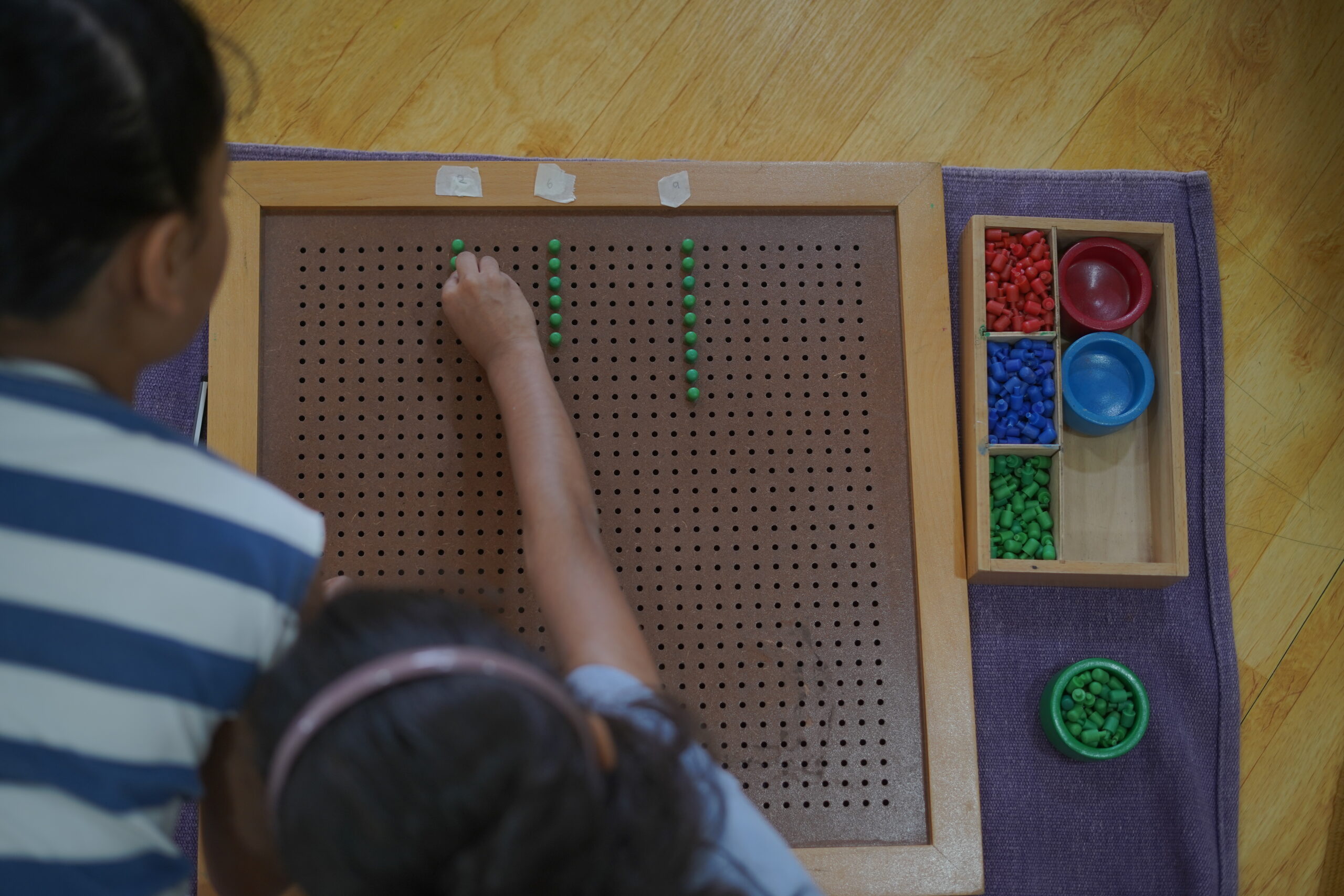
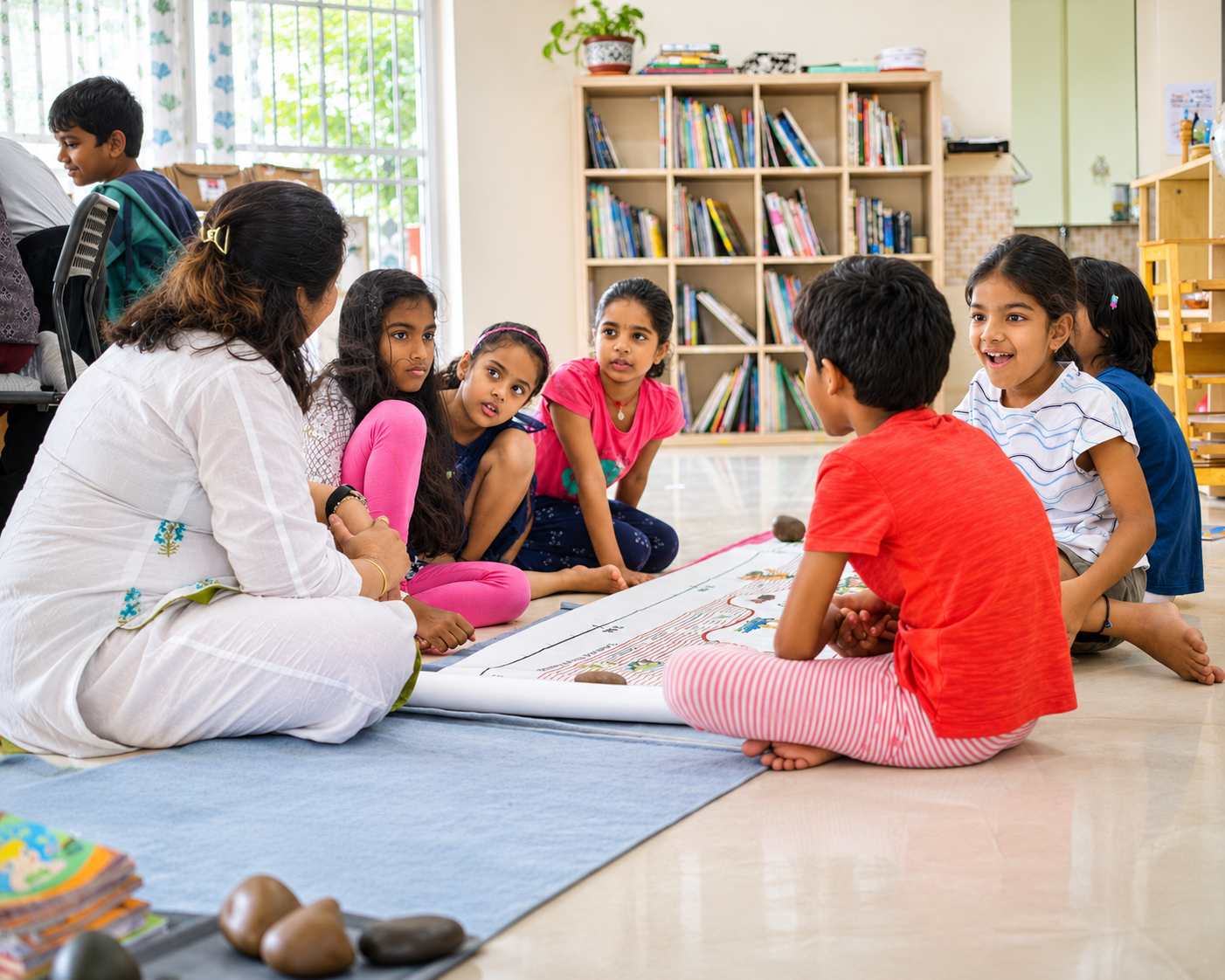
Montessori Elementary education is a continuous six-year cycle for children aged 6 to 12, covering Class 1 to Class 6 in a mixed-age community. It is built around Cosmic Education, which invites children to explore how subjects and human experiences are connected. Children have long periods for concentrated individual and group work. Progress is followed through the guide’s observations, work journals, portfolios and conferences rather than class rankings. The purpose is not merely to give children more information, but to help them form and investigate their own questions.
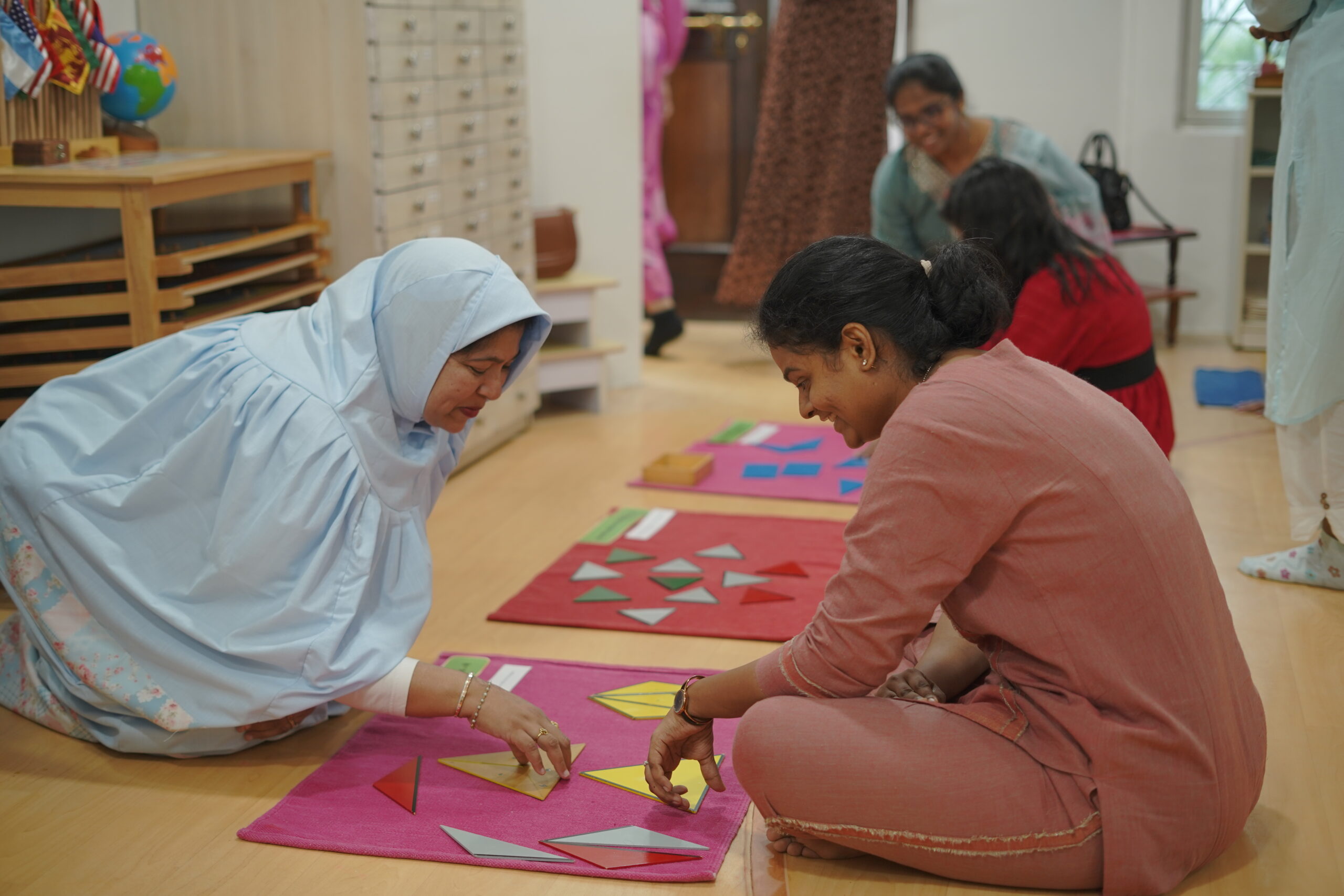
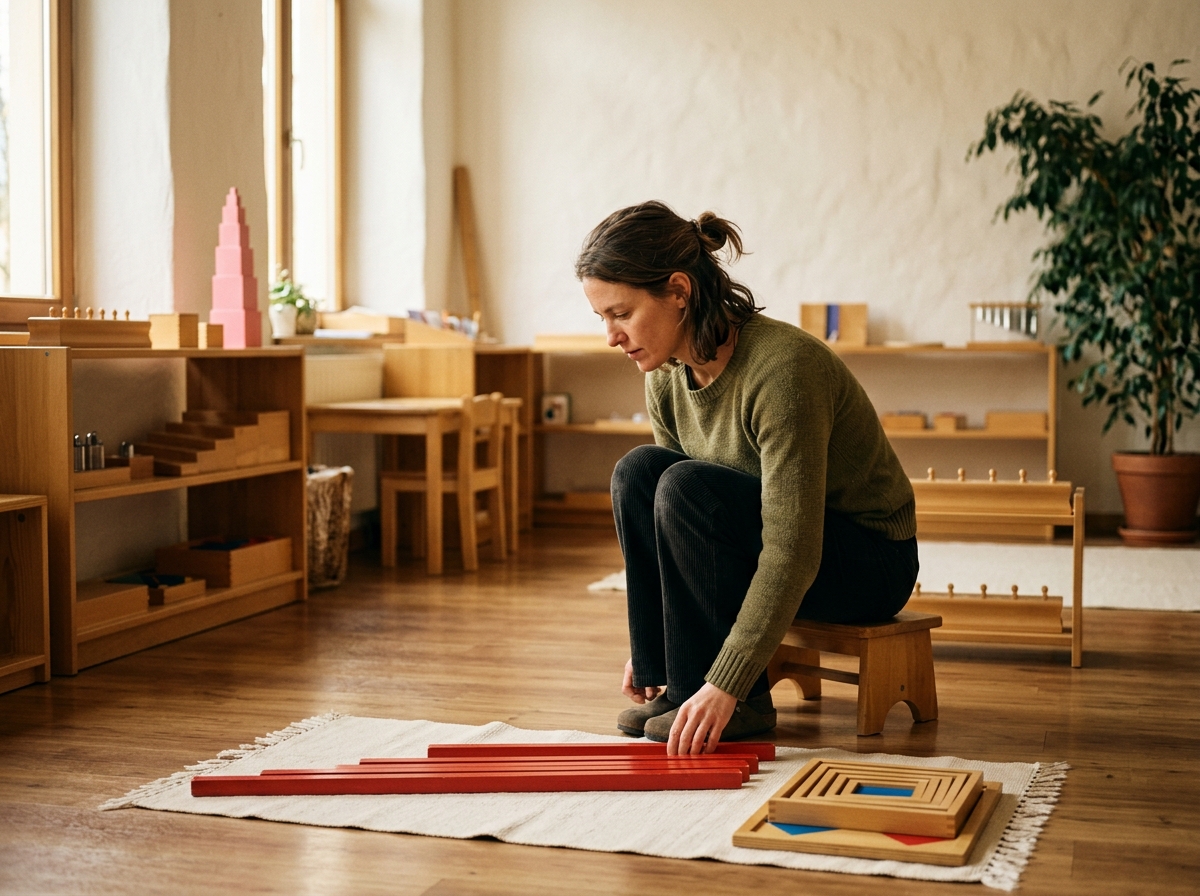
The Montessori elementary education at Blue Blocks runs at the Tellapur campus of Blue Blocks Montessori School and follows the Nursery, PP1 and PP2 years. Children learn through physical materials and direct experience across mathematics and geometry, biology and botany, zoology, physics, chemistry, geography, history, languages and the arts.
Eight ideas that explain Montessori Elementary education
1. The second plane
What it means: Montessori described childhood in stages, which she called planes of development. The years from 6 to 12 form the second plane. Children at this age develop a reasoning mind, a powerful imagination, a strong sense of fairness, and a need to work and think in groups. The elementary cycle is designed for this whole stage, which is why it runs as one six-year community rather than six separate years. The thinking behind this is set out in our Montessori learning philosophy.
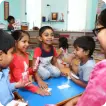
What it looks like: Children working in pairs and small groups, debating a rule, or following a question far beyond where it started.
Ask your child: “What question did you and your friends explore today?”
“One of the questions that stayed with me after my AMI 6–12 training was this: Why do we spend so many years teaching children to answer questions, but so little time helping them discover questions of their own? Perhaps the true purpose of education is not to prepare children with answers, but to develop minds capable of questioning what they have been taught.”
Pavan Goyal, Founder, Blue Blocks Montessori School
2. The Great Stories
What it means: Every subject in the elementary years opens with one of five Great Stories: the creation of the universe, the coming of life, the coming of human beings, the story of writing and the story of numbers. Each story is told to spark curiosity, not to deliver facts. This approach is called cosmic education: every fact sits within the context of everything else.
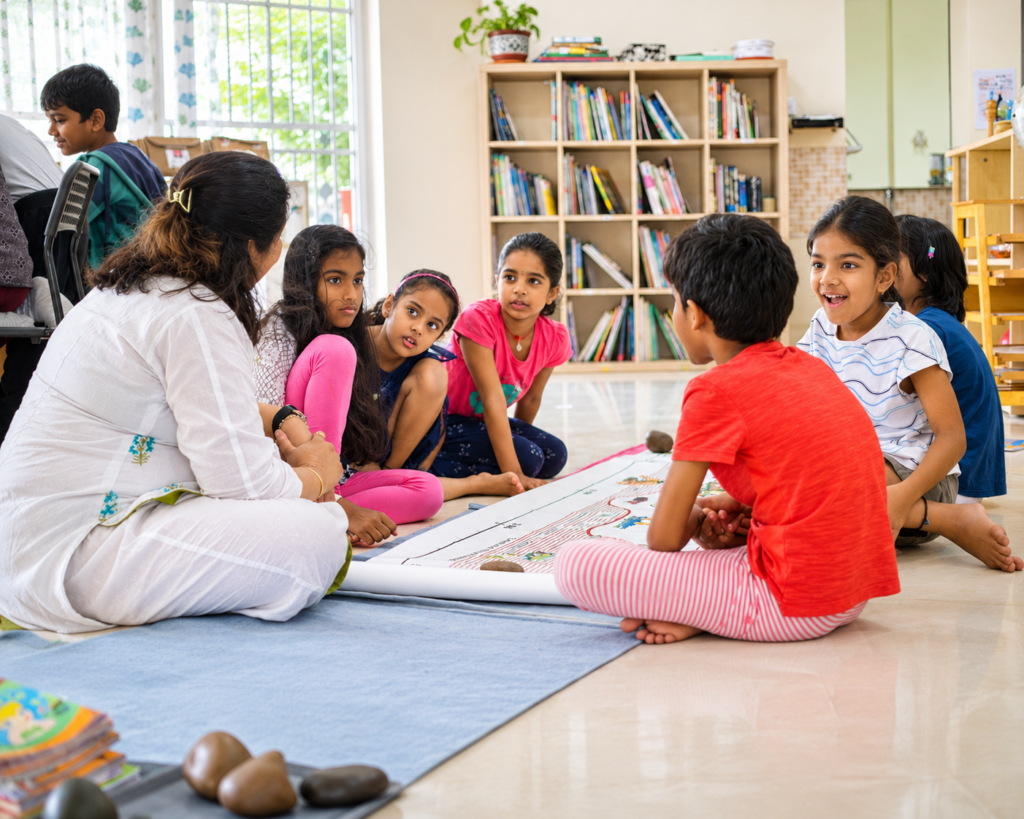
What it looks like: A story about the formation of the Earth leads one child into volcanoes, another into the layers of rock beneath the Deccan plateau, and a third into how mountains shape rainfall.
Ask your child: “Which story are you following right now?”
In Lining the Nest, Chapter 13, “Your Child from 6–12 Years: The Universe Through Your Child’s Mind”, we write: “When they turn 6, they are ready to be offered the ‘Universe’!” The idea is not to overwhelm children with information. It is to give imagination a larger landscape, so a question about rain, rocks or numbers can become an investigation of how the world fits together. The AMI explanation of Cosmic Education describes the Great Stories as starting points for further exploration, not lessons that finish with the telling of the story.
3. The work period
What it means: The school day for the elementary years runs from 8.30 to 3.30, and each morning centres on a long, uninterrupted work period. Children choose and plan work within the responsibilities of the community. The guide offers lessons to individuals or small groups, follows up through observation and conferences, and helps children extend their work. The period is not unstructured free time: it gives a child room to discover what sustained effort, collaboration and a question pursued in depth actually require.
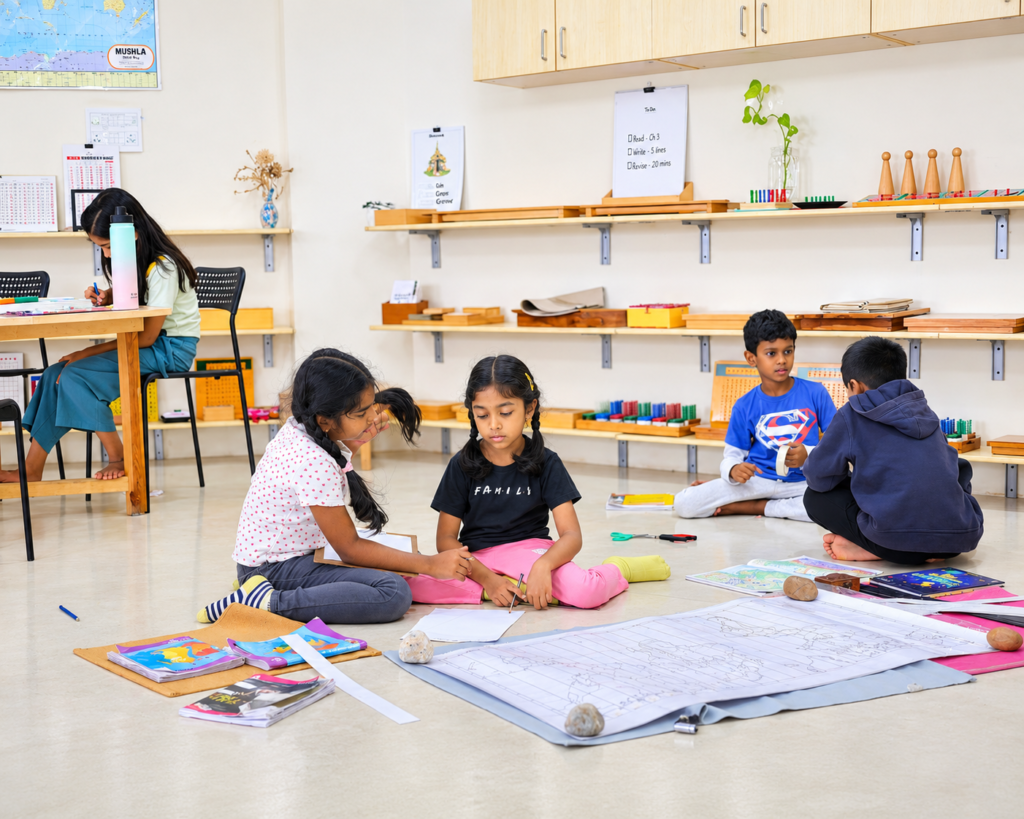
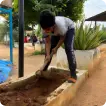
What it looks like: One group measuring the school grounds for a geometry project, a child writing a report on the parts of a flower, two others checking each other’s long division with materials.
Ask your child: “What work did you choose today, and what made you curious about it?”
4. The work journal
What it means: Elementary children keep their own work journal. They record what they chose, what they completed and what they want to pursue next. A journal also makes unfinished work visible. Children can begin noticing how they use their time instead of relying entirely on an adult to decide their next task.
What it looks like: A child reviewing their week and notices they haven’t done any geography, then plans to change that.
Ask your child: “Is there a piece of work from your journal this week that you would like to tell me about?”
5. The conference
What it means: The guide meets each child individually and regularly to discuss their work, their interests and their challenges, review their work journal, and plan what comes next. These conferences are the main way progress is discussed with the child. Parents receive observation-based reports and meet the guide in parent–guide conferences.
What it looks like: A quiet conversation at a table, with the child’s work journal open between them.
Ask your child: “What are you planning to work on next with your guide?”
6. Going out
What it means: A Going Out is a small-group research expedition initiated and planned by children when a question takes them beyond the classroom, whether to a museum, an expert, a field site or a community organisation. With the guide’s preparation, adult oversight and safety arrangements, children practise writing letters, making calls, planning transport and budgets, asking questions and reporting back. The aim is not simply to visit a place; it is to become capable of organising a genuine enquiry.
What it looks like: A group visiting a flour mill to understand how grain becomes food, or walking a local trail to study birds.
Ask your child: “Where would you like to go out next, and what would you need to plan?”
7. Research
What it means: At Blue Blocks Montessori School, elementary children have opportunities to take part in research with the Blue Blocks Micro Research Institute. Our methodology for scientist–child co-authorship describes how children contribute to studies as real collaborators.
What it looks like: Children studying how meerkats organise their groups and applying it to leadership in our Meerkat Model of Bio-Leadership study, or designing colour signals in Becoming Fireflies, an embodied biomimicry activity. Children aged 8 to 12 working in the Drone Lab have contributed designs to five patent applications; these are filed applications, not five granted patents. The Biomimicry Hive has also documented twenty original bird-nest designs in one cycle.
Ask your child: “What have you discovered this week that surprised you?”
What an Elementary guide looks for beyond the finished product: The school has documented twenty original bird-nest designs produced in one cycle of its Biomimicry Hive. For a guide, the number of models is only one part of the story.
More revealing questions are: What problem was each design trying to solve? Why did children choose different structures? What would they reconsider after comparing the designs? Those are questions a guide can explore through observation and conversation. The documented designs illustrate the opportunity for enquiry; they are not, by themselves, a measured result showing that an innovation programme causes independent thinking.
8. The community
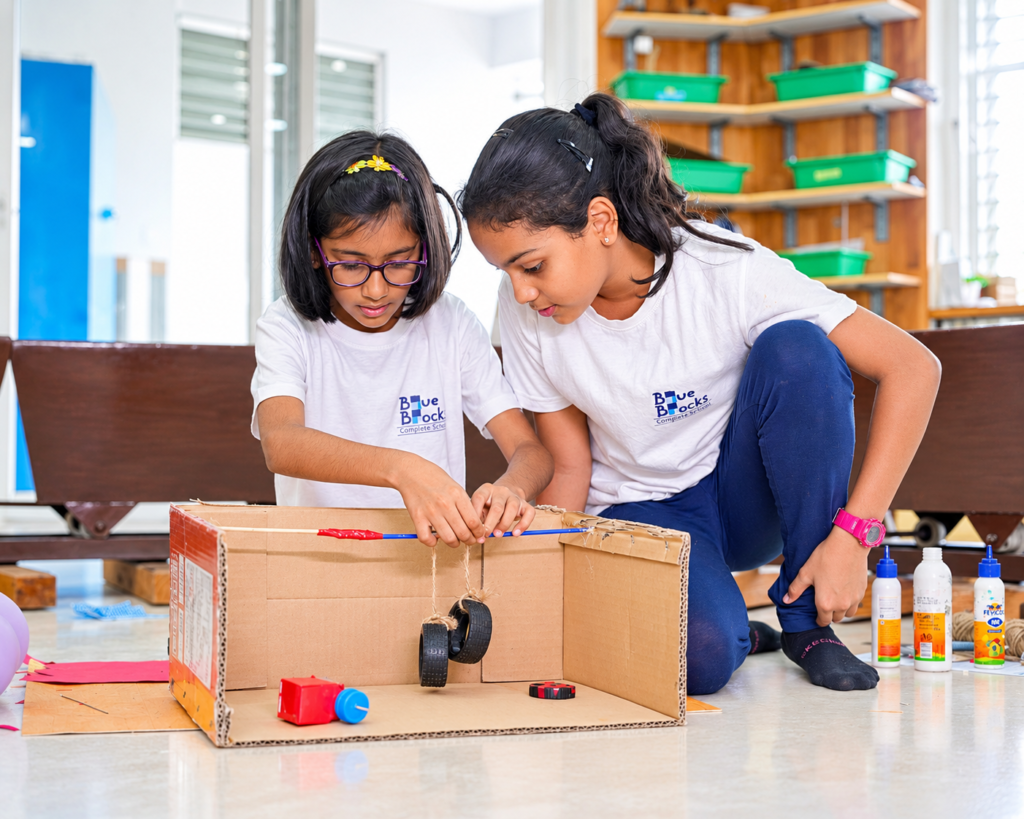
What it means: Children aged 6 to 12 learn in one community. Younger children learn by watching and working alongside older ones, and older children consolidate their understanding by helping. Children learn English, Hindi and Telugu, and physical development, including sports, karate, dance and yoga, is part of the daily rhythm.
What it looks like: A nine-year-old explaining fractions to a seven-year-old using the same materials she once learnt from.
Ask your child: “Did you get to help someone today? What did you do together?”
What are the benefits of Montessori education for 6–12 year olds?
The main benefits of Montessori education for primary students lie in how they learn to work. Children plan their own time, follow questions in depth, work together in small groups, and review their own progress with a guide. These experiences are designed to nurture independent thinking: asking a question, investigating it, explaining one’s reasoning, collaborating and being willing to revise an idea. Parents can look beyond what a child has completed and ask what the child has discovered, struggled with or changed their mind about.
Our research institute has reviewed how self-directed learning environments relate to the development of executive function, the skills of planning, attention and self-control that underpin independent work. Our biophilia study, which includes children from 6 to 16, looks at how children’s connection with nature shows in their drawings. For a broader view of how approaches compare, read our article on Montessori vs traditional education, and if you are still deciding, our guide Is Montessori right for your family?
How a Montessori primary school in Hyderabad tracks progress without grades
Assessment in the elementary years is continuous and observation-based, not periodic and test-based. Progress is tracked in four ways:
- Guide’s records: detailed records of each presentation a child receives, the work they do and their progress towards mastery.
- The child’s work journal: what the child chose, completed and wants to do next.
- The portfolio: finished work, reports, maps, timelines and creative writing.
- Individual conferences: regular one-to-one meetings between guide and child.
Parents receive observation-based reports and meet the guide in parent–guide conferences. We do not use grades or rankings in the Elementary programme. The pathway after Class 6 is described separately in our adolescent programme. You can see the full structure of our Grades 1–6 learning programme, including the subjects covered and the mentors who teach them.
Montessori elementary school Hyderabad: near the Financial District and Gachibowli
The Elementary programme at Blue Blocks Montessori School runs at the Tellapur campus on Osman Nagar Road. Families comparing primary schools near Gachibowli or Montessori education near the Financial District can consider the Tellapur campus and the practical journey to and from school. Children who complete our Children’s House at Gachibowli can continue into the elementary years at Tellapur.
The Elementary team brings together Montessori guides holding the individual AMI Elementary Diploma (6–12), an educator qualification distinct from institutional AMI school accreditation, alongside subject specialists in mathematics, the sciences, English, Hindi, Telugu, dance, karate and sports. If you are comparing schools, the twelve questions in our guide to choosing a nursery school near Gachibowli apply just as well to the primary years.
Frequently asked questions
Can my child join the elementary programme from a regular school?
Yes. Each child’s work is planned individually, so a child joining from another school begins where they are. The guide observes the child closely in the first weeks and presents the materials they need to find their place in the community.
Are there exams in the Montessori elementary years?
There are no board exams at this level. Progress is assessed continuously through the guide’s records, the child’s work journal, a portfolio of finished work and regular one-to-one conferences. Parents receive observation-based reports rather than grades or rankings.
Which languages do children learn in the elementary years?
Children at Blue Blocks Montessori School learn English, Hindi and Telugu in the elementary years, alongside the full range of subjects taught through Montessori materials and direct experience.
What happens after Class 6?
Children continue into our adolescent programme for ages 12 to 16 at the Tellapur campus, so they move on within the same Montessori approach and the same community.
Is the elementary programme offered at the Gachibowli campus?
No. Our elementary programme for ages 6 to 12 runs at our Tellapur campus. The Gachibowli campus serves the Toddler Community and the Children’s House (Nursery, PP1 and PP2).