






Nursery Admissions in Hyderabad: A Parent Checklist for 2026–27
Parents searching for ‘nursery admissions Hyderabad’ often find that forms, workshop dates, age rules and fee conversations all arrive in the same few weeks, from several schools at once. It’s a natural part of the process, and it’s easier when you have a clear order to follow. This checklist sorts it into four questions: is your child ready, what is the school really like, what does the application need, and what are you committing to? At the end is a short list you can keep and tick off.
What is the admission age for nursery school in Hyderabad?
Most nursery programmes in Hyderabad begin at about three, but each school sets its own starting age and cut-off date. In Montessori, the years from three to six form the second half of the first plane of development, which runs from birth to six. At Blue Blocks, children join our Children’s House from two and a half, which gives them time to settle before this phase begins.
The more useful way to think about nursery admission age in Hyderabad is to count backwards from Class 1. India’s National Education Policy places the start of Class 1 at six, and the central government has asked states to make six the minimum age for Class 1 admission. Telangana has kept its existing criteria while it reviews the rule, so the age your child must be for Class 1 may still change. Since the nursery years lead into Class 1, the age your child joins nursery decides how many years they will have before it.
This is why the date of birth matters more than the child’s age today. Two children born a few weeks apart can fall on either side of a school’s cut-off date and begin a year apart. Before you apply anywhere, ask each school for its cut-off date, and for the age it expects children to be when they move into Class 1.
Is your child ready for nursery, and is the timing right?
Readiness at two and a half or three looks different from readiness for a toddler group. None of these signs is a test, and a child does not need all of them:
- Wanting to do things themselves. A child who insists on pouring their own water, putting on their own shoes or carrying their own bag is ready for a room built around that urge.
- Following a simple request. “Please bring your cup to the table” is enough. It shows a child can listen, hold an idea and act on it.
- Making their needs known. In any language. Many children in Hyderabad move between Telugu, Hindi, Urdu, English and other languages at home, and our research on language development and the home literacy environment shows how much the home language contributes to early learning.
- Spending time with another trusted adult. A child who can be comforted by a grandparent or familiar caregiver is beginning to trust adults beyond their parents.
Timing matters too. A child who has just welcomed a sibling or moved house may benefit from a few settled weeks first. Because we admit children throughout the year, a family can choose the moment that suits the child rather than the calendar.
Alongside the forms adults complete, there is another kind of preparation a child can join in. In Lining the Nest, Chapter 12: Education: Aid for Life, Akira’s parents realise that, ahead of her first school day, she has already laid out her favourite clothes and packed her school bag. The episode is a reminder that starting school is a change the child experiences, not simply an application the adults complete. Even a small, age-appropriate choice about what to wear or place in a bag can help a child participate in preparing for that change.
How to prepare for nursery admissions: what the process tells you about a school
Parents often treat the admission process as paperwork to get through. It is more useful to read it as evidence. How a school admits children shows you what it values long before your child’s first day.
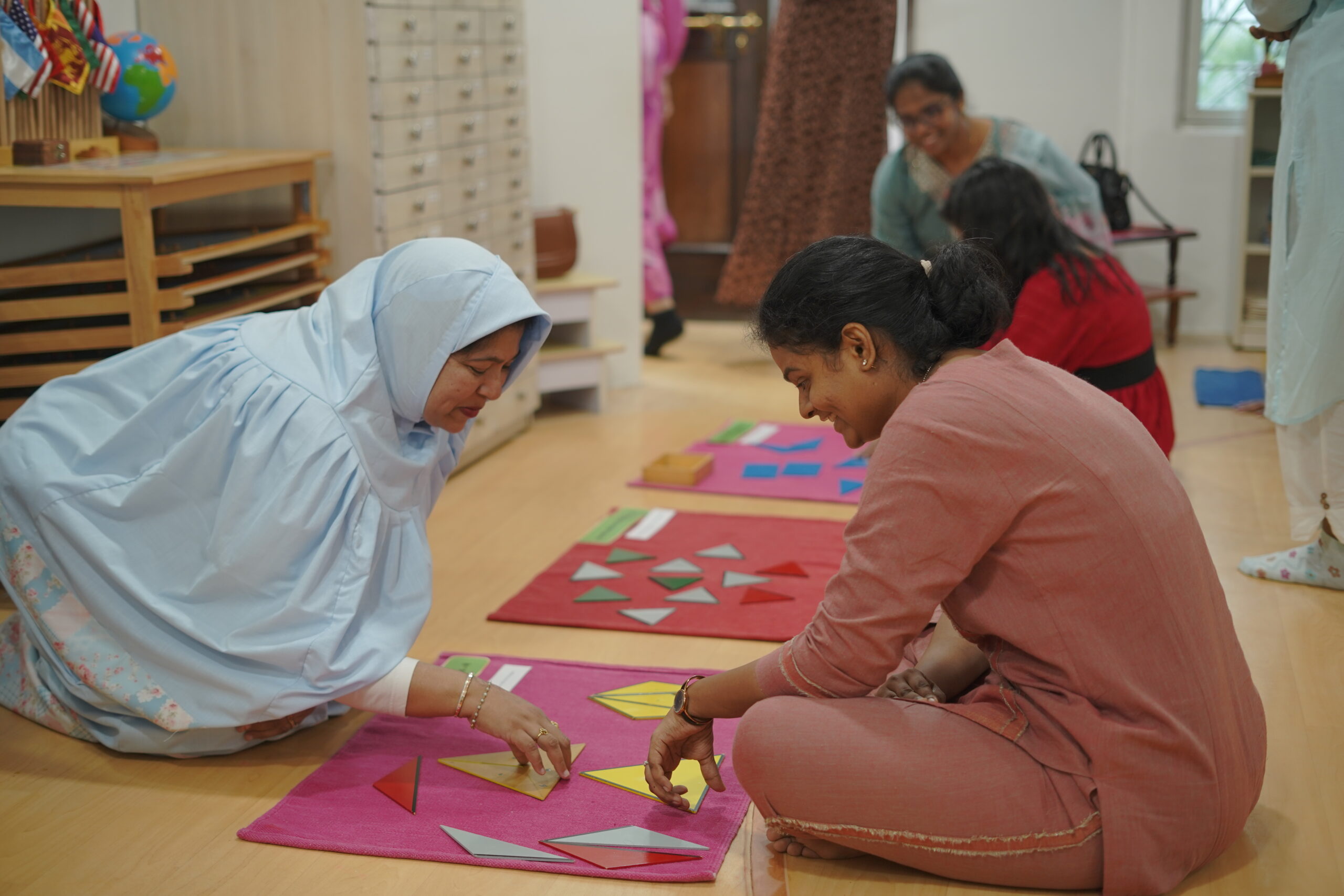
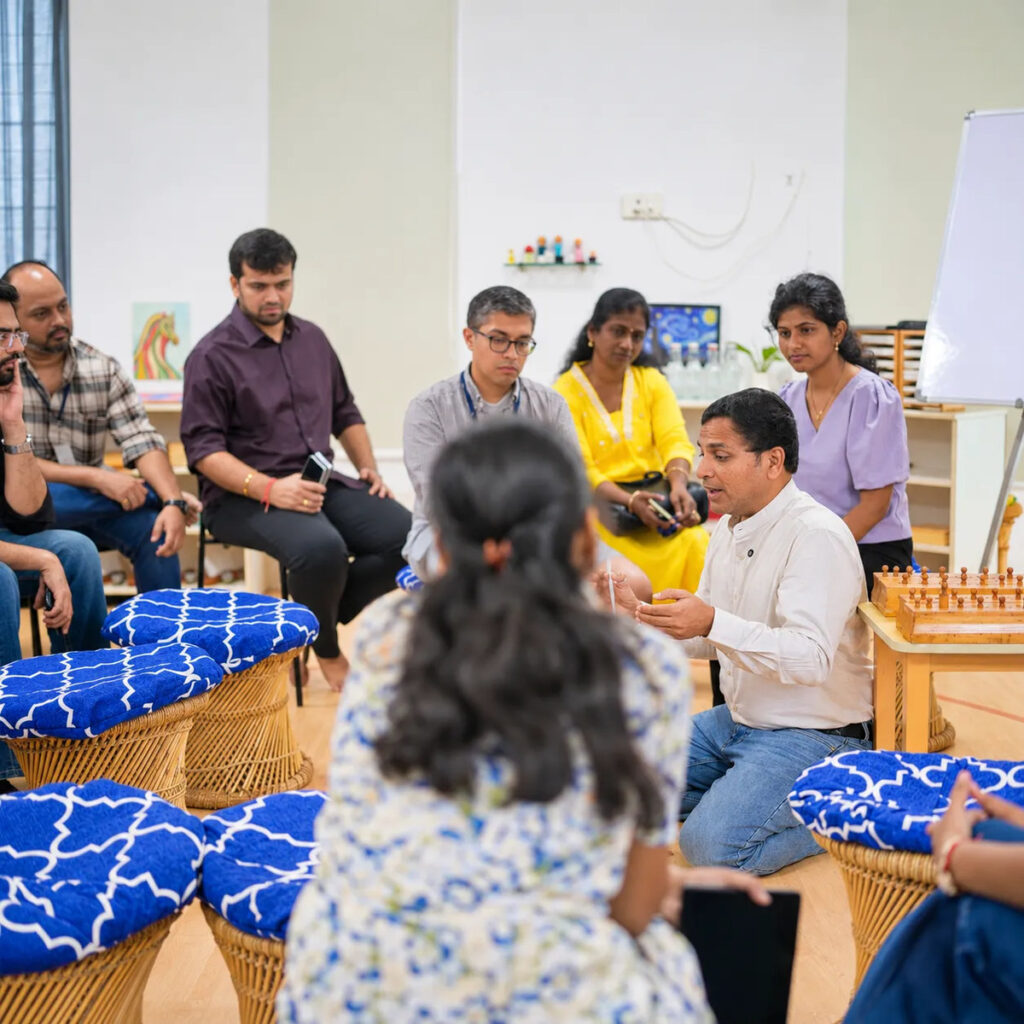
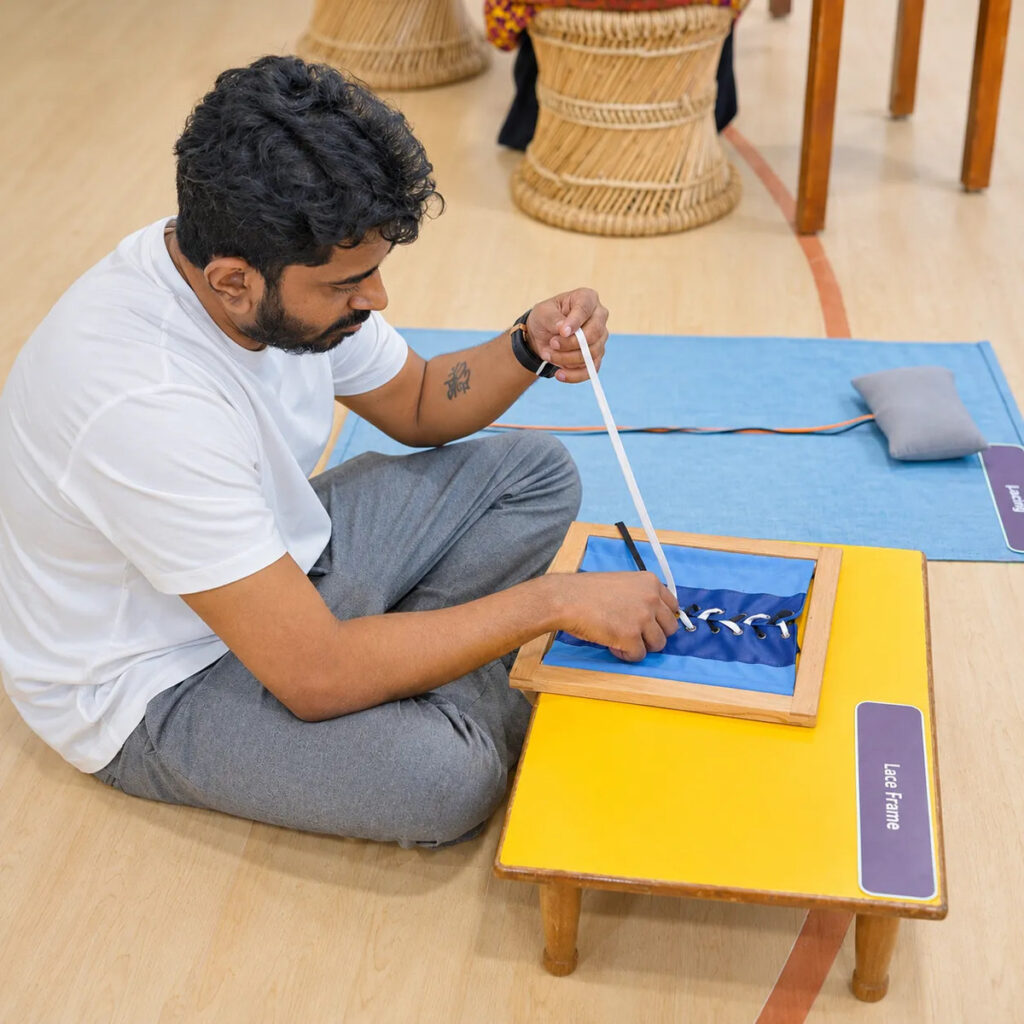
Notice how the school lets you see it. Many Montessori schools, including ours, do not run tours while children are working, because an unfamiliar adult walking through the room breaks the concentration the morning is built on. Parents see the environment at a parent session, open day or, at Blue Blocks, our Saturday admission workshop, where they can handle the materials and ask questions freely. Our research on parent workshops looks at why this first encounter matters.
Notice who you meet. A school that wants to know your family will make time for a conversation, not just a form. At Blue Blocks, every family speaks online with our Director of Admissions and then meets our founder before a child joins.
During an admissions conversation, a mother described her daughter as very quiet. Our Director of Admissions asked, “Is she quiet at home too?” The mother smiled and replied, “Oh no! With her grandparents, she talks nonstop in Telugu.” The director asked her to describe how the child expresses her needs, shares her experiences and communicates with people she is comfortable with.
As the conversation continued, a very different picture of the child began to emerge. Her quietness around unfamiliar adults was only one part of her behaviour, not a complete picture of her communication abilities. It is a valuable reminder for parents that understanding a child means looking beyond how they behave in one situation and recognising the abilities they express when they feel secure, understood and comfortable.
Notice whether the school meets your child. For children from two years and nine months, we observe the child in the environment before the application is completed. It is not a test. It gives the guide a first picture of how your child moves, chooses and settles.
Notice what you are told about the adults. Ask which training the adults hold and for which age group. Montessori training is specific to age. Our Children’s House guides hold the AMI Primary Diploma (3–6).
How to choose the right nursery school for my child?
Choose the school whose admission process already treats your child as an individual. The way a school admits children usually mirrors how it will teach them: whether it observes before it decides, takes time to get to know the family, and is open about who the adults are and how they are trained.
“An admission form can tell us a child’s age, perhaps even what they can do today. But it cannot tell us who that child will become over the next three years. Their interests will change, their questions will deepen, and their need for independence will grow. The real task of education is to keep discovering the child as they change, rather than deciding too early who they are.” – Munira Hussain, Co-founder, Blue Blocks Montessori School
Beyond the process, two questions matter most. First, does the school continue after the nursery years, so your child does not have to change schools at six? Second, how will it keep you informed? At Blue Blocks, progress is shared in scheduled one-to-one meetings, and our research on the school–home partnership explains why that conversation deserves its own time. For a closer look at how Montessori and regular preschools differ in materials, curriculum and pace, read our guide to the difference between Montessori nursery and CBSE preschool.
The application: the observation, conversations and paperwork
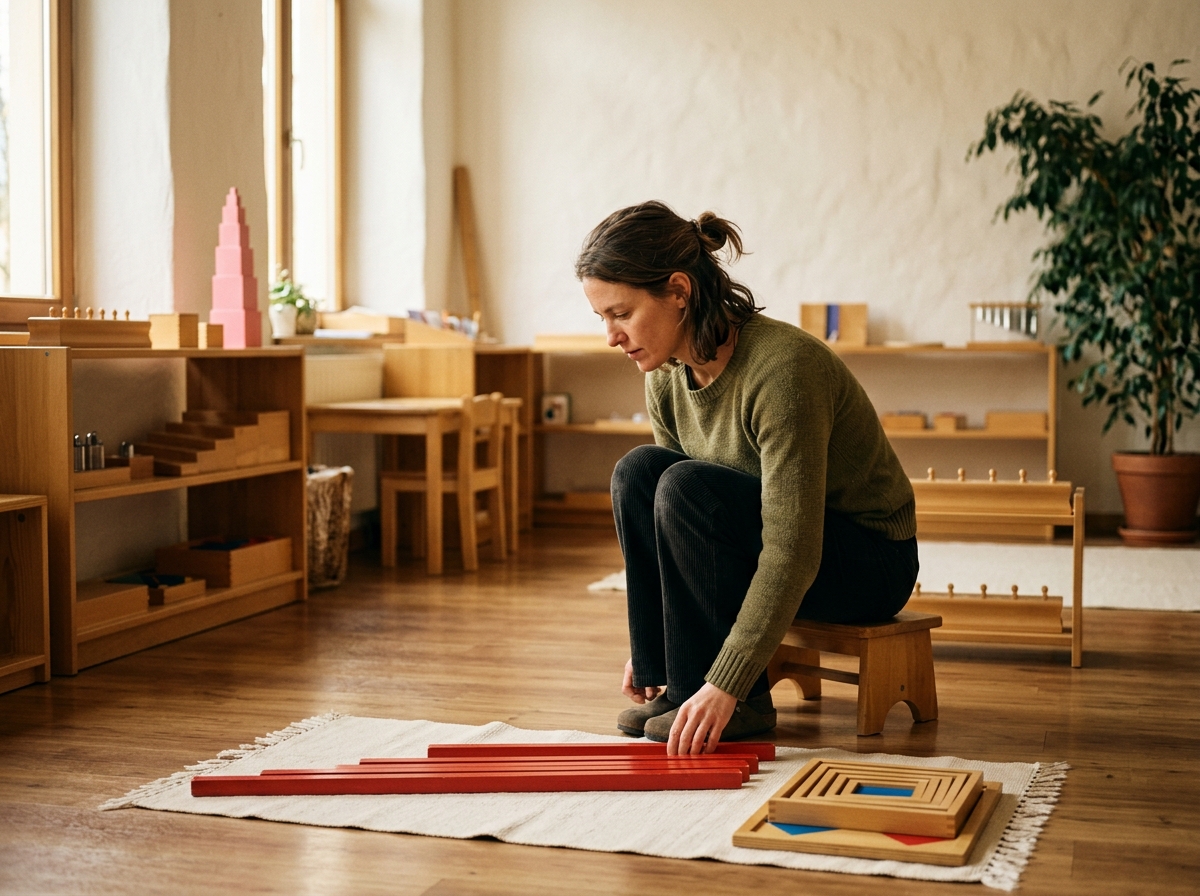
Unlike playgroup admissions, where families move directly to the application after the Saturday workshop, nursery admissions at Blue Blocks include a dedicated observation for children aged two years and nine months and above. This takes place inside the prepared Children’s House environment.
After the Saturday admission workshop, our admissions team guides families through the following stages:
- The child observation (from two years and nine months): Your child spends time in the Children’s House while a trained guide observes how they move, choose materials, respond to the space and settle. It is not an entrance test or academic screening. It gives the guide a picture of your child’s starting point.
- Two family conversations: You meet online with our Director of Admissions to talk through your child’s daily routines, home languages and family expectations, followed by a conversation with our founder about your child’s long-term journey at Blue Blocks.
- The formal application and enrolment documents: Formal paperwork and verification records are completed at this stage, once your family and the school have had the opportunity to consider whether the environment is the right fit.
What to bring to your first conversations: Because formal documents are requested later in the process, you do not need to assemble a file before your visit. Keep your child’s exact date of birth handy to discuss the timeline for Class 1 under each school’s current cut-off rules, along with any notes on your child’s speech, sleep, sensory preferences or previous preschool experiences that may help our guides and admissions team understand them more fully.
Families looking into nursery admissions in Gachibowli or Tellapur can begin with an enquiry on our admissions page. If you also have a younger child, our guide to playgroup admission in Hyderabad explains the admission process for toddlers.
Before you commit: questions worth asking
Fee details are best discussed directly with each school’s admissions team, and ours shares them during the process. Beyond the fees, a nursery place is a commitment of three years, and these questions tell you what that commitment involves:
- What does a school year include? Ask about the length of the day, the work period, outdoor time and any school breaks.
- What is expected of parents? Many Montessori schools ask families to attend workshops and progress meetings. Knowing this early helps you plan.
- How often will you hear about your child’s progress, and how?
- What happens if your family relocates or needs to pause?
- How is a new child helped to settle in the first weeks?
- Where does the school lead after nursery?
The answers matter more than any single figure, because they describe the life your child and your family will have with the school.
Nursery admissions in Gachibowli and Tellapur
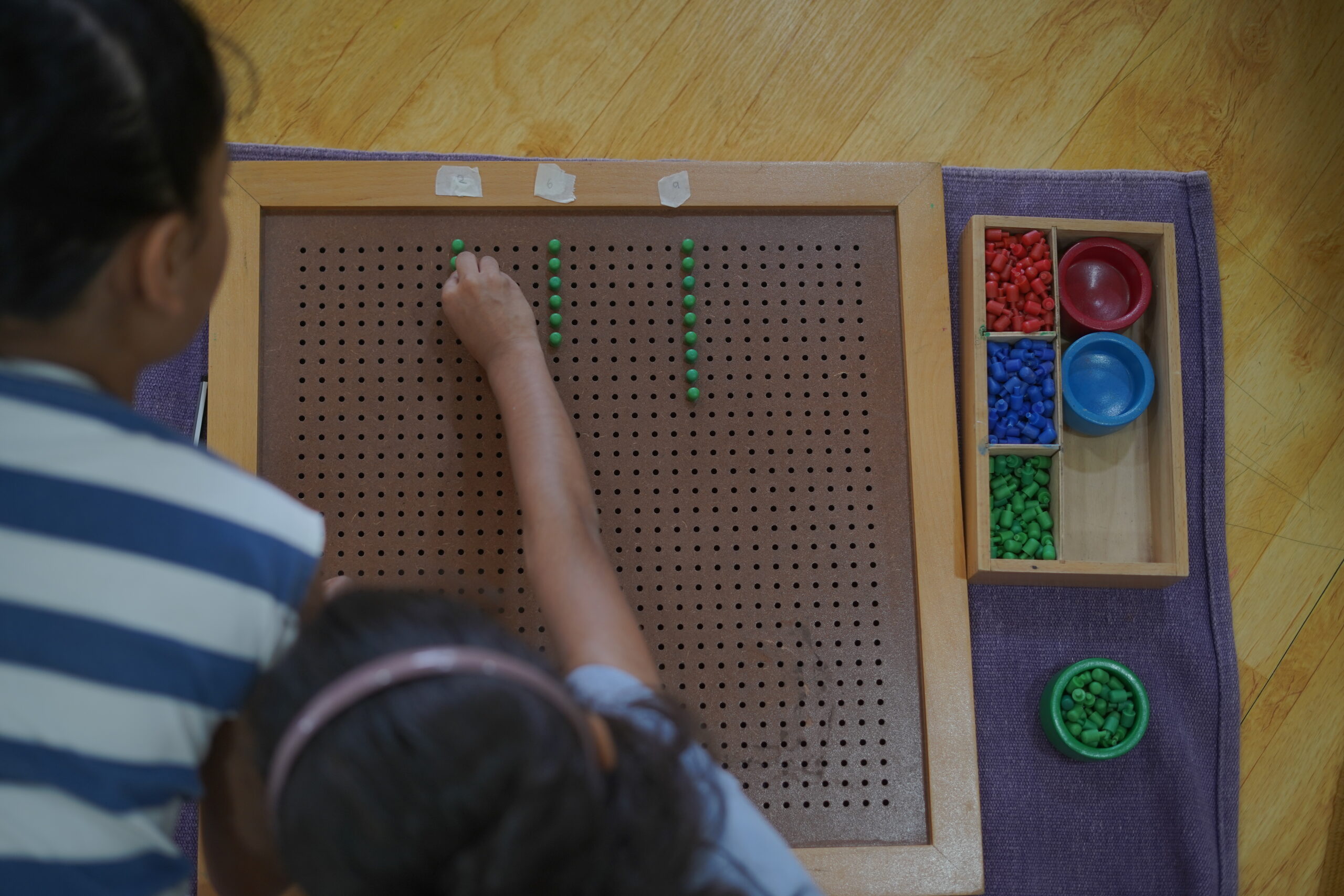
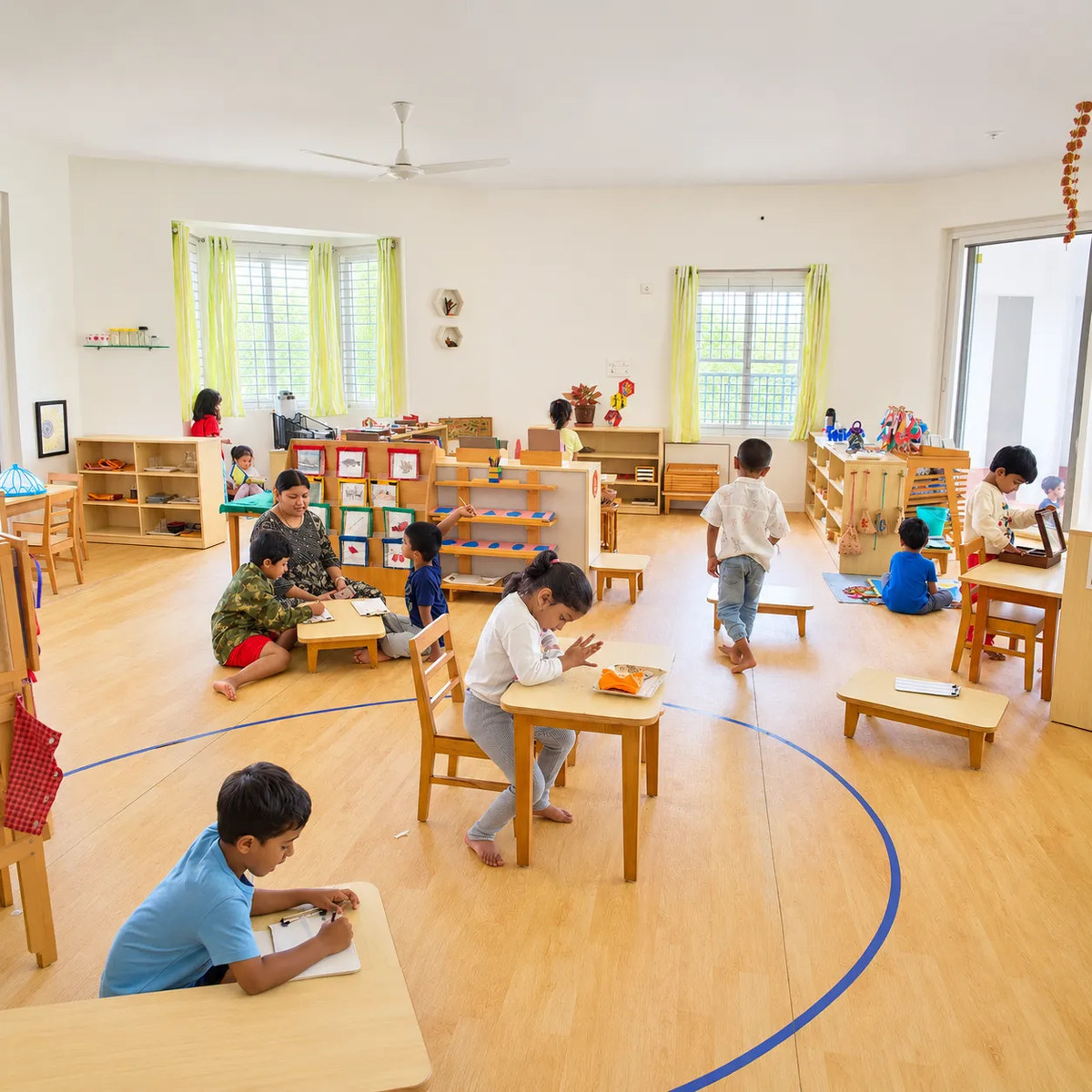
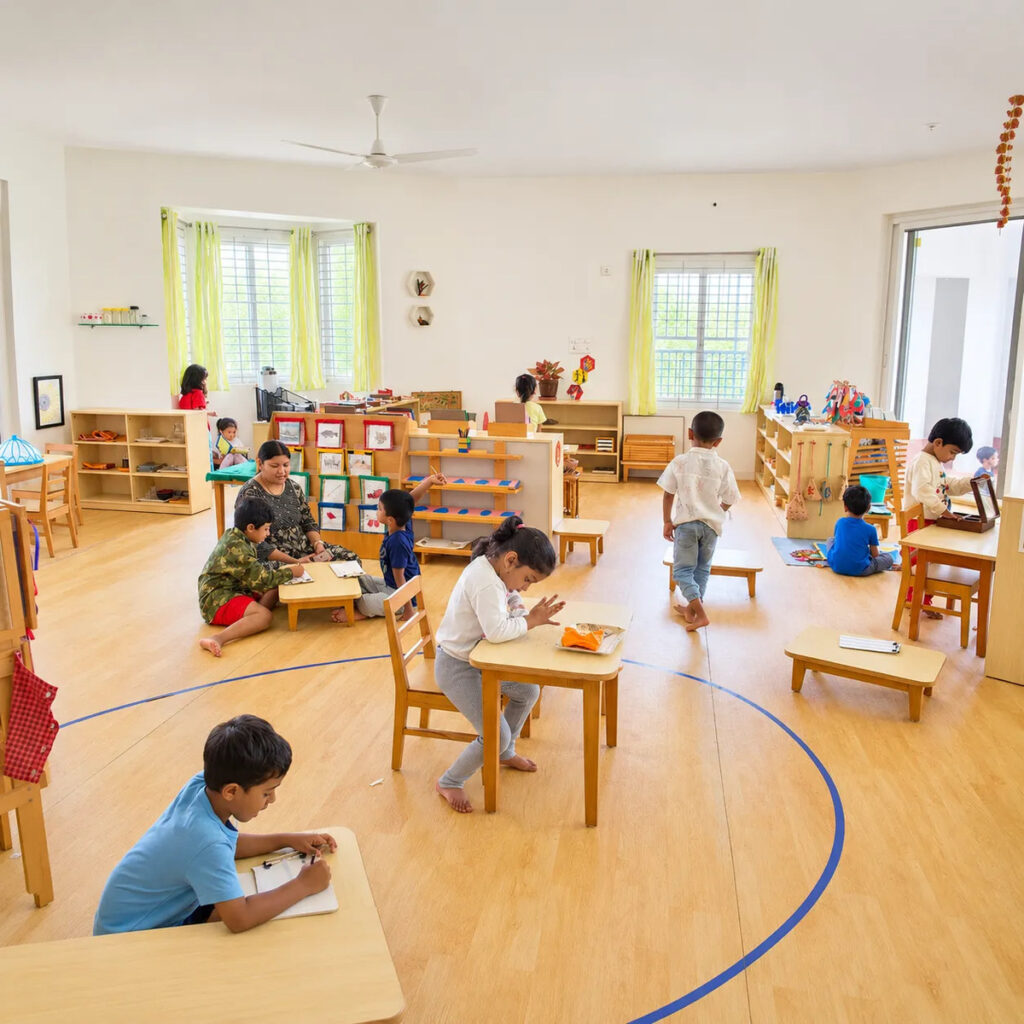
Our Children’s House runs at both our campuses: in Gachibowli, opposite DLF Gachibowli, and in Tellapur. Children join from two and a half years old and stay until six, through the Nursery, PP1 and PP2 years, in one mixed-age community. Over those three years, a child grows from one of the youngest in the room, learning by observing older children, to one of the oldest, who helps others and takes on the most complex work. You can read more about our Children’s House programme and the five areas of learning it covers.
For families looking for a nursery school in Tellapur, our Tellapur campus also continues through the 6–12 and 12–16 years, so a child can stay in the same approach long after nursery. Our toddler community, for children from 15 months, runs at our Gachibowli campus. We admit children throughout the year at both campuses, with places currently open in our toddler community at Gachibowli and in our pre-primary programme for 2026–27. The first step for any family is an enquiry.
Nursery admissions Hyderabad: your checklist
Your child
- Check each school’s cut-off date against your child’s date of birth.
- Ask what age the school expects children to be at Class 1.
- Notice the readiness signs at home: doing things themselves, following a simple request, making needs known.
- Choose a start date that suits your child, not only the calendar.
The school
- Attend a parent session, open day or admission workshop.
- Ask which training the adults hold, and for which age group.
- Ask whether the school continues after the nursery years.
- Ask how progress is shared with parents.
The application
- Complete the application form.
- Prepare the documents the school asks for.
The commitment
- Discuss fees directly with the admissions team.
- Ask what is expected of parents across the three years.
Frequently asked questions
Can my child join nursery in the middle of the year?
Yes. Blue Blocks admits children throughout the year, not only at the start of the academic year. Because each child in our Children’s House works from an individual plan, a child can join whenever they and their family are ready, without waiting for a fixed intake.
When do I need to submit documents for nursery admission?
You do not need to submit documents to make an initial enquiry or attend a Saturday admission workshop. Formal verification records, which may include your child’s date-of-birth proof, health or immunisation details and family identification, are requested at the formal application stage after the observation, where applicable, and the family conversations. Our admissions team provides the exact checklist at that stage.
Is there an entrance test for nursery admission at Blue Blocks?
No. For children from two years and nine months, we observe the child in the Montessori environment before the application is completed. It is not an assessment. It helps the guide understand how your child moves, chooses and settles, so the first weeks can be planned around them.
Can my child join nursery at two and a half?
Yes. Montessori education treats three to six as one stage, and we welcome children into our Children’s House from two and a half. Joining a little earlier gives a child time to settle into the community before those years begin, at either our Gachibowli or Tellapur campus.