



What Do Children Learn in Nursery School? A Look Beneath the Activity
Ask a three-year-old what they did at school today, and the answer is usually “played” or simply “nothing.” It is an honest answer. To a young child, pouring water or tracing a letter feels like play. But parents asking “what do children learn in nursery school?” deserve a fuller picture than that, because the activities a child calls play are often doing precise and purposeful work. This guide looks at what you would see in a Montessori nursery, and what is being built underneath.
What do children learn in a Montessori nursery?
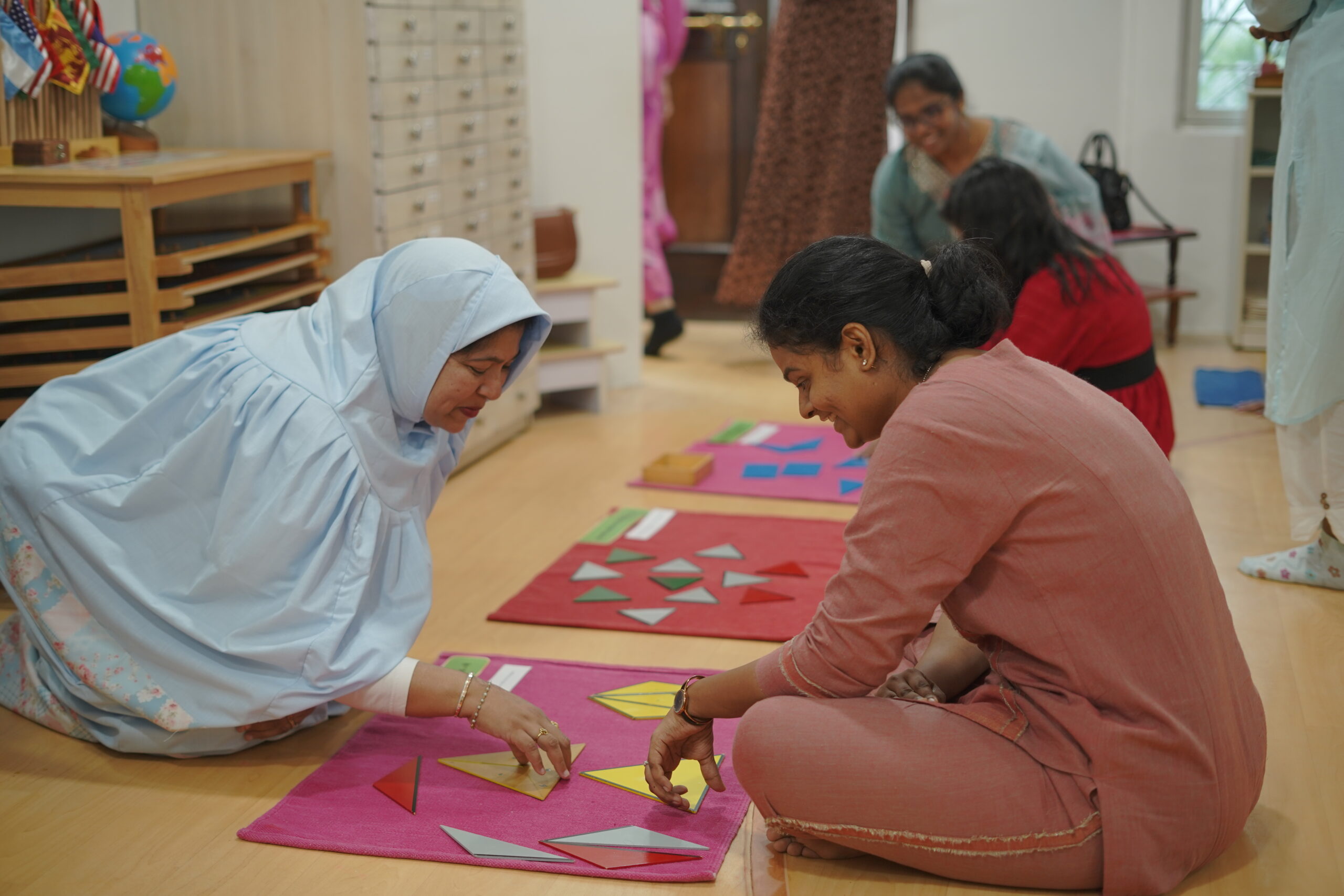
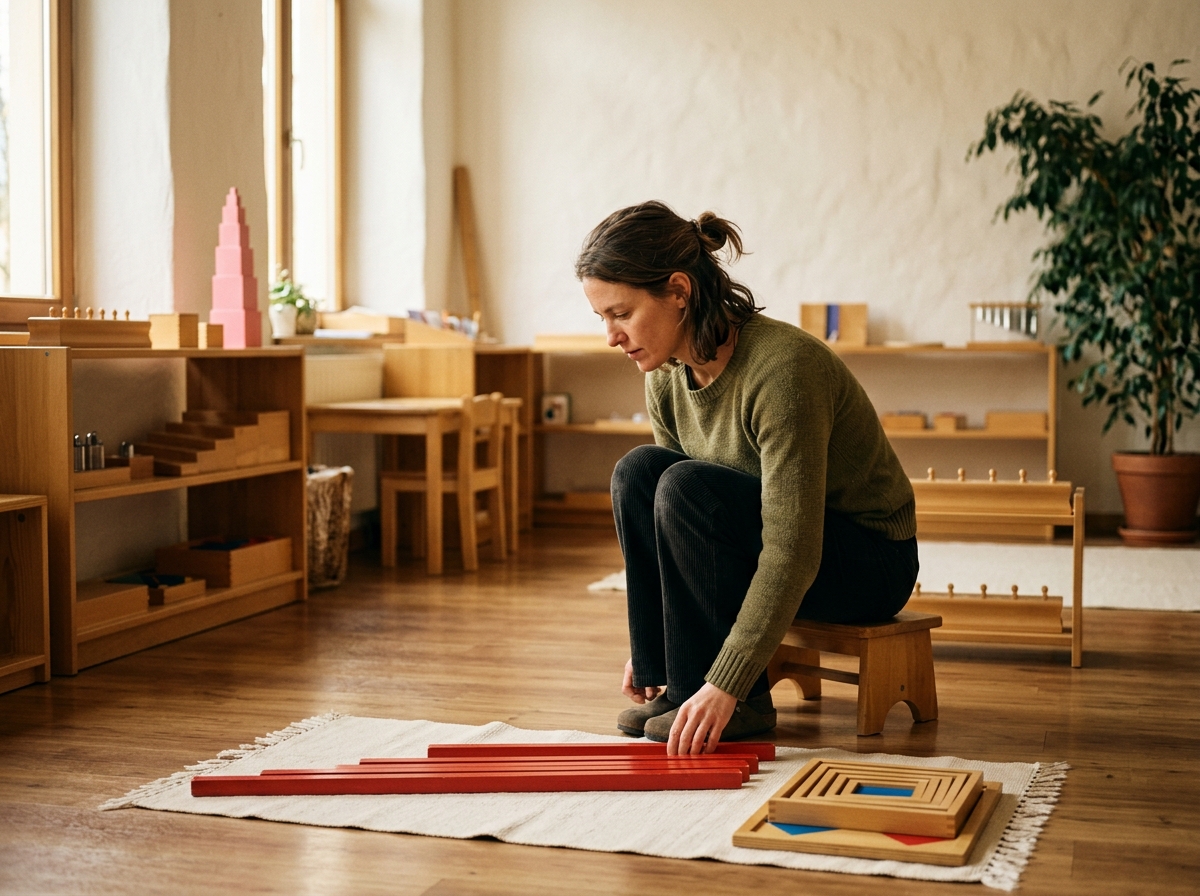
In a Montessori nursery, children learn across five areas: Practical life, sensorial, mathematics, language, and culture. Each area moves from simple to complex and from concrete to abstract, so a child handles real objects long before working with symbols. Children move through this work at their own pace, guided by an adult who plans for each child individually.
Underneath the five areas sit qualities that no single activity teaches directly: concentration, independence, coordination of the hand and body, and the confidence to try something, make a mistake and try again. These grow through daily practice, which is why the same activities return again and again. The thinking behind this is set out in our Montessori learning philosophy.
“We adults divide education into areas such as language, mathematics, movement and practical life. But a three-year-old does not experience learning in separate compartments. When a child carries a glass of water across a room, she is judging its weight, adjusting her grip, coordinating her steps and keeping a destination in mind. It is one ordinary action, yet her attention, movement and thinking are working together. The richness of early learning lies in how one meaningful experience can bring so many abilities together.”
(Pavan Goyal, Founder, Blue Blocks Montessori School)
What do children learn in nursery school? What you see, and what’s being built
The easiest way to understand a Montessori nursery is to stand beside one activity at a time. Each note below describes something you might see a child doing, what it builds, and where it leads.
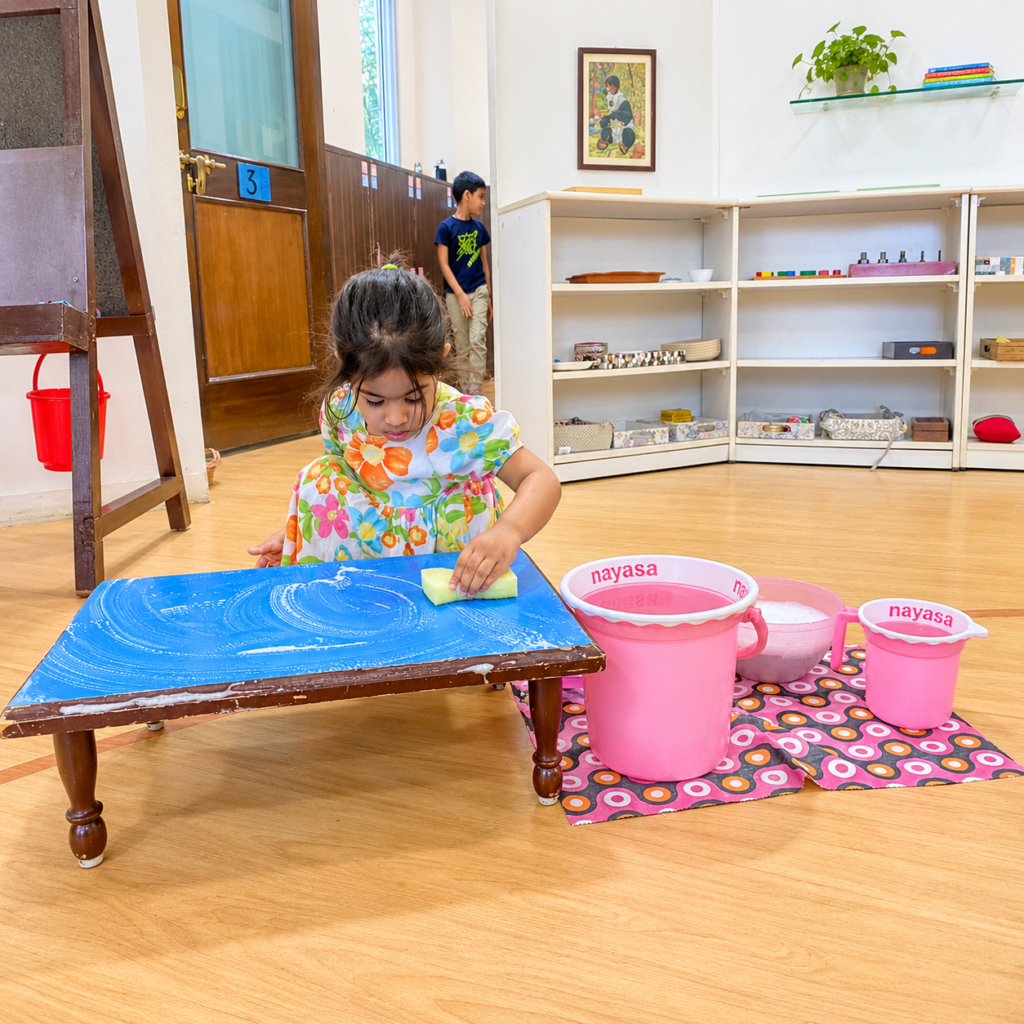
Practical life
What you’d see: A child carries a small jug to a table, pours water into a glass, and wipes up the drops that land on the tray.
What it builds: Control of the wrist and fingers, a sense of sequence, and the habit of finishing what was started.
Where it leads: Care for oneself and one’s surroundings, and the steady hand that later work depends on.
What you’d see: A child unrolls an oil cloth, polishes a small brass bowl, then rolls the oil cloth up and returns everything to the shelf.
What it builds: Concentration across a task with many steps, and a sense of order in the room.
Where it leads: Independence. Our research on care of the environment and on personal care and daily rhythm looks at how these everyday tasks carry into life at home.
Sensorial
What you’d see: A child lifts a set of knobbed cylinders out of a wooden block, mixes them up, and fits each one back into its own hole.
What it builds: Fine discrimination of size, and a grip between thumb and two fingers on each small knob.
Where it leads: That same grip is the one a child will later use to hold a pencil.
Montessori’s approach to sensory development in early years rests on refining each sense one at a time. Colour tablets ask a child to match and then grade shades. Sound boxes ask them to pair sounds by ear. Because each material isolates a single quality, the child can give it full attention. Our parents’ observations of sensorial development and concentration show how this attention begins to appear at home as well.
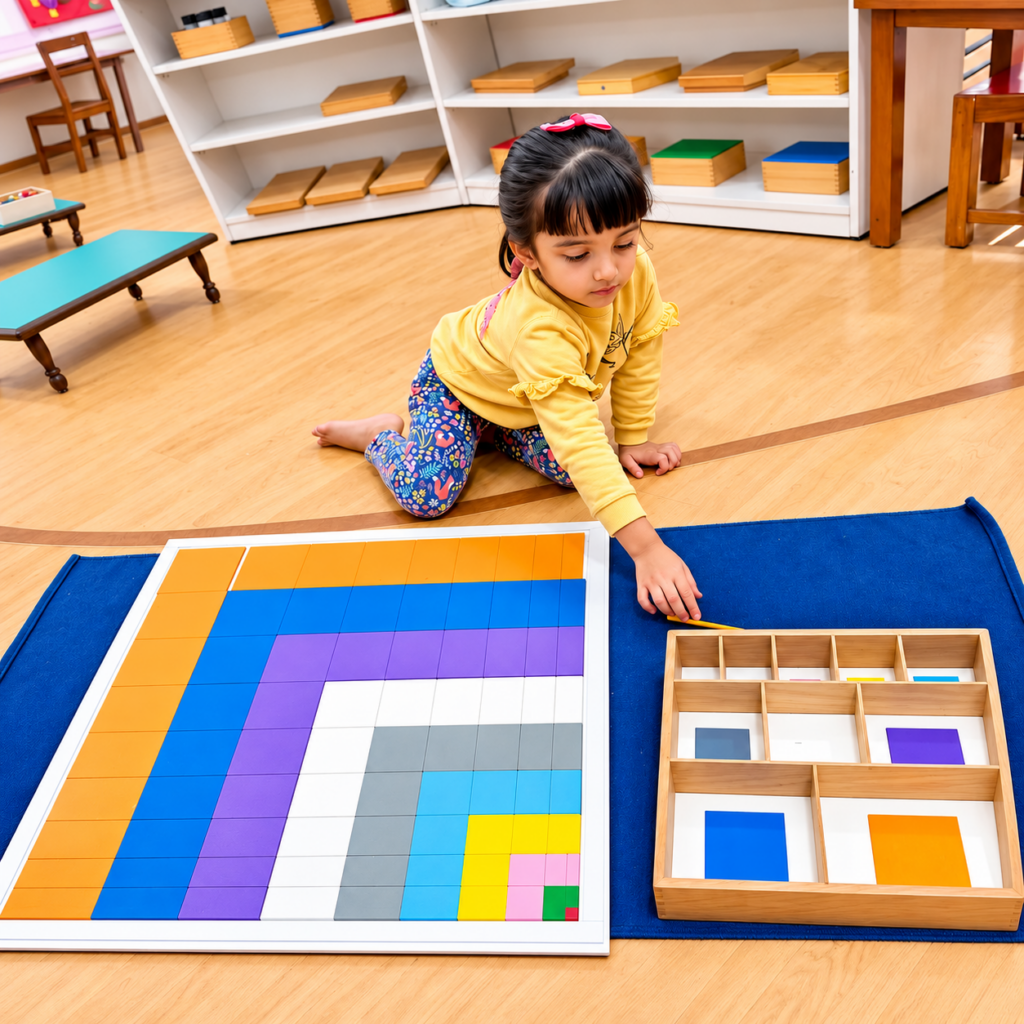
In Lining the Nest, Chapter 2: Sensorial Development: Senses: Avenues to the Intellect, the authors recount how two-year-old Nayna reacted when her father returned home with unfamiliar stubble. She tried to brush it away, convinced that he had sand on his face. Nayna was using a sensation she already knew to make sense of one she had just encountered. For a parent, it is a revealing example of why sensory exploration matters: children are continuously comparing, sorting and giving meaning to their experiences of the world.
Mathematics
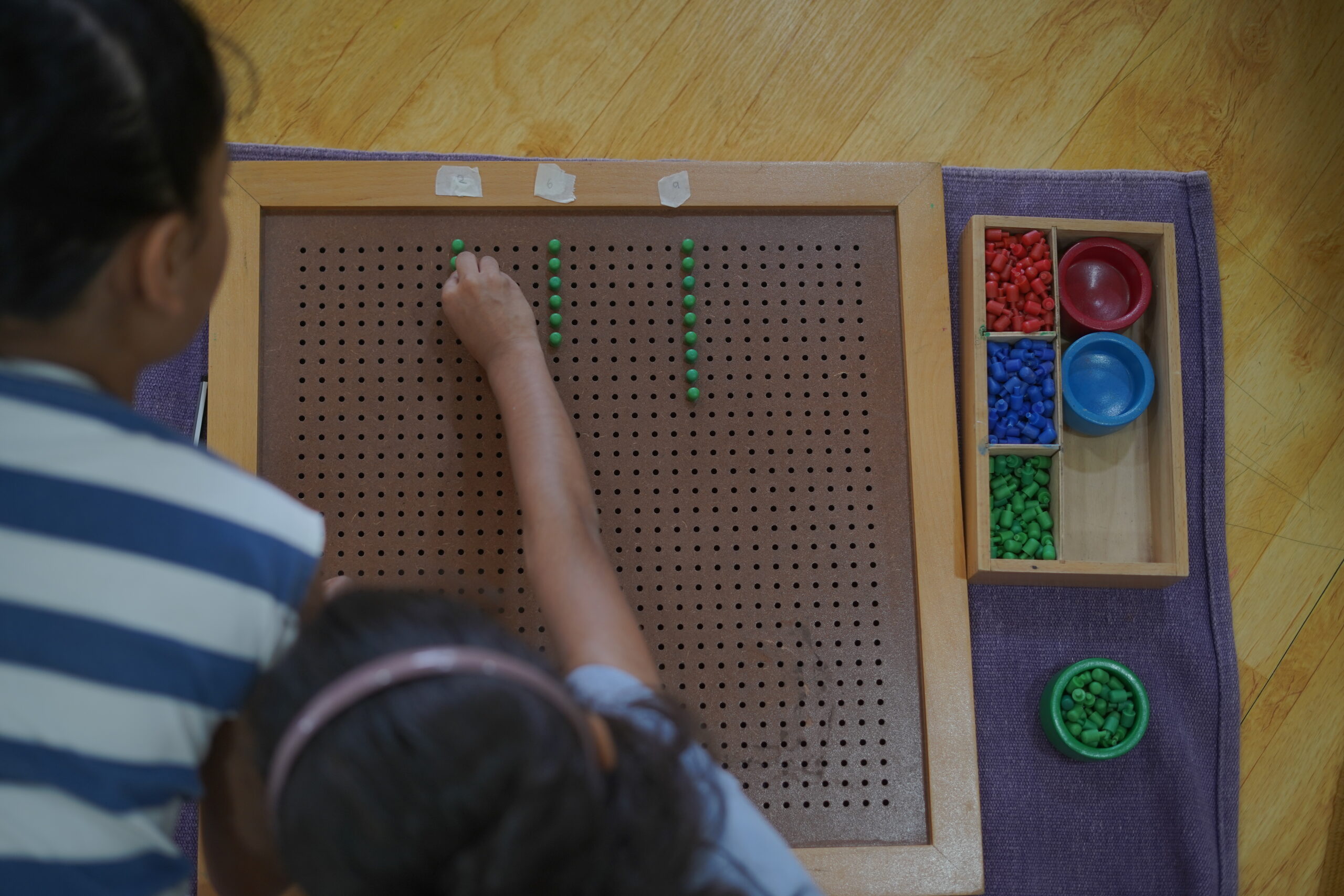
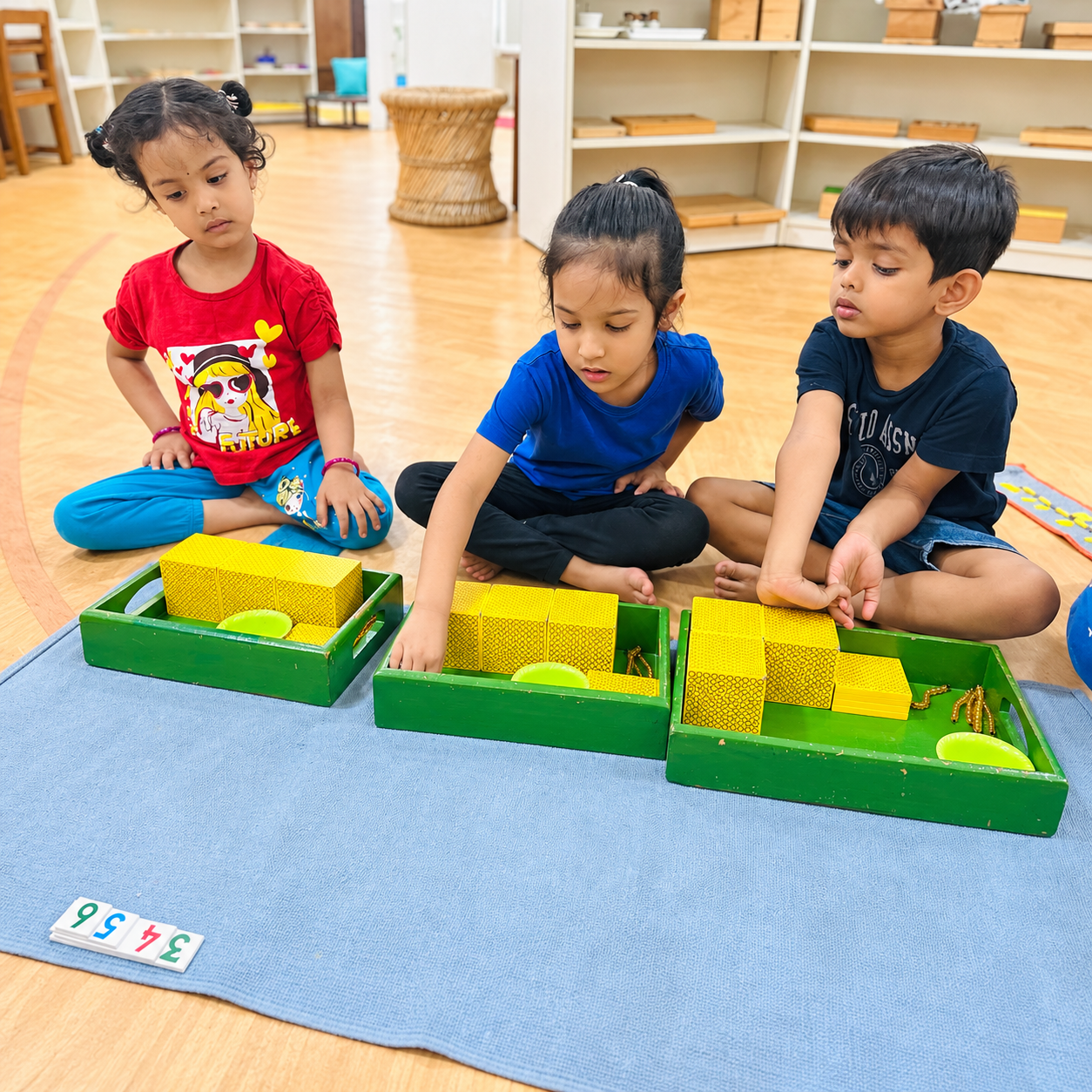
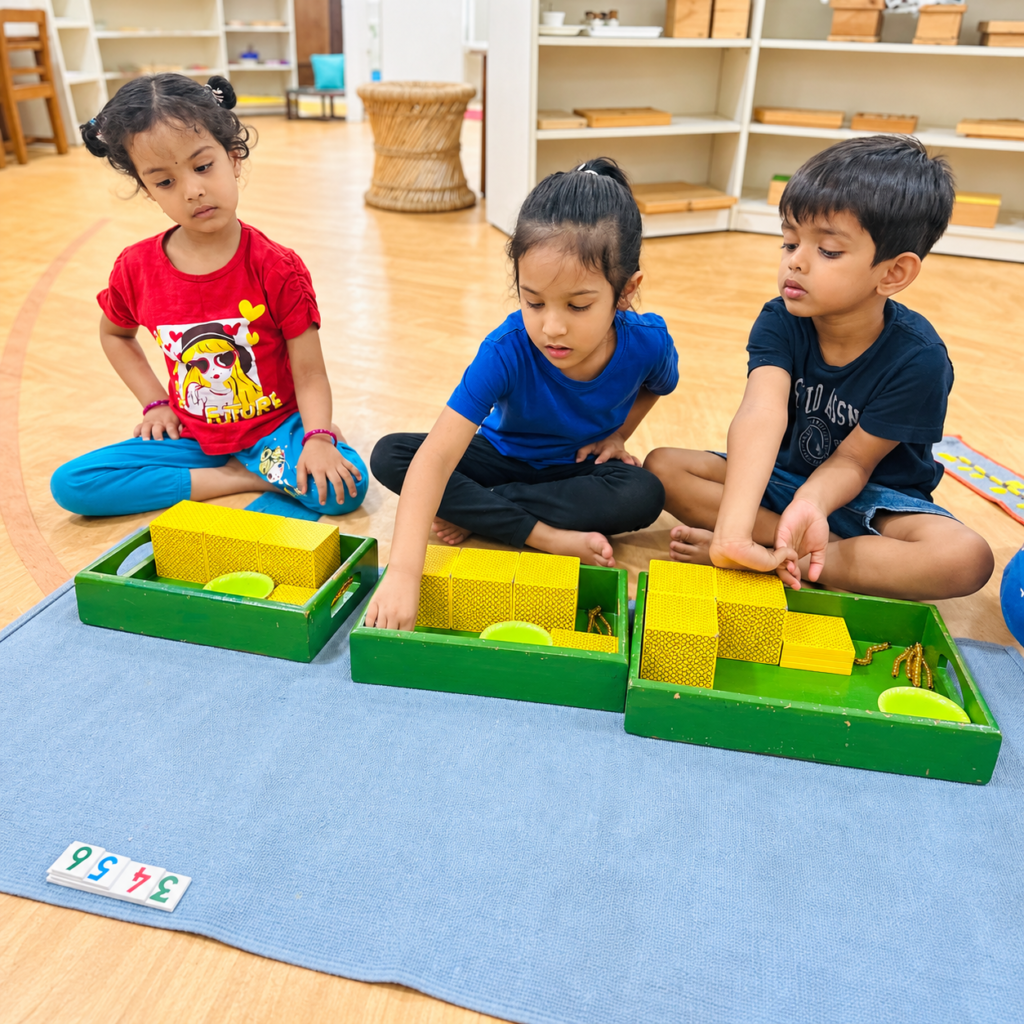
What you’d see: A child is working with a single golden bead, then a bar of ten, then a square of a hundred, comparing the weight of each in their hands.
What it builds: A physical sense of quantity, so that “a hundred” is something the child has carried, not just a word.
Where it leads: Place value, and later the operations of addition, subtraction, multiplication and division, all first worked with materials before they are written on paper.
Language
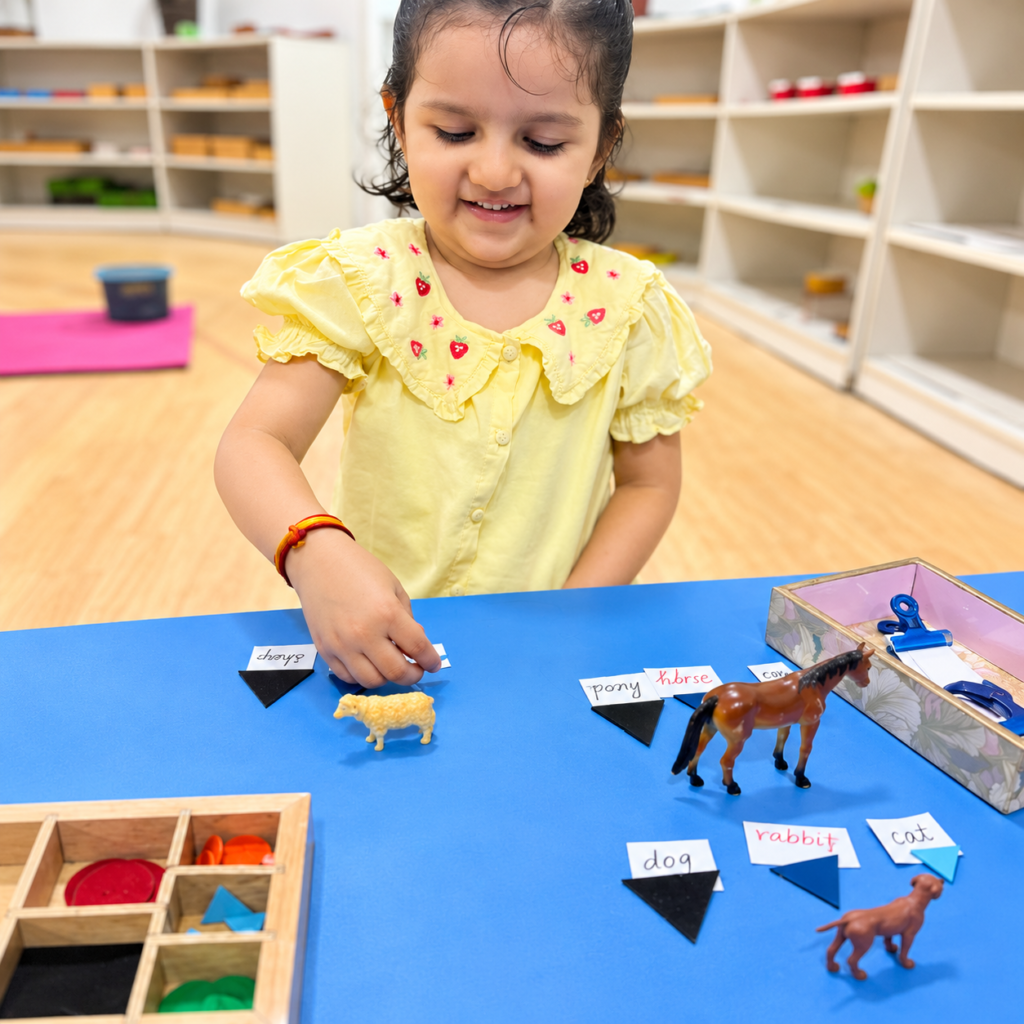
What you’d see: A child traces a sandpaper letter with two fingers and says its sound, then goes off to find an object in the room that begins with it.
What it builds: A link between the shape of a letter, its sound and the movement of the hand.
Where it leads: Writing, and then reading. In a Montessori nursery, writing often comes before reading.
Spoken language comes first and runs through everything. From the first day, the guide uses the real names of things and leads conversations, stories and songs that steadily widen a child’s vocabulary. Our home observation study of language development and the literacy environment shows how much families contribute to this alongside the school.
Culture
What you’d see: A child checks the soil, waters the plant, wipes each leaf with cotton and trims away dried leaves.
What it builds: Close observation, careful hands and responsibility for a living thing.
Where it leads: Botany, zoology and geography, which children explore in the Children’s House through real plants, puzzle maps and globes. Our study of biophilia in the classroom, with children aged 6 to 16, shows how this connection with nature continues to grow in the years that follow.
During plant care in our Children’s House, a child brought a small watering can to a plant, then touched the soil with one finger. Finding it still damp, she returned the watering can and chose a soft cloth to clean a leaf instead. Her guide observed from a distance as the child changed her plan. The significant learning was in the decision: caring for a living thing meant responding to what it needed, rather than simply completing a familiar activity.
The hidden thread: Many of the everyday-life activities quietly prepare a child for work that comes later. Wiping a table from left to right rehearses the direction of writing. Carrying a tray without spilling builds the control that careful handwriting needs. Returning each material to its place, as our research on the return-to-shelf routine explores, builds the sense of order that mathematics relies on. Montessori called this indirect preparation. It is one reason a nursery morning can look simple and still be doing a great deal.
What skills should a 3-year-old learn in nursery?
Rather than a list of milestones, it helps to think in terms of skills that grow steadily over the nursery years: independence in caring for oneself, concentration on a chosen task, coordination of the hand and body, a growing vocabulary, and the ability to work alongside others. There is no single age at which each one should appear. Children develop at different rates, and in a Montessori nursery, each child moves through the work at their own pace.
What matters more than the timing is the direction. A child who once needed help pouring water now pours for a friend. A child who once observed the older children with the beads now works with them. Over the three years, a child grows from one of the youngest in the room, learning through observation, to one of the oldest, who helps younger children and takes on the most complex work.
Choice plays a large part in this. When children choose their own work from a prepared environment, they tend to concentrate longer and return to it more readily. Our research institute has reviewed how self-directed learning environments relate to skills such as planning, attention and self-control, and our article on Montessori vs traditional education looks at how different approaches handle pace.
Nursery school activities for 3–4 year olds you can offer at home
Many of the most useful nursery school activities for 3–4 year olds need nothing more than ordinary household things and a little patience. The aim is not to copy the classroom, but to give a child real work and the time to do it.
- Pouring: a small jug and a glass at the child’s height, with a cloth nearby for spills.
- Sorting: matching socks from the laundry, or putting spoons and forks into their places.
- Counting: setting the table and counting one plate for each person.
- Naming: using the real names of things, such as colander, sieve, cumin and curry leaf, while you cook together.
- Caring: a plant of their own to water, and a cloth to wipe their own table.
At Blue Blocks Montessori School, whenever a child is presented with a new activity, parents receive a handout explaining the work and suggesting ways to support it at home. Families can also explore our parent resources at Blue Blocks Montessori School for further reading on child development.
Children learn most from activities they can complete themselves, so choose tools that fit their hands. Our guide on how to teach your toddler to eat by themselves shows how the same principle works at mealtimes, and our review of hands-on and lecture-based learning looks at why doing tends to stay with children longer than being told.
Montessori nursery near Gachibowli
For parents exploring a nursery school in Gachibowli, our Children’s House runs at our Gachibowli campus, opposite DLF Gachibowli, and at our Tellapur campus. Children join from two and a half and stay until six, through the Nursery, PP1 and PP2 years, in one mixed-age community. Our guides hold the individual AMI Primary Diploma (3–6), a specialised qualification for Montessori educators that is distinct from institutional AMI school accreditation. Each morning centres on a long, uninterrupted work period across the five areas described above.
You can read more about the nursery programme at Blue Blocks Montessori School and how a morning unfolds. If you are comparing approaches, our guide to the difference between Montessori nursery and CBSE preschool sets them side by side, and our nursery admissions checklist walks through ages, readiness and the admission steps.
Frequently asked questions
Why does my child say they “just played” at nursery?
Because to a young child, purposeful work and play feel the same. Pouring, matching and tracing letters are absorbing and enjoyable, so a child naturally calls them play. Instead of asking what they learnt, try asking what they carried, poured or made today. You will often hear far more.
Is it a problem if my child repeats the same activity every day?
No. Repetition is how a young child refines a skill until it becomes their own. A child may return to the same material for days or weeks, then move on once it is mastered. In a Montessori nursery, the guide observes this closely and introduces new work when the child is ready.
Do Montessori nurseries use worksheets?
Montessori nurseries work mainly with concrete materials rather than worksheets. Children build an understanding of letters and numbers by handling materials such as sandpaper letters, the movable alphabet, and golden beads before moving to paper and pencil.
How will I know what my child is learning?
At Blue Blocks Montessori School, when a child is presented with a new activity, parents receive a handout describing the activity, along with ways to support the same skill at home. Guides also share the child’s progress in scheduled one-to-one meetings, and if something comes up in between, the guide will call the parent.