



10 Adolescents, 10 Water Problems: What Sea Creatures Taught Our Researchers
Ten adolescent researchers picked ten real problems facing the world’s water and went looking for the sea creatures that solved them first.
When a sea turtle hatchling breaks out of its shell at night, it heads for the brightest horizon. On a natural beach, that is the moonlit sea. On a beach lined with street lights, it can be a road.
That single problem became one of ten biomimicry projects by students in the Blue Blocks Erdkinder programme, each published this year as a research paper with its own DOI. Each paper starts with a real threat to the world’s water, from plastic and oil spills to deep-sea mining and lost turtles, and asks the same question: which living thing has already solved something like this?
What sets these biomimicry projects by students apart
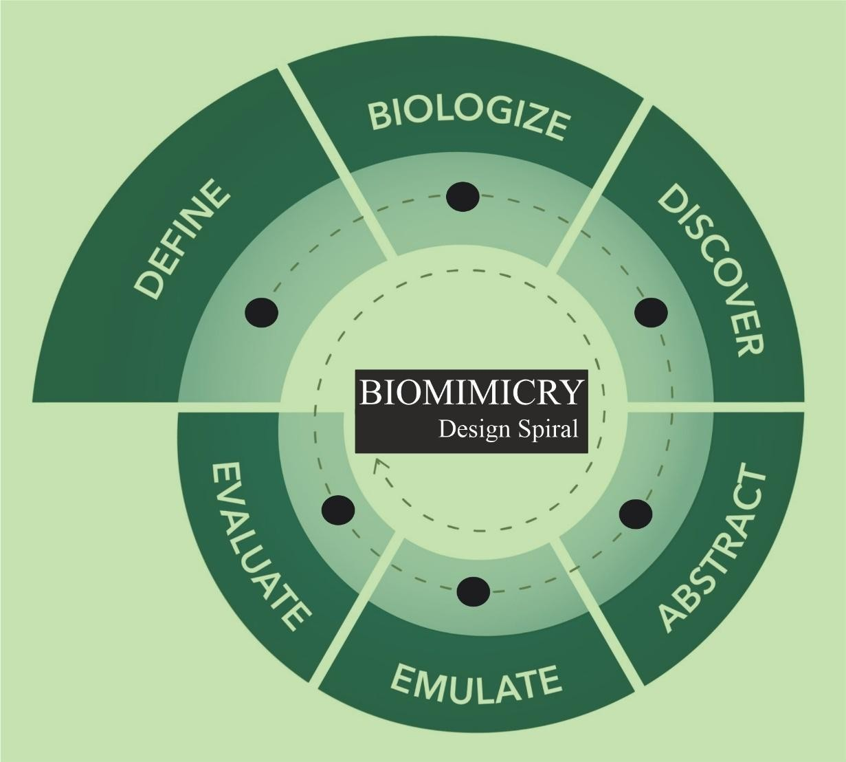
Our younger children begin with nature: they watch a leaf, a bird or an ant for two weeks and then ask what it could teach us. Adolescents work the other way round. They begin with a problem, research the organisms that have faced something similar, and then run the full design cycle: ideas, sketches, prototypes, tests and an honest account of what was and was not proved.
That honesty runs through all ten papers. Every one states plainly whether its design was built, tested or remains a concept on paper, and what would still need to be shown before it could work in the real ocean. We have kept that status line for each project below, because knowing what you have not yet proved is part of doing research properly.
Each adolescent led one paper and co-authored others, working in teams the way professional research groups do. Every project was guided by a mentor from the Blue Blocks team. Click a lead researcher’s name to read the full paper.
4 designs for cleaning polluted water
The Octo-clean: An Octopus-Inspired Prototype for Collecting Plastic from the Ocean
Led by A. Gupta, with V. Agarwal and S. Ponnala. Mentor: S. Ediga.
One device, three ways to catch plastic: octopus-style pincher arms for large pieces, whale-baleen combs for medium ones, and loofah-covered arms that filter like a sea sponge for small fragments. Across three rounds of redesign, the reported collection rate in tank tests rose from about 85% to 96%. Status: a 28 cm prototype, built for about INR 3,000 and tested in a water tank. The results are preliminary, because the raw measurements were not recorded.
NEMO: A Biomimicry-Based Design for Cleaning Oil Spills, Inspired by the Clownfish, the Sea Anemone and the Lotus Leaf
Led by V. Agarwal, with A. Gupta. Mentor: K. Khare.
A clownfish’s protective mucus inspired the device’s outer coating, sea anemone tentacles inspired internal structures that slow oily water, and the water-repelling lotus leaf inspired the surface that separates oil from water. The paper also designs its own next experiment: a lotus-inspired mesh tested against an untreated one, using vegetable oil.Status: a 40 cm model in plaster of Paris, partly built. Not yet tested.
Design and Development of a Manta Ray-Inspired Aquatic Drone for Potential Heavy Metal Removal, led by R. V.K., with V. Reddy, A. A. Reddy, U. Hussain Kagalwalla and S. Goyal. Mentor: S. K. Rallabandi.
Dissolved metals such as mercury slip through ordinary filters, so the team proposed a cartridge of thiol-functionalised silica, a material that binds certain metal ions, carried on a vehicle shaped like a manta ray. When a fully underwater drone proved too hard to waterproof and steer, the team redesigned it as a remote-controlled surface vehicle.
Status: the surface drone and two filtration models were built. The heavy-metal cartridge remains a proposal, and tests with hazardous metals are reserved for a proper laboratory.
Sedi-Clean: A Crab-Inspired Robot to Reduce Sediment Pollution Caused by Deep-Sea Mining, led by A. A. Reddy, with R. V.K., V. Reddy, U. Hussain Kagalwalla and S. Goyal. Mentor: K. Khare.
Crabs move sideways, change direction without turning and stay steady on rough ground, so Sedi-Clean is an eight-legged robot that would draw in clouded water stirred up by mining, settle and filter the sediment, and return clearer water to the sea. The paper is also clear about the limit: cleaning sediment cannot undo the damage mining does to the seabed.
Status: a concept with technical drawings. No prototype yet.
3 designs for protecting ocean life
Nature-Inspired Selectivity: Developing a Fishing Net for Reduced Turtle Bycatch, led by S. Goyal, with U. Hussain Kagalwalla, V. Reddy, A. A. Reddy and R. V.K. Mentor: R. Rati.
Aquamorph borrows from three organisms: a green border that sea turtles can see marks the escape hatch, a grid modelled on fish gill rakers keeps turtles out of the catch, and a flap inspired by bending kelp fronds swings open for a turtle and closes again behind it. In five tabletop trials, the toy turtle was kept out of the catch area and escaped through the hatch.
Status: a working tabletop prototype, built for about INR 2,100 and tested qualitatively. No live animals were involved.
Red Light for the Way Home: A Stoplight Loosejaw-Inspired Beach Model to Protect Sea Turtle Hatchlings, led by S. Ponnala, with J. Nallamothu, P. Aditya Rao and A. Gupta. Mentor: R. Rati.
The stoplight loosejaw, a deep-sea fish that glows in far-red light, inspired a beach lit in red, which hatchlings are less drawn to than white light. Termite mounds, pine cones, a desert beetle and a sand scorpion added ideas for cooling nests, collecting water and sensing when eggs hatch.
Status: a tabletop beach model, built for about INR 2,990. Not yet tested. The paper notes that hatchlings can still see red light, so brightness and shielding still matter.
Learning from the Ocean: Designing a Biomimetic Research Vessel to Reduce the Impact of Shipping on Marine Life, led by U. Hussain Kagalwalla, with S. Goyal, V. Reddy, A. A. Reddy and R. V.K. Mentor: S. Ediga.
The most ambitious design in the collection draws on seventeen organisms for a 100-metre research ship, THALLASA, and its two-person submersible, NEREID. Whales, tuna and dolphins shaped the hull, humpback whale flippers the propeller, and harbour seal whiskers a system for sensing animals nearby, all aimed at a quieter, cleaner ship.
Status: a thermocol model of the hull and propeller, partly built. The improvements it proposes are still to be tested.
2 designs for sensing and exploring the deep
U.W.E.B.B: A Crab-Inspired Capsule Design for Exploring the Deep Sea and Mapping Ocean Temperatures, led by V. Reddy, with A. A. Reddy, R. V.K., S. Goyal and U. Hussain Kagalwalla. Mentor: S. Ediga.
A crab that lives around hydrothermal vents some 3,600 metres down inspired a strong protective shell for a temperature-mapping capsule. The team compared three shapes and chose a capsule with rounded ends over a sphere, trading a little strength for usable space inside.
Status: a 0.9-metre demonstration model, built for about INR 4,000. It is not functional, and its deep-sea depth target is still unproven.
A Jellyfish-Inspired Wave Sensor to Warn People When a Coral Reef Has Been Hit, led by P. Aditya Rao, with S. Ponnala. Mentor: K. Khare.
The moon jellyfish senses movement with tiny organs in which heavy crystals shift and touch sensitive cells. That became a simple switch: a hanging wire that swings against a contact when the water moves hard enough, setting off a buzzer and lights so that a damaged reef can be checked.
Status: the circuit was built and worked in tabletop checks. Not yet tested in water.
1 design for fresh water
HYDROBIOLYSIS: A Giant-Kelp- and Freshwater-Fungi-Inspired Freshwater Microalgae Prototype, led by J. Nallamothu, with S. Ponnala and S. Goyal. Mentor: S. K. Rallabandi.
Set in the context of the Ganga River, this design would capture excess microalgae in a structure shaped like giant kelp and break it down in a sealed chamber, borrowing the way freshwater fungi decompose organic matter. Over four rounds of redesign, the team separated capture from decomposition so the filters would not clog.
Status: a concept with technical drawings. The paper is explicit that nothing would be released into a river without expert review.
What 10 ocean problems teach
Ten problems, more than thirty organisms, and one habit: start with what is going wrong, then ask who in nature has already found a way through it.
Not every design here was built, and the ones that were built were mostly tested on a tabletop. But every one of these adolescents can explain what their design is meant to do, why a particular animal inspired it, and exactly what still needs to be proved. That is what research looks like at this age.
Frequently asked questions
What are biomimicry projects by students?
Biomimicry projects by students ask young people to solve a human problem by studying how a living thing has already solved a similar one. At Blue Blocks, adolescents start with a real problem, research the organisms involved, then design, build and test a biomimicry solution.
At what age can students do biomimicry research?
Children can begin at six, by observing nature closely. From around twelve, students can run the full design cycle on real problems, as the ten adolescents in this collection did.
Which sea creatures inspire biomimicry designs?
In this collection alone: the octopus, manta ray, clownfish, moon jellyfish, hydrothermal vent crab, stoplight loosejaw, humpback whale and harbour seal, among more than thirty organisms.
Our thanks to the mentors who guided this work: S. Ediga, R. Rati, K. Khare, S. K. Rallabandi, and Mausam.