






Montessori Playgroup Vs Daycare: What Really Differs?
When parents weigh up a Montessori vs traditional playgroup, daycare often joins the same conversation, and it is a natural one to have. The two playgroups differ mainly in method: who chooses the activity, and what the adult does. Daycare serves a different purpose: it offers care across the working day. A helpful place to begin is with how many hours your family needs, and then with the environment your child will spend those hours in.
It can be tempting to picture these three options on a single ladder, with basic care at one end and an ideal early-learning setting at the other. In practice, each one meets a different need, and seeing them that way makes the comparison simpler and fairer to every option.
Most parents ask the wrong question first. Here’s the right one.
The question most families start with is “Which is better: a Montessori playgroup, a traditional playgroup or daycare?” It is a natural place to begin, but it has no single answer, because the three options are not doing the same job. The more useful starting point is two separate questions. The first is practical: how many hours of care does your family need on a working day? The second is about experience: what will your child actually be doing during those hours, and with whom?
Daycare exists to answer the first question. A playgroup, Montessori or otherwise, answers the second, for part of the day. A setting that offers daycare and playgroup together tries to answer both, which can work very well, but only if both parts are thought through with the same care.
Separating the two questions also makes the comparison fairer. Many families need full-day care, and choosing it is not a lesser decision. The question for them is not whether to use daycare, but what kind of daycare, and how it fits with everything else in a toddler’s week.
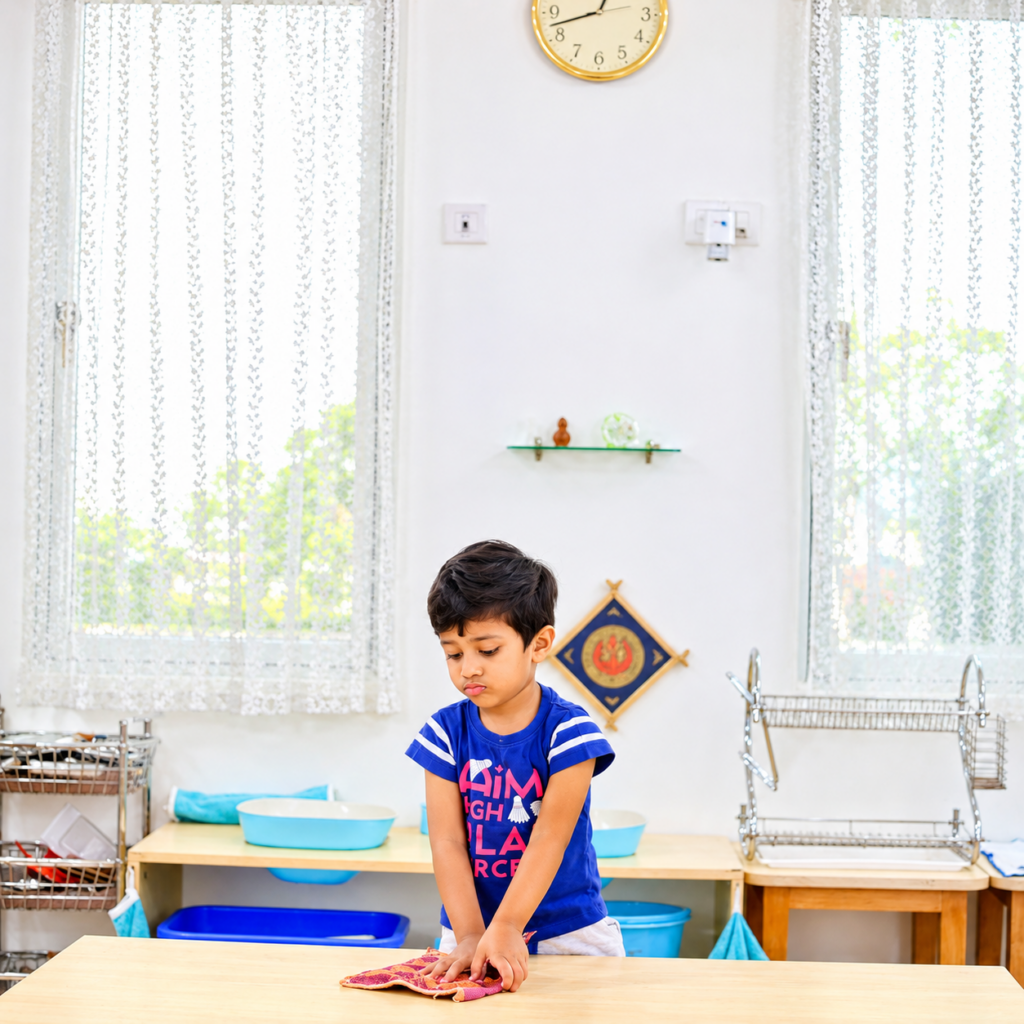
Montessori vs traditional playgroup vs daycare at a glance
In short: the two playgroups differ in method, while daycare differs in purpose. The profiles below describe typical arrangements. Individual settings vary, so treat each line as something to ask about.
Montessori playgroup
Purpose: an environment built for movement, language and independence.
Hours: a morning session.
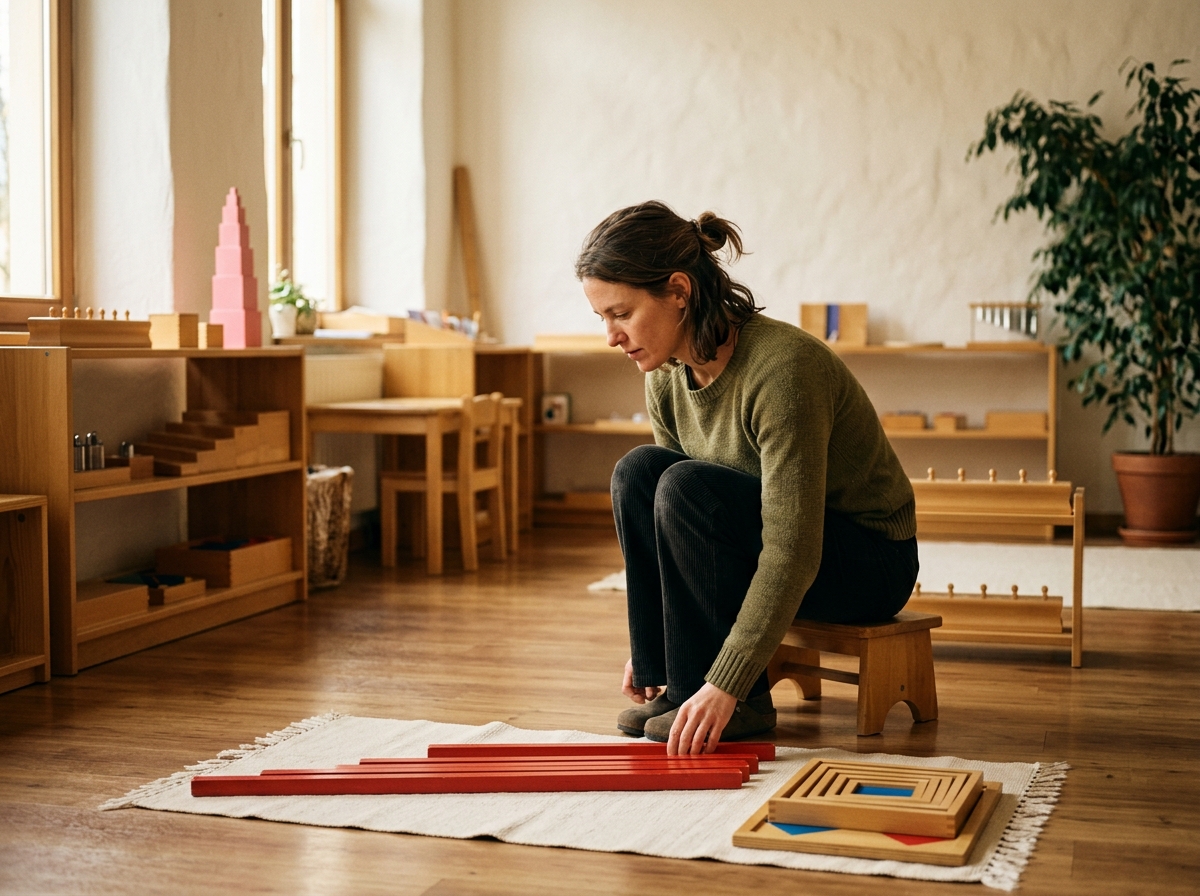
The environment: child-sized furniture and real objects on low, open shelves, prepared around each child’s individual plan.
Who chooses the activity: the child, from what the guide has prepared.
The adult’s role: observes each child, plans individually, presents an activity and then steps back.
Shape of the morning: a long period of chosen work, a shared snack the children help prepare, songs and outdoor time.
Who it suits: families who want a setting built around a toddler’s independence for part of the day.
One question worth asking: how is each child’s plan made?
Traditional playgroup
Purpose: a first group experience of songs, stories, crafts and other children.
Hours: a morning session.
The environment: a bright room with toys, activity corners and group tables.
Who chooses the activity: mostly the adult, who plans for the whole group.
The adult’s role: leads the group through planned activities.
Shape of the morning: circle time, a group activity, free play and snack.
Who it suits: families who want a familiar, group-based introduction to routines and other children.
One question worth asking: how much of the day is the whole group doing the same thing?
Daycare
Purpose: safe care, meals and rest across the working day.
Hours: matched to parents’ working hours.
The environment: varies; good settings include age-appropriate play materials and quiet areas for rest.
Who chooses the activity: varies between child-led and adult-led.
The adult’s role: provides care routines alongside play.
Shape of the day: meals, naps, play and care routines spread across the day.
Who it suits: families who need care for a full working day.
One question worth asking: will the same adults care for my child every day?
How is a Montessori playgroup different from a normal play school?
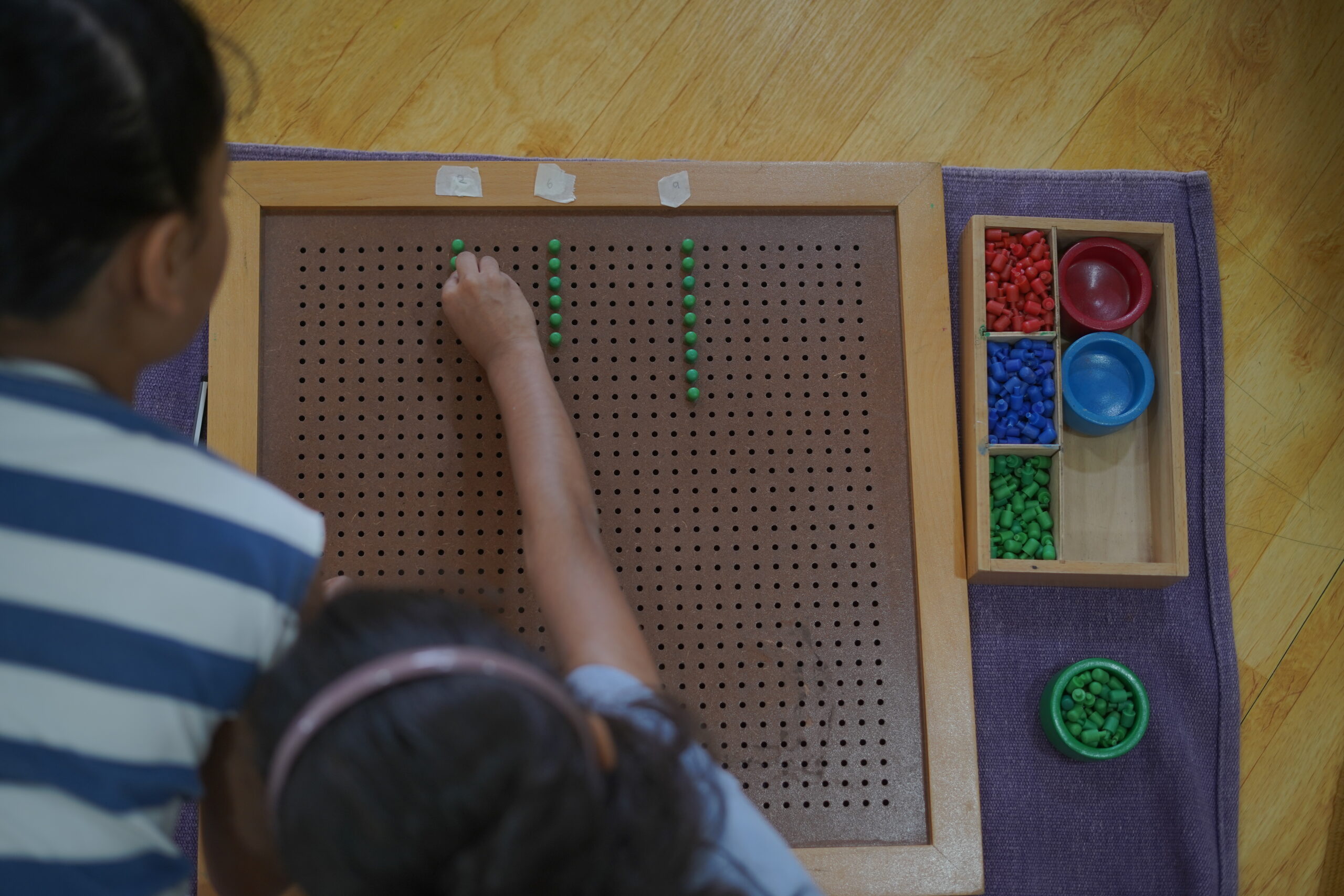
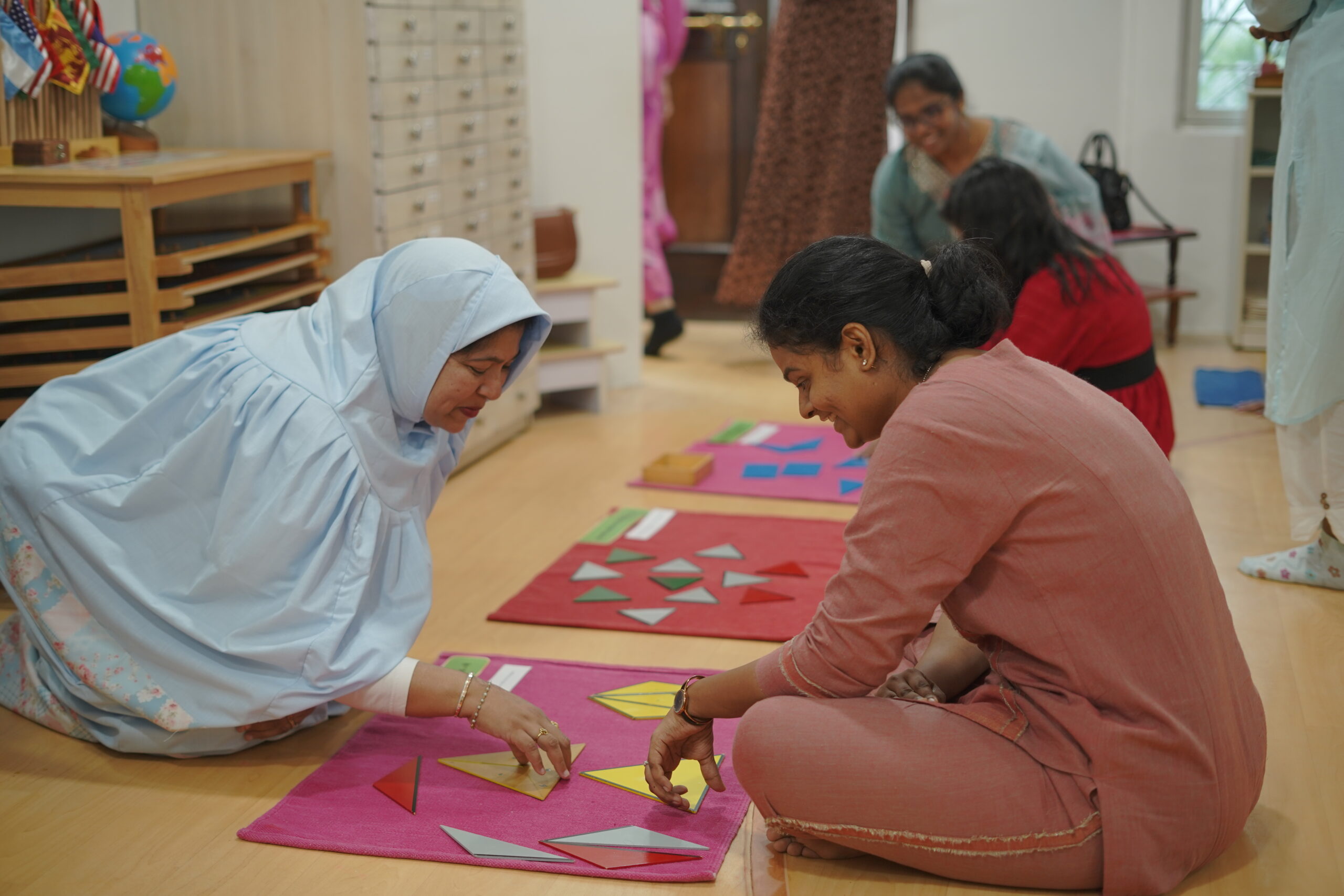
The difference lies less in the toys than in what the adult does. In a Montessori playgroup, the guide observes each child closely and draws up an individual plan based on what that child is ready for next: a new practical task, a challenging activity, new words for familiar things. The environment is then prepared to match. During the morning, the guide presents an activity, invites the child to take a turn and steps back to observe. When a child is absorbed, the guide does not interrupt.
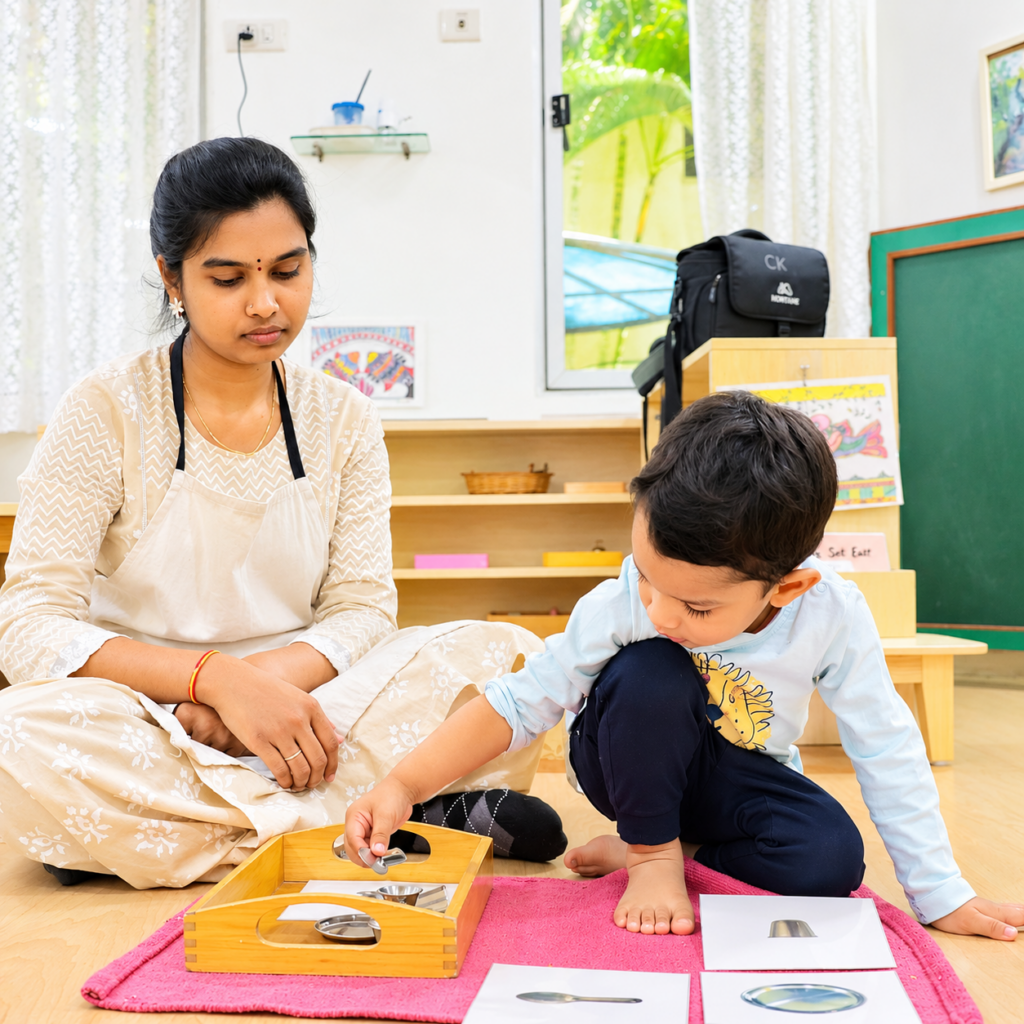
Sometimes, an individual learning plan begins with a very small observation. In our Toddler environment, a child repeatedly returned to a basket containing small, realistic animal models. One morning, he brought the elephant to his guide twice, holding it up without speaking. She named the animal and observed which other animals interested him. This helped her prepare an individual language presentation using familiar objects. What the child chose to explore became the starting point for what the guide offered him next.
The room itself is arranged so that a toddler can do things without asking for help. The jug is small enough to lift. The broom is short enough to use. Each set of materials has its own place on a low shelf, so a child can find it, use it and put it back. Over time, this daily practice builds independence, coordination and confidence in a way that is hard to teach directly.
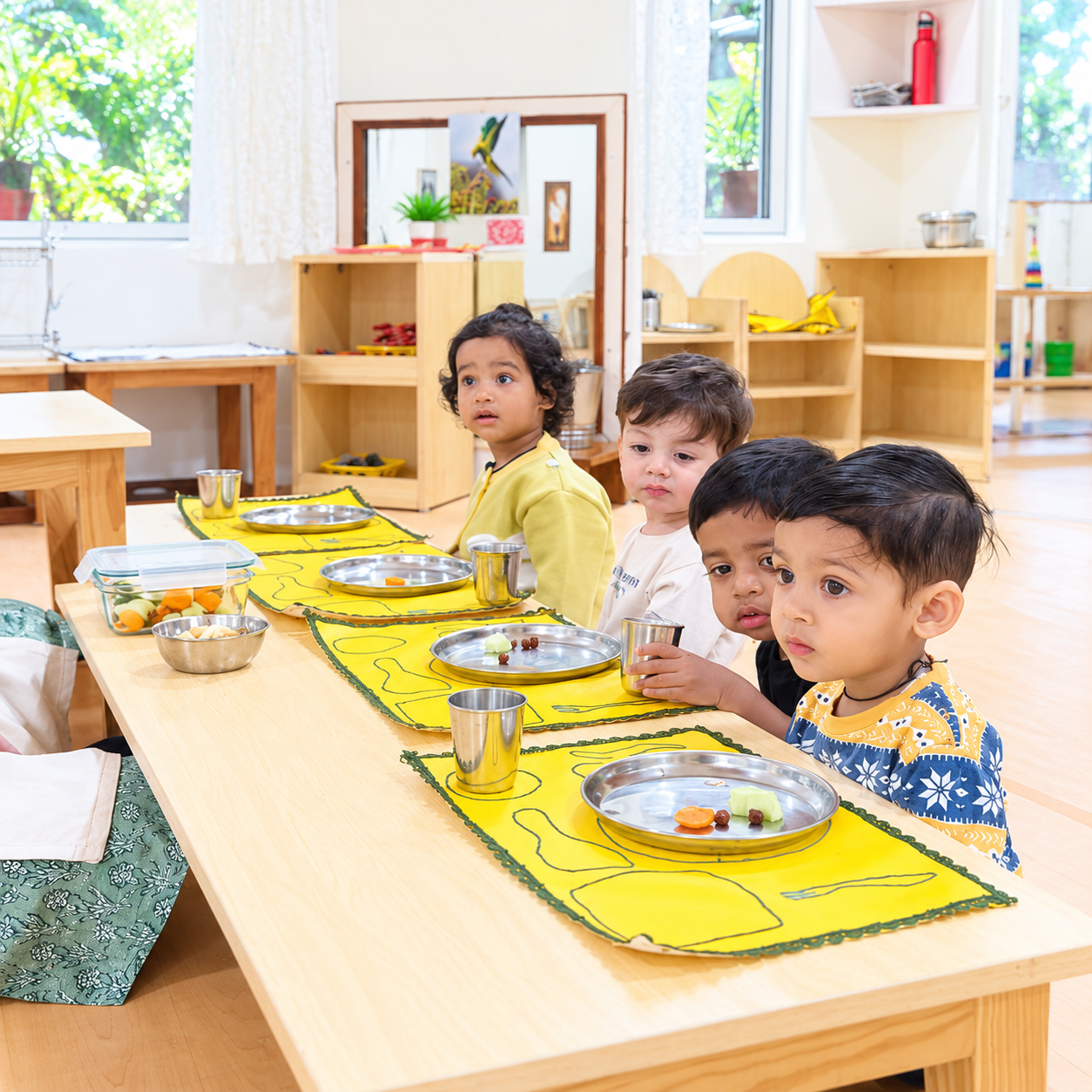
This connects with a passage in Lining the Nest, Chapter 8: Food beyond nutrition, which describes a child beginning to understand the “beginning, middle and end of mealtimes”, from washing hands to putting plates and cutlery away. In a toddler community, the shared snack can therefore be part of the child’s purposeful work, not simply a break between activities.
In a typical play school, the adult leads more of the day. The group sings the same rhyme, makes the same craft and moves between activities together. That suits many children, and learning to take part in a group has real value. In the Montessori vs traditional playgroup comparison, the two approaches simply put their weight in different places: one on shared group routines, the other on individual choice and independence.
One practical note. The word ‘Montessori’ on a signboard does not tell you what training the adults have, or for which age group. Montessori training is specific to age, and the preparation for working with children under three is different from the preparation for three- to six-year-olds. Our Montessori toddler community in Hyderabad is led by guides trained specifically for the birth-to-three years, and it is worth asking any setting the same question.
Is a Montessori playgroup better than daycare?
They are not substitutes, so ‘better’ depends on what your family needs. If you need care for a full working day, a morning playgroup does not solve that, however good it is. If you can cover the rest of the day, a playgroup gives your child a few hours in an environment designed entirely around their development.
It is also worth setting aside the idea that daycare means minding and playgroup means learning. India’s national guidelines for running crèches expect them to provide early stimulation, age-appropriate play materials and a balance of child-initiated and adult-led activity. A well-run daycare is meant to be a place where young children learn, not simply a place where they wait.
“We often look for evidence of learning in what a child can show us. A new word, a finished activity, something they can do today that they couldn’t do yesterday. But some of the most important learning in the early years is almost invisible. A child may be learning to make a choice, sustain an interest or become comfortable with something unfamiliar. It is in these quiet, everyday experiences that the foundations of independent thinking, concentration and confidence gradually take shape.”
Munira Hussain, Co-founder, Blue Blocks Montessori School
So the more useful question is not which label is better, but whether a particular setting is good for your child during the hours they will spend there. Across every kind of setting, three things matter most for children under three:
- The same adults, every day. Toddlers settle and learn through familiar faces. Frequent changes ask a very young child to rebuild trust again and again.
- Adults trained for this age. Children under three have particular needs around movement, eating, sleep and separation. Training for older children does not automatically cover them.
- An environment that lets a toddler do things. A room where children can reach, carry, pour and choose gives them hundreds of small chances each day to build independence.
Daycare and playgroup combo in Hyderabad: what to check
Some settings in Hyderabad offer a daycare with playgroup under one roof, and for many working families this is a practical answer. A combination works best when both parts are designed together rather than simply placed side by side. Before choosing one, it is worth asking:
- Are the playgroup hours and the daycare hours run by the same adults, or by different teams?
- Do both parts follow the same approach, or does the child move from one style of care to another during the day?
- How does a toddler move from the playgroup part of the day to the daycare part, and who is with them during that change?
- Do meal and rest times follow a consistent order, so the day feels predictable?
- How, and how often, will you hear about your child’s progress?
Blue Blocks runs a Montessori playgroup, not a daycare. Families who need full-day care combine our morning sessions with care at home or elsewhere, and the questions above apply just as much to that arrangement.
Questions to ask any playgroup or daycare
Whether you are weighing a Montessori vs traditional playgroup or a daycare, a few specific questions tell you more than a general tour. Many Montessori settings, including ours, protect the children’s work period from outside visitors, so these conversations usually happen at a parent session, open day or admission workshop.
- Will the same adults be with my child every day?
- What training do the adults have for children under three specifically?
- How is each child’s day planned, and who decides what they do?
- How will my child be helped to settle in, and what is the policy on parents entering the environment?
- How will you share news of my child’s progress with us?
- If my child speaks mostly in our home language, how will the adults understand them?
The answers will show you not only how the setting runs, but how carefully it has thought about the children in it.
Montessori playgroup at Blue Blocks, Gachibowli
For families looking for a Montessori playgroup near them in west Hyderabad, our toddler community runs at our Gachibowli campus, opposite DLF Gachibowli. Children join from 15 months, or as soon as they start walking, and stay until about two and a half. They attend one of two morning sessions, from 9.00 to 11.00 or from 11.15 to 1.15.
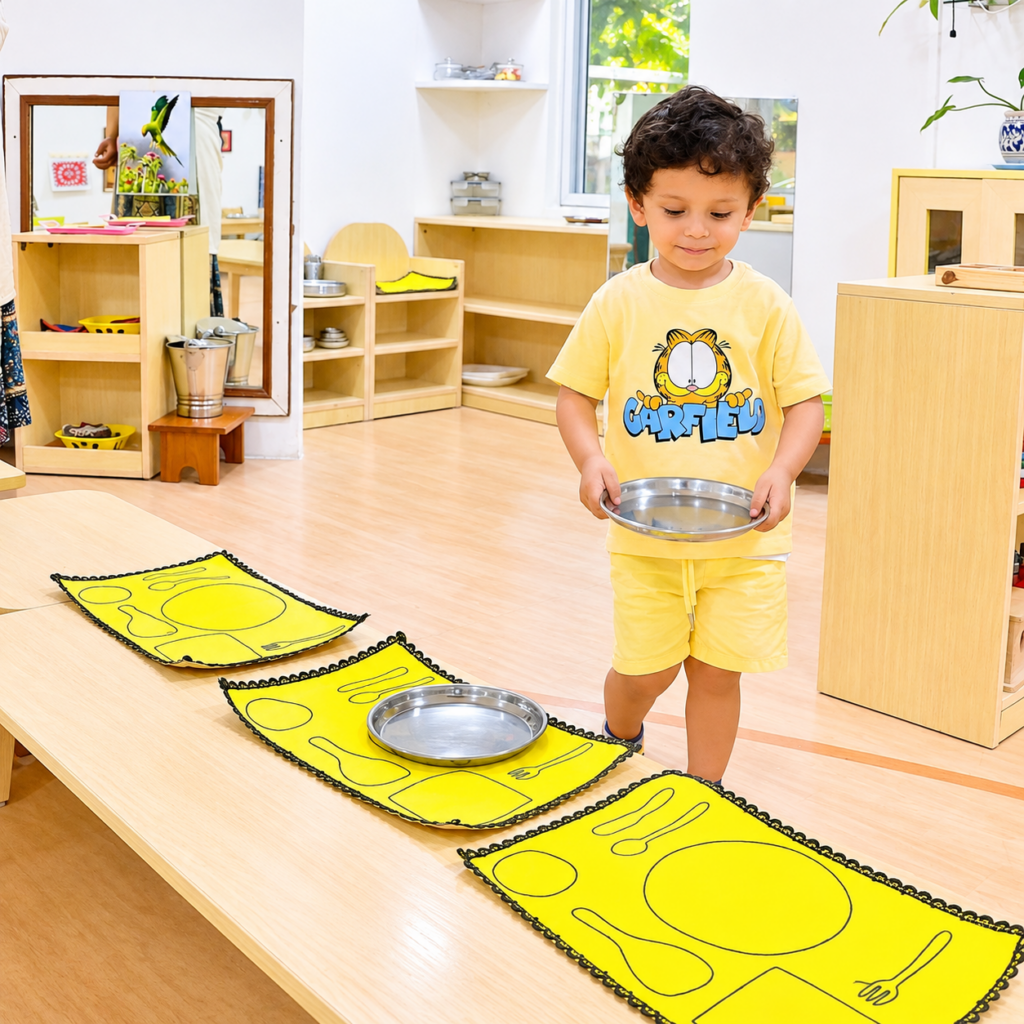
Our toddler guides hold the AMI Assistants to Infancy (0–3) diploma. At two and a half, children move into our Children’s House for the Nursery, PP1 and PP2 years, so they continue in the same Montessori approach rather than starting again somewhere new. You can read more about our Montessori playgroup in Hyderabad, including how a typical morning unfolds.
The name on the gate and the room inside
The Montessori vs traditional playgroup question, and the daycare question alongside it, rarely has a single right answer. It depends on the hours your family needs and the kind of day you want your child to have. The name on the gate tells you a philosophy. The room tells you what your child’s day will be.
Frequently asked questions
Can a child attend a playgroup and a daycare at the same time?
Yes, and many working families do exactly that. The main things to check are consistency and transitions: who brings the child between the two settings, whether meal and rest times follow a similar order, and how each setting shares news of the child’s progress with you.
Is daycare bad for toddlers?
Not in itself, and many families rely on it. But toddlers have particular needs: a secure bond with a few familiar adults, and plenty of time with their family. For this reason, Montessori education sees home as a child’s primary environment in the first three years, and our toddler sessions run for two hours by design, long enough for focused, joyful work and short enough to keep home at the centre of the day. Where a family needs full-day care, the same adults each day, carers trained for under-threes, and a calm rhythm matter most.
Do Montessori playgroups have toys?
Montessori playgroups have more real, child-sized materials and objects: jugs, cloths, brushes, puzzles and books. The guide prepares these around each child’s individual plan, and each set has its own place on an open shelf, so a toddler can find, use and put things away independently. Play is still central; it is simply organised differently.
How do I find a Montessori playgroup near me?
Start by asking each setting what Montessori training its adults hold and for which age group, since training for under-threes is specific. Then attend a parent session or open day to see the prepared environment, and ask how each child’s plan is made. The name on the signboard alone tells you little.